Professional Data Recovery Services
- Details
- Written by: Seattle Data Recovery
- Category: Database Recovery
- Hits: 3607
MSSQL Database Repair
Seattle Data Recovery repairs existing databases when database files cannot be opened because of file corruption. Seattle Data Recovery scans and searches the constituent parts of the database to restore its integrity. When MSSQL database files cannot be opened, Seattle Data Recovery works around inaccessible or damaged files to recover the rest of your tables.
In today's data-driven landscape, the integrity of database systems is paramount. Unfortunately, over time, databases can become susceptible to corruption, leading to critical disruptions in operations. For organizations relying on Microsoft SQL (MSSQL), understanding the intricacies of database repair is essential. In this comprehensive guide, we delve into the realm of MSSQL database recovery, providing insights into common corruption errors, methodologies for diagnosing issues, and effective recovery strategies, all while highlighting the specialized services of Seattle Data Recovery.
Read more: MSSQL Database Repair: Overcoming Corruption Challenges with Seattle Data Recovery
- Details
- Written by: Seattle Data Recovery
- Category: Hard Drive Data Recovery
- Hits: 2870
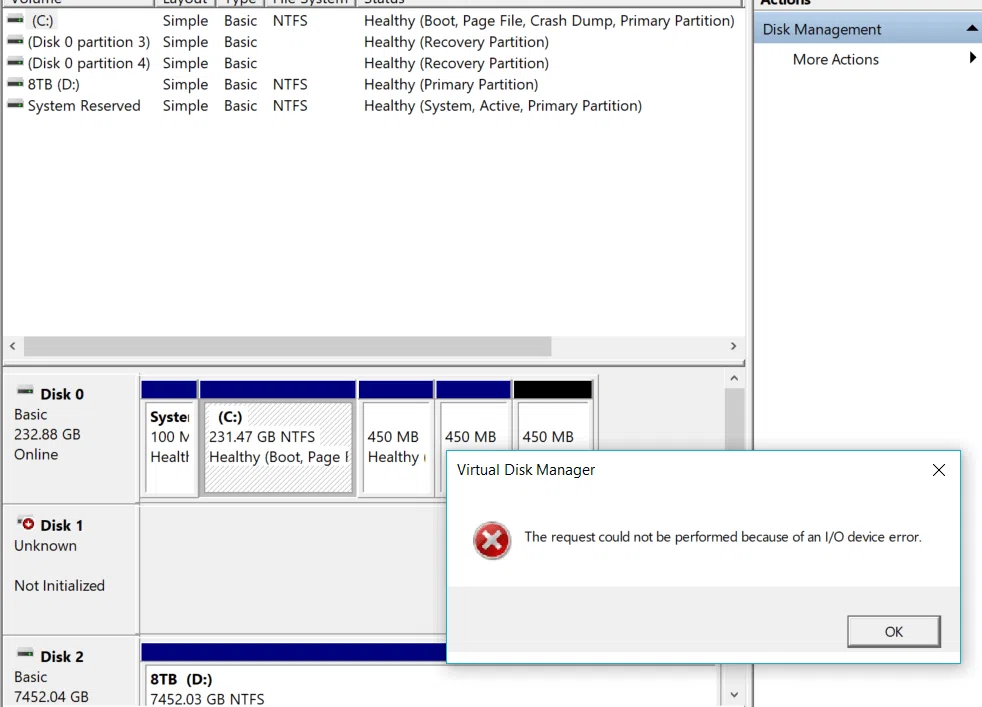
Our reliance on technology and data integrity has never been higher in today's digital world. When your computer displays the ominous message, "The request could not be performed because of an I/O device error," it signals a potential catastrophe for your information. Such an error not only disrupts your workflow but also instills a sense of dread regarding the safety of your valuable data. Seattle Data Recovery addresses the implications of this issue, explores potential causes, and emphasizes the importance of seeking professional help from Seattle Data Recovery services.
Read more: Navigating I/O Device Errors that Threaten Your Data
- Details
- Written by: Seattle Data Recovery
- Category: Hard Drive Data Recovery
- Hits: 2866
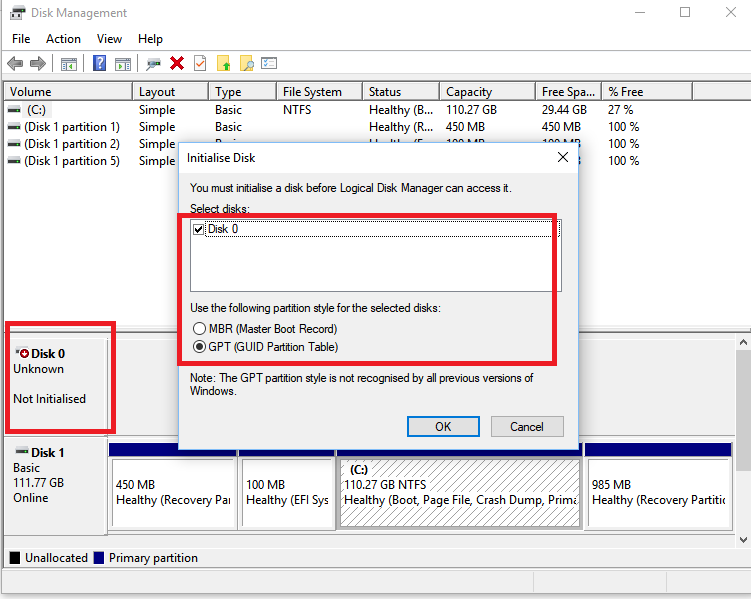
Call Seattle Data Recover at (206) 657-6685 For Windows Disk Recovery
DO NOT INITIALIZE AN UNKNOWN DISK
DO NOT REBUILD THE MASTER BOOT RECORD (MBR)
DO NOT REBUILD THE GUIDED PARTITION TABLE (GPT)
These options are offered as Windows solutions to wipe everything and start fresh, hoping the disk will work again as an empty drive with a new drive letter. They are not offered as a data recovery solution. These options will erase your data, rebuild the drive records, and create empty space over your files. Contact Seattle Data Recovery as soon as you see any unknown disk error.
Read more: Seattle Data Recovery Utilizes Advanced Techniques to Retrieve Your Vital Data
- Details
- Written by: Seattle Data Recovery
- Category: Data Recovery for Encryption
- Hits: 2822
The Importance of Data Security
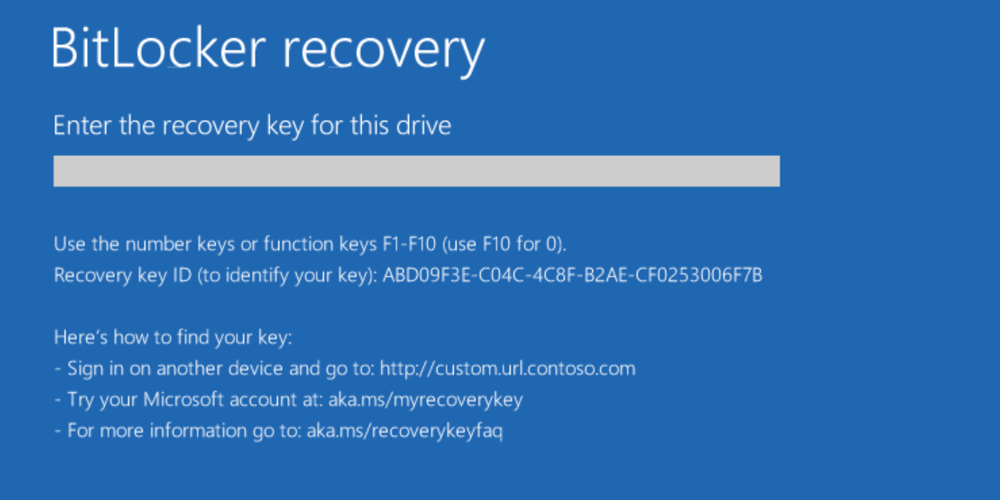
In today's digital landscape, data security remains paramount. With threats looming from cyberattacks, data loss, and unintentional deletions, users often employ encryption to protect valuable information. BitLocker is one of the most widely used encryption methods on Windows operating systems. However, the stakes are high when access to a BitLocker-encrypted hard drive is compromised. Seattle Data Recovery specializes in assisting users to regain access to their data, collaborating closely with computer manufacturers and Microsoft support teams to ensure a seamless recovery process.
Read more: Seattle Data Recovery Restores Access to BitLocker-Encrypted Hard Drives
- Details
- Written by: Seattle Data Recovery
- Category: Portable Hard Drive Data Recovery
- Hits: 2311
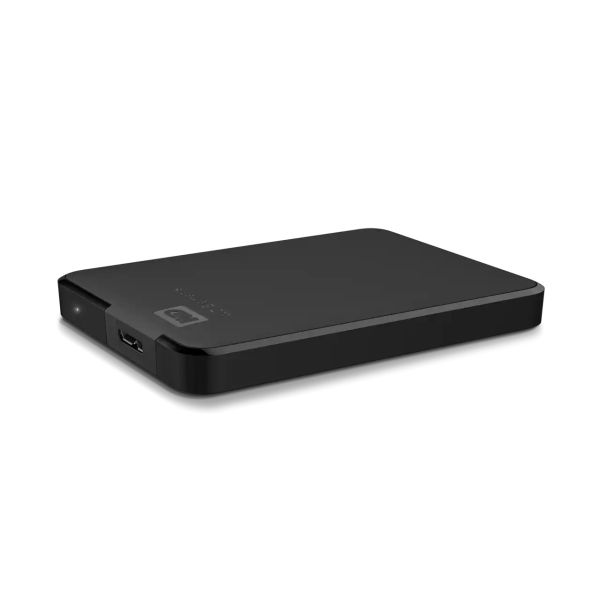
Understanding the Growing Complexity of WD Elements Portable Data Recovery
In today's digital age, external hard drives such as the WD Elements Portable have become indispensable for storing and transferring critical data. However, when these drives encounter failures, the recovery process can become unexpectedly complicated. Seattle Data Recovery has observed a sharp increase in requests related to these devices, particularly due to their unique design features—most notably, soldered USB ports and hardware-level encryption. As a result, owners find themselves facing obstacles that demand advanced technical expertise, specialized equipment, and considerable patience.
The product Warning details various factors that contribute to the complexity of recovering data from WD Elements Portable drives. We will examine the distinct hardware configurations, encryption methodologies, firmware architecture, and physical damage factors that render traditional data recovery methods ineffective. By understanding these challenges, users can better appreciate the importance of consulting professional recovery services and avoid costly DIY attempts that could cause further damage.
The Hidden Dangers of Soldered USB Ports in WD Elements Portable Drives
One of the fundamental reasons data recovery for WD Elements Portable drives can be particularly difficult originates from their design choice to solder the USB port directly onto the main PCB. Unlike conventional external drives that use a removable bridge board to connect the USB interface to the internal SATA drive, many WD models incorporate this circuitry directly into the drive's main circuit board. This integration eliminates the easy access point that technicians and enthusiasts typically use to bypass USB-related faults.
If the USB port or the integrated controller becomes damaged, the drive often becomes entirely inaccessible through standard connections. Attempting to bypass or repair this soldered-on port involves sophisticated soldering procedures, delicate micro-welding, and a high risk of further damage. These procedures require specialized tools and expertise, making DIY repairs highly inadvisable. As such, professional data recovery services, such as Seattle Data Recovery, are often the best choice for handling these intricate hardware challenges efficiently and safely.
This design choice also complicates any subsequent recovery process, as the entire drive's accessibility hinges on the integrity of the soldered circuit board. When failure occurs, the only viable way to recover data involves complex hardware intervention, often extending recovery timelines considerably.
Read more: Product Warning for Western Digital WD Elements Portable: Data Recovery Is Complex
- Seattle Data Recovery Restores LTO-5 Tape Data
- Dell Laptop Data Recovery
- Resurrecting Data: Navigating Common Data Recovery Needs and Emerging Storage Trends with Seattle Data Recovery Expertise
- Unlocking Lost Bytes: A Deep Dive into Common Data Recovery Needs and the Evolution of Portable Storage Technologies
Subcategories
Fast & Secure Mail-In Data Recovery Services
Step-by-Step Packing Guide
1. The Anti-Static Layer
- Action: Slide the hard drive or SSD into a dedicated anti-static bag (ESD shield).
- Why it matters: Electronic components are highly vulnerable to Electrostatic Discharge (ESD). A simple static shock from standard plastic or blankets can permanently fry the drive's logic board or firmware chip before it even arrives at our lab. If you do not have an anti-static bag, place the drive inside a clean paper envelope as a temporary alternative.
2. The Shock-Absorption Roll
- Action: Wrap the drive tightly in a minimum of 2 to 3 inches of industrial bubble wrap. Secure the wrap with packing tape.
- Why it matters: Ensure that all six sides of the drive are completely covered, paid special attention to the corners. Mechanical drives cannot withstand harsh drops or constant shipping vibrations. Wrapping all sides ensures the internal platters and delicate motor spindles remain aligned.
3. The Rigid Box Enclosure
- Action: Place the wrapped drive into a sturdy cardboard box. Fill any remaining empty space with packing peanuts, crumpled paper, or extra bubble wrap so the drive cannot slide or shift when the box is shaken.
- Why it matters: Securely seal all edges of the box using heavy-duty packing tape. Clearly label the exterior of the package as "FRAGILE: SENSITIVE ELECTRONICS".
Find a Shipping Drop-Off Location Near You
- FedEx Office & Drop-Off Locations: Find a FedEx Location
- United States Postal Service (USPS) Post Offices: Find a USPS Post Office
- The UPS Store & Customer Centers: Find a UPS Location
🏢 Secure Laboratory Delivery and Intake Instructions
Seattle Data Recovery
1455 NW Leary Way, Suite 400
Seattle, WA 98107
Emergency Data Recovery Services
Emergency Data Recovery: 24/7 Priority Lab Intervention for Critical Outages
Priority Support for Seattle’s Vital Industry Sectors
- Healthcare & Medical Facilities: Critical recovery of PACS/DICOM medical imaging servers, encrypted Electronic Health Record (EHR) databases, and internal diagnostic hardware storage. All emergency procedures are executed under strict HIPAA-compliant data privacy controls.
- Aerospace & Defense Contractors: Rapid extraction of complex CAD blueprints, flight telemetry logs, software repositories, and testing data from high-capacity enterprise SAS/SATA drives or fiber channel SAN storage architectures.
- Production, Media, & Post-Production Houses: Immediate retrieval of uncompressed cinematic footage (
.R3D,.MOV,.MXF) from damaged field drives, unreadable high-speed memory cards, or production RAID arrays to prevent missing high-dollar delivery windows. [13] - Legal & Corporate Enterprise: High-priority extraction of active corporate transaction databases, virtual machines (
.VMDK,.VHDX), and email communication archives (.PST,.EDB) required for time-critical court submittals or active forensic investigations.
Emergency Remote Triage via TeamViewer
High-Stakes Cleanroom & Micro-Soldering Capabilities
- ISO 5 Cleanroom Interventions: Immediate physical read/write head assembly replacements and spindle motor stabilization for clicking or dropped mechanical server drives.
- Advanced Chip-Off Data Recovery: For dead solid-state storage, we bypass the burned components entirely. Technicians desolder raw NAND flash memory chips under high-power microscopes, reading the raw silicon storage blocks directly.
- Apple Silicon Logic Board Restorations: Emergency micro-soldering and logic board transplants for water-damaged or short-circuited MacBook Pros and iMacs, bypassing hardware-level encryption keys to extract trapped local user data.
Secure 24/7 Courier & Walk-In Intake Instructions
- Location: UW Medicine Building, NW Leary Way, Ballard, Seattle, WA.
- Emergency Drop-Off Hours: Available 24 hours a day, 7 days a week, 365 days a year (advance phone authorization required for after-hours building entry).
- Arrival & Free Designated Parking: Drive vehicles onto Level 2 of the facility parking deck. Regus-managed customer parking spaces (Spaces 40–45) are specifically reserved for our clients.
- Secure Building Access: Proceed inside the main lobby doors. Take the building elevator directly up to Level 4 (please note that the building stairwells are locked for security and do not access the secure office suites).
- Regus Corporate Suite Intake: Turn right out of the elevator cab to enter our executive corporate suite, managed in partnership with Regus. Regus front-desk professionals maintain an elite, confidential corporate workspace, ensuring your emergency hardware is logged securely and routed straight to our cleanroom engineers.
File Recovery
1. Enterprise Databases & Financial Records
- Database Formats:
.MDF/.LDF(Microsoft SQL Server),.DBF(Oracle),.IBD/.FRM(MySQL), and.NSF(Lotus Notes). - Accounting & ERP Data:
.QBW/.QBB(QuickBooks Company files),.MYO(MYOB), and complex SAP database backups.
2. High-End Creative Assets & Post-Production Video
- Raw Video Formats:
.R3D(RED Digital Cinema Raw),.ARI(Arri Raw),.MXF(Material Exchange Format),.MOV(ProRes 4444 / DNxHR), and.MP4(High-bitrate cinematic profiles). - Audio Project Files:
.PRPROJ(Adobe Premiere),.SESX(Audition),.PTX(Pro Tools), and.CPR(Cubase).
3. Engineering, Architecture & 3D Modeling
- CAD & Building Information Modeling (BIM):
.DWG/.DXF(AutoCAD),.RVT(Autodesk Revit), and.PLN(ArchiCAD). - 3D Renderings & Manufacturing Data:
.MAX(3ds Max),.STP/.STEP(Standard for Exchange of Product Data),.IGS/.IGES, and.SLDPRT/.SLDASM(SolidWorks).
4. Legal Discovery, Forensics & Virtual Environments
- Virtual Machine Disks:
.VMDK(VMware Virtual Disk),.VHD/.VHDX(Hyper-V), and.OVA/.OVF(Open Virtualization Format). - Legal & Email Containers:
.PST/.OST(Microsoft Outlook data files),.EDB(Exchange Server Database), and.E01/.DD(Expert Witness Forensic Images).
5. Proprietary Software Code & Technical Research
- Source Code Repositories:
.GIT(Git history configuration),.ZIP/.TAR.GZ(Compressed development build archives),.PY(Python scripts), and.CPP(C++ source files). - Mathematical & Scientific Data:
.MAT(MATLAB data files),.H5/.HDF5(Hierarchical Data Format), and complex geospatial.SHP(Shapefiles).
Data Recovery for Microsoft Office
Forensic Reconstruction of Lost and Corrupted Microsoft Office Files
Tier 1: Logical File System Reconstruction & Corrupted Repairs
- Accidental Format or Deletion: When a folder containing
.docxor.xlsxfiles is emptied from the trash, the operating system doesn't immediately erase the data—it merely deletes the file's index pointer. Our specialized equipment performs deep carving protocols to match the unique hexadecimal file signatures (headers and footers) distinct to Microsoft Office documents. This allows us to reconstruct the files cleanly, even if the original folder structure was completely wiped. - Deep XML Document Repair: Modern Microsoft Office files (
.docx,.xlsx,.pptx) are actually compressed XML archive containers. If a computer loses power or an external drive is pulled out mid-save, the internal XML structure fractures, causing the application to crash upon opening. Our lab technicians manually open the document's raw hex code, realign the broken XML tags, extract the text and embedded media elements, and rebuild the container so the file opens cleanly without data gaps. - Autosave & Shadow Copy Extraction: If an office document was overwritten by accident, we can often deploy deep forensic sector scanning to locate hidden, temporary
~$template files, Microsoft AutoRecovery cache volumes, or operating system Volume Shadow Copies that retain historical snapshots of your data prior to the overwrite.
Tier 2: Physical Hardware Extraction (When the Drive Fails)
- Our laboratory technicians move the storage media directly into our ISO 5 Cleanroom or micro-soldering stations.
- We physically repair failing drive components (such as a hard drive's broken read/write heads or shorted logic board power rails) and immediately clone the entire storage volume sector-by-sector using hardware tools like the PC-3000.
- Once a secure bit-for-bit digital copy is created on our servers, we systematically extract your original Microsoft files without risking further mechanical degradation.
- Stop Writing New Data Instantly: Every email you open, web page you visit, or new file you save writes temporary data to your drive. If your lost Office files are currently sitting in "unallocated" storage space, saving anything new can instantly overwrite those sectors, rendering the old files permanently unrecoverable.
- Do Not Click "Repair" Repeatedly in Microsoft Office: If Excel or Word prompts you with an automated box asking to "Repair the damaged file," trying it repeatedly on an already unstable external drive or corrupted partition can permanently mangle the remaining internal XML strings.
- Avoid Automated Retail File-Scraping Tools: Free or cheap downloaded recovery apps run blindly through your operating system. If the files were lost because the underlying hard drive or SSD is developing bad sectors, forcing a generic app to rigorously scan the media will overheat the drive, permanently killing the remaining read heads.
The Two Fronts of Microsoft Office Recovery
Critical Protocol to Protect Lost Office Files
Data Recovery for Media Files
Forensic Extraction & Reconstruction of Creative Media Assets
The Complex Mechanics of Media Data Loss
1. Reassembling Fragmented Video & Audio (File Carving)
- The Problem: Standard data recovery software only looks for the file's "header" and "footer." When it attempts to recover a fragmented video clip, the resulting file is usually broken, plays for only a few seconds, or throws an "Unsupported Format" error.
- The Seattle Data Recovery Solution: We utilize advanced Video Block Reassembly algorithms. Our hardware imagers scan the raw hex code of the storage media, map out the corresponding camera brand parameters (such as RED, ARRI, Sony, or Canon), and manually restitch the fragmented data streams back together, matching audio tracks and video frames exactly.
2. Bypassing Mass Corruptions on Production Media (CFexpress, SD, & RED MAGs)
- The Problem: When plugged into a card reader, the media states "Card Cannot Be Read" or prompts you to format it.
- The Seattle Data Recovery Solution: We place unstable flash media onto hardware-level diagnostic imagers like the PC-3000 Flash system. We isolate degrading NAND flash cells, bypass unstable internal card controllers, and directly clone the raw storage sectors, allowing us to safely extract your raw footage without further stressing the delicate silicon.
3. Rebuilding Multi-Drive Production Arrays (RAID & G-Technology Units)
- The Problem: A single hard drive within the array starts clicking or dropping offline, causing the entire shared storage volume to vanish or report as uninitialized.
- The Seattle Data Recovery Solution: We pull every individual drive member from the production unit and evaluate them safely. Any drive experiencing mechanical clicking or beeping is immediately moved to our ISO 5 Cleanroom for physical head-stack or motor replacement. Once all individual members are safely cloned to our secure servers, our engineers manually calculate the block size and stripe layout, virtually rebuilding the array to export your project catalogs and timelines cleanly.
Critical Instructions for Production Teams Facing Data Loss
- Do Not Record New Data to the Card: If you accidentally deleted a clip or formatted a memory card, eject it from the camera immediately. Continual shooting writes new data over the deleted sectors, making previous clips permanently irretrievable.
- Avoid Automated "Repair" or Index Rebuilders: Forcing an editing program or video player to aggressively try to "fix" a broken file wrapper on an unstable drive can permanently overwrite the remaining underlying metadata strings.
- Kill Power to Noisy Enclosures Instantly: If an external editing drive begins clicking, buzzing, or ticking, cut the power. Keeping a mechanically failing 7200 RPM drive running can scratch the magnetic platters, permanently shaving your footage away into literal dust.
Database Recovery
Enterprise-Level Database Forensic Reconstruction
The Two Core Fronts of Database Recovery
Tier 1: Logical Database Schema & Pointer Reconstruction
- Bypassing the Transact-SQL / Engine Lock: When a database experiences an improper shutdown, it can get stuck in a permanent "In Recovery" or "Suspect" state. Our technicians bypass standard database engine restrictions, using specialized hex editors to manually patch corrupted page headers, re-index broken data pages, and force the database back into a stable state.
- Transaction Log (.ldf / .log) Reconstruction: Relational databases rely heavily on active transaction logs to ensure data consistency. If a log file becomes mismatched or missing, the primary data file will lock out. We perform direct sector carving to reconstruct the missing log structures or modify the primary database boot sector to safely attach the raw table files without log dependencies.
- Accidental Table Drop or Row Deletion: When a database administrator accidentally executes an erroneous
DROP TABLEorDELETEquery, the data rows are not immediately wiped—their pointers are simply marked as available space. Our forensic systems perform deep byte-level carving across the raw storage space, matching the specific data types, variable constraints, and schema signatures to completely recover deleted entries.
Tier 2: Physical Hardware Intervention (Multi-Disk Arrays & SANs)
- Our laboratory technicians pull every individual hard drive or solid-state drive member from the host server array. Any drive presenting mechanical failures is immediately processed inside our certified ISO 5 Cleanroom for precision component replacement.
- We utilize advanced hardware imagers like the PC-3000 to create bit-for-bit digital clones of each drive while bypassing unstable firmware zones.
- Once all drive members are safely cloned to our secure servers, our engineers manually calculate the array’s block size, parity rotation, and stripe order—virtually rebuilding the underlying storage environment so we can smoothly extract the pristine, uncorrupted database files.
Comprehensive Database Platforms We Recover
- Microsoft SQL Server: Primary Data Files (
.mdf), Secondary Data Files (.ndf), and Transaction Log Files (.ldf). - Oracle Database: Data files (
.dbf), Control Files (.ctl), and Redo Log files. - Open-Source Relational Systems: MySQL (
.ibd/.frm), MariaDB, and PostgreSQL environments. - NoSQL & Distributed Frameworks: MongoDB, Cassandra, and complex structured JSON databases.
- Legacy Formats: FileMaker Pro, Microsoft Access (
.mdb/.accdb), and FoxPro environments.
Emergency Guidelines for Corporate IT Managers Facing Database Failure
- Do Not Continuous Power-Cycle the Host Node: Relational databases perform intense, high-speed read/write transactions. If a drive inside your storage array is physically failing, forcing it to try and boot or initialize an automated file consistency scan will rapidly destroy the read/write heads and scratch the underlying platters.
- Avoid Automated Built-In "Repair" Switches (e.g., REPAIR_ALLOW_DATA_LOSS): Command-line switches like SQL’s
REPAIR_ALLOW_DATA_LOSSare designed as a last resort for 100% healthy storage hardware. This command resolves inconsistencies by aggressively deleting any corrupted pages or tables it encounters. On an unstable drive, this can permanently purge extensive blocks of completely healthy user data rows. - Do Not Attempt an Automated RAID Rebuild: If your database resides on a striped RAID array and drops offline due to a drive failure, do not initiate an automated array rebuild. The mechanical and thermal stress of a rebuild will frequently cause a secondary, aging drive in the array to fail, collapsing the volume structure permanently.
Hard Drive Data Recovery
1. Enterprise Storage & High-Availability RAID Drives
- Seagate Exos Series: Premium enterprise SATA and SAS helium-filled drives (Exos X16, X18, X24) used in massive corporate data centers.
- Western Digital Ultrastar: High-density enterprise drives (DC HC550, DC HC570, DC HC680) featuring OptiNAND technology and complex actuator architectures.
- Fiber Channel (FC) Hard Drives: Legacy and modern high-speed storage interfaces used in complex Storage Area Networks (SAN).
- Dell EMC & HPE Server Drives: Proprietary firmware-locked enterprise SAS drives engineered explicitly for high-end server blades and storage enclosures.
2. Professional & Production-Grade Portable Drives
- LaCie Rugged & d2 Professional: The entertainment industry standard for on-set filming, frequently suffering from dropped damage, water exposure, or interface bridge failure.
- SanDisk Professional (G-Technology): Premium multi-drive desktop arrays (G-RAID Shuttle, G-DRIVE) used for commercial audio and high-bitrate video post-production.
- OWC (Other World Computing) ThunderBay: High-speed Thunderbolt RAID enclosures favored by video editors and digital asset managers.
- Glyph Production Technologies: High-reliability production drives (Studio, Atom) engineered specifically for commercial music studios and live performance audio tracking.
3. Healthcare & Medical-Grade Data Storage
- DICOM/PACS Server Arrays: High-capacity enterprise networks running customized storage pools explicitly for handling high-resolution medical imaging (MRIs, CT scans, X-rays).
- Modality Hardware Hard Drives: Internal storage units integrated directly into specialized medical diagnostic hardware (GE Healthcare, Siemens Healthineers, Philips Medical systems).
- Medical Cart SSDs: Secure, encrypted mobile storage drives used on point-of-care hospital carts for real-time patient charts and Electronic Health Record (EHR) updates.
4. Antique, Legacy & Industrial Storage Devices
- SCSI & Ultra-SCSI Hard Drives: Legacy small computer system interface drives used in 1990s server architecture, legacy telecommunication nodes, and vintage print manufacturing equipment.
- IDE / PATA Desktop Drives: Older parallel ATA drives (Western Digital Caviar, Maxtor DiamondMax, Quantum Fireball) requiring physical hardware head swaps with rare donor parts.
- Industrial CompactFlash (CF) & PCMCIA Cards: Solid-state flash storage running proprietary operating systems inside legacy CNC manufacturing machines, aviation navigation units, and early automated manufacturing lines.
- MicroDrives: Miniature rotating magnetic hard drives inside a CompactFlash form factor, popular in early digital cameras and legacy industrial logging tools.
Data Recovery for Encryption
Technical Operations Report: Encrypted Data Recovery & Hardware Remediation
This report outlines the specialized methodologies, safety protocols, and operational costs associated with our advanced data recovery services. It explicitly clarifies that our facility does not engage in password cracking or cryptographic bypass operations. Instead, we leverage a proprietary infrastructure of encryption keys, tokens, donor components, and forensic hardware to migrate encrypted volumes from compromised media to functional host environments. This process enables the logical repair and extraction of corrupted data to new storage media (SSD/HDD).
Our recovery process is strictly founded on hardware-level remediation and logical volume reconstruction. We do not decrypt data without authorized credentials; rather, we restore the physical and digital integrity of the storage medium to facilitate access.
-
2.1 Hardware Migration & Volume Mounting
The core of our operation involves the extraction of encrypted volumes from physically damaged devices. This is achieved by utilizing an extensive internal library of:-
Encryption Keys & Tokens: Verified cryptographic artifacts required for volume authentication.
-
Donor Hardware: A vast inventory of circuit boards (PCBs), controller chips, and donor drives matching specific firmware revisions.
-
Forensic Tools & Software: Proprietary algorithms designed to stabilize unstable read/write heads and correct error-correcting code (ECC) discrepancies.
Once the physical substrate is stabilized, the encrypted volume is mounted within a controlled, functional hardware environment. -
-
2.2 Data Integrity Restoration
Following successful mounting, we employ advanced logical recovery techniques to address file system corruption. This includes repairing broken partition tables, patching corrupted sector chains, and rebuilding directory structures. The final deliverable is a verified, bit-perfect copy of the recovered data transferred to a new, high-reliability SSD or HDD.
The physical manipulation of micro-circuitry and storage components introduces significant environmental and health hazards. Our facility adheres to strict safety standards to mitigate risks associated with:
-
Thermal & Chemical Exposure: The removal and replacement of surface-mount components (chip-off recovery) require the use of high-temperature reflow stations and aggressive chemical solvents for flux removal and board cleaning.
-
Toxic Materials: Technicians are routinely exposed to lead (from solder) and hazardous fumes generated during the heating of substrates and coatings.
-
Mitigation Strategies: Operations are conducted using industrial-grade fume extraction systems, lead-safe handling procedures, and personal protective equipment (PPE) to ensure technician safety.
maintaining a certified cleanroom environment is critical for preventing catastrophic data loss due to particulate contamination. This requirement imposes substantial operational overhead.
-
Environmental Controls: The facility utilizes HEPA-filtered air systems to maintain ISO-standard air quality, preventing microscopic dust and static discharge from damaging exposed platters and silicon dies.
-
Consumables & Garments: To maintain sterility, technicians must utilize single-use, anti-static protective uniforms (bunny suits), gloves, and face masks for every entry into the cleanroom. The cumulative cost of these disposable materials is a significant factor in the overall pricing structure.
-
Specialized Circuitry: The precise removal and re-soldering of memory chips and controllers require capital-intensive optical inspection systems and micro-soldering workstations.
Our data recovery services represent a complex intersection of electrical engineering, digital forensics, and hazardous material handling. The costs associated with our services directly reflect the investment in specialized equipment, the consumption of single-use safety gear, and the inherent risks involved in physical hardware remediation. We remain committed to providing the highest standard of recovery success while maintaining rigorous safety and ethical standards.
Reference Section: Regulatory Compliance & Technical Standards
Our "chip-off" and hardware migration techniques adhere to the digital forensic standards established by federal bodies for the recovery of data from damaged or encrypted media.
NIST (National Institute of Standards and Technology)
- Standard: Computer Forensics Tool Testing (CFTT)
- Relevance: Validates the methodology for digital data acquisition from damaged devices, including "chip-off" extraction where flash memory is physically removed from the circuit board to bypass failed controllers.
- Source: NIST Computer Forensics Tool Testing Program | Chip-Off Data Analysis (NIST Presentation)
FEMA (Federal Emergency Management Agency)
- Standard: Digital Forensics Basics (AWR-139-W)
- Relevance: Recognizes the necessity of advanced recovery techniques to retrieve data that has been "intentionally hidden or encrypted," confirming that physical extraction is a validated recovery path when standard access fails.
- Source: FEMA National Preparedness Course Catalog
- State of Indiana Digital Forensic Unit Procedures
- Standard: Chip-Off Extraction Protocols
- Relevance: Official government procedure manuals explicitly classify "chip-off" as an advanced data extraction technique required when devices are damaged or locked, validating it as a recognized forensic process rather than an illicit activity.
- Source: Digital Forensic Unit Procedures Manual (IN.gov)
Our facility strictly follows military and federal guidelines for handling the toxic materials involved in micro-circuitry repair and chemical cleaning.
- DOD (Department of Defense)
- Standard: Hazardous Materials Information Resource System (HMIRS)
- Relevance: The authoritative source for Safety Data Sheets (SDS) used by the US Military. Our lab utilizes these standards to manage the risks of chemical solvents and flux residues used during the cleaning of sensitive electronics.
- Source: DLA Hazardous Materials Information Resource System
- OSHA (Occupational Safety and Health Administration) / NIOSH
- Standard: Chemical Hazards & Lead Exposure
- Relevance: Defines the permissible exposure limits (PEL) for lead fumes (from soldering) and chemical solvents. Compliance with these standards necessitates the high-cost ventilation systems and personal protective equipment (PPE) utilized in our lab.
- Source: NIOSH Pocket Guide to Chemical Hazards
- ISO (International Organization for Standardization)
- Standard: ISO 14644-1 (Cleanroom Standards)
- Relevance: Defines the air cleanliness classes required for handling exposed storage media. Our facility adheres to strict particle count limits (e.g., ISO Class 5) to prevent microscopic contaminants from destroying data during physical recovery.
Hard Drive Repairs
Hardware-Level Hard Drive Repair for All Brands by Seattle Data Recovery
Universal Failure Tiers & Brand-Specific Engineering Protocols
Western Digital (WD): Bypassing Integrated USB & Encryption
- The Hardware Hurdle: Most portable WD drives (like the My Passport series) do not feature a standard SATA connector. Instead, the USB port and a hardware encryption chip are soldered directly to the main Printed Circuit Board (PCB).
- Our Repair Protocol: If the board suffers a short circuit or the USB port breaks, our technicians perform precision micro-soldering. Under magnification, we tap directly into the drive’s core SATA transmission lines on the board, routing them out to our diagnostic hardware while keeping the encryption chip active to prevent data scrambling.
Seagate: Resolving Seized Spindles & Firmware Loops
- The Hardware Hurdle: Seagate drives feature a compact mechanical design that makes them prone to a "seized spindle motor" or stuck heads if dropped. Additionally, their Media Cache architecture can get trapped in a permanent firmware lock loop when it hits corrupted data sectors.
- Our Repair Protocol: For stuck components, the drive is moved to our dust-free cleanroom where engineers use specialized mechanical tools to safely unstick the head assembly or cleanly migrate the platters to a matching donor chassis. For firmware loops, we link directly to the drive’s system terminal to patch its internal code via RAM commands.
Toshiba: Clearing G-Sensor Lockouts
- The Hardware Hurdle: Toshiba external lines (Canvio series) feature built-in hardware accelerometers (G-Sensors) designed to instantly lock the drive if motion is detected. A sudden drop can trap the drive in a defensive, non-responsive firmware loop.
- Our Repair Protocol: Much like WD, modern Toshiba portable drives utilize integrated USB boards. We convert the native board to a raw SATA path, allowing us to transmit low-level commands that clear out the persistent error logs trapped in the drive’s system memory, stabilizing the controller for data mirroring.
HGST / SanDisk Professional: Enterprise Multi-Platter Alignment
- The Hardware Hurdle: HGST and G-Technology drives spin at higher RPMs (7200 RPM) and often feature tight, multi-platter stacks. They use highly unique NVRAM chips on their PCBs containing custom adaptive alignment data for that specific drive's internal read/write heads.
- Our Repair Protocol: If the PCB fails due to power surges, a simple board swap will fail. Our technicians desolder the original microscopic NVRAM chip and cleanly transplant it onto a perfectly matched donor PCB. Mechanical repairs are performed with absolute precision to maintain the alignment of the multi-platter stack.
The Seattle Data Recovery Hardware Repair Process
- The Cleanroom Inquest: If a drive is clicking, grinding, or beeping, it is never powered on in a standard room. It is opened strictly inside an ISO 5 Cleanroom environment where airborne particles are filtered down to microscopic levels. This prevents dust from landing on the platters and permanently scratching away data.
- Donor Part Matching: Physical part replacements require an incredibly precise match. We maintain an extensive inventory of donor drives, matching not just the model number, but also manufacturing dates, site codes, and internal pre-amplifier revisions.
- Forensic Cloned Imaging: Repaired hard drives are highly unstable and are never meant to be returned to normal use. Once the drive spins up smoothly, it is immediately attached to a hardware imager to create a bit-for-bit digital clone. We extract your data safely from this healthy clone.
Emergency Guidelines: Protect Your Media from Permanent Loss
- Disconnect Power Immediately: If the drive is making unusual sounds (clicking, beeping, buzzing), pull the plug. Keeping it powered on can cause a broken read head to physically dig into the spinning platter, shredding your data into unrecoverable dust.
- Say No to DIY Software: File recovery programs are designed for healthy drives with deleted files. Forcing software to scan a drive with a physical head or firmware failure will rapidly overheat and permanently destroy the unit.
- Do Not Open the Drive Casing: Cracking open a hard drive cover outside of a certified cleanroom immediately ruins the drive's internal environment, exposing the platters to millions of microscopic airborne contaminants.
External USB Hard Drive Recovery
1. Terms for Finding Professional Help (Physical Damage)
- "Cleanroom data recovery": Essential for open-drive repairs. It ensures dust doesn't destroy the sensitive platters inside the drive.
- "Head swap service": Specific repair for when the read/write heads are damaged (often causes clicking sounds).
- "Platter restoration" or "scratch damage recovery": For severe damage where the data storage surface is physically scratched.
- "PCB repair" or "firmware repair": For when the drive's circuit board or internal coding fails (drive might seem dead or show wrong capacity).
- "No data no fee recovery": A pricing model where you pay nothing if they cannot recover your files.
2. Terms for DIY Software (Logical Errors)
- "Partition recovery software": If the drive shows up as "unallocated" or asks to be formatted.
- "Undelete tool" or "File recovery utility": If you accidentally deleted files or emptied the trash/recycle bin.
- "Corrupted file system repair": If the drive is visible but you can't open folders.
3. Industry "Slang" to Know
- "Click of death": The rhythmic clicking sound indicating mechanical failure.
- "Donor drive": A matching hard drive that professionals buy to harvest parts (like heads) to repair yours.
- "Cloning": The process of creating a bit-by-bit copy of your failing drive to a healthy one before attempting recovery.
Cost Expectations
- Logical Recovery (Software/Firmware): Typically $500+.
- Physical Recovery (Cleanroom/Mechanical): Typically $600 – $2,500+ depending on if you need donor parts.
Portable Hard Drive Data Recovery
LaCie
Article: The Science of Digital Resilience
1. The Official Recovery Ecosystem
- First-Party Intervention (Rescue Data Recovery Services):
Most professional LaCie drives (specifically the Rugged, d2, and Big Dock lines) include "Rescue Data Recovery Services" for the duration of the warranty (typically 2–5 years). This service grants direct access to Seagate’s internal laboratories. Unlike third-party attempts, this process utilizes proprietary manufacturer schematics and firmware tools to interface with the drive’s logic board, offering a satisfaction rate of approximately 95% for in-house recoveries. - Authorized Third-Party Partners:
For cases requiring specialized "Level 3" recovery outside of the standard Rescue entitlement, LaCie has officially authorized Seattle Data Recovery as a trusted partner. Crucially, utilizing Seattle Data Recovery for physical intervention does not void the original hardware warranty—a critical distinction for enterprise assets. Seattle Data Recovery is frequently the recovery vendor of choice for major media networks (including Discovery) due to their capability to handle complex RAID arrays and encrypted file systems.
2. Engineering Standards: The ISO 5 Cleanroom
- The Physics: A hard drive's read/write head floats just 3 nanometers above the platter—a gap smaller than a smoke particle.
- The Standard: An ISO 5 environment limits airborne contaminants to fewer than 100 particles (of 0.5 microns or larger) per cubic foot. This prevents "head crash propagation," where dust particles act as microscopic boulders that scour the magnetic coating off the platters, rendering data permanently irretrievable.
3. Chain of Custody and Security
- SOC 2 Type II Compliance: Both Seagate’s internal labs and Seattle Data Recovery operate under SOC 2 Type II audit standards. This certification verifies that the facility maintains rigorous controls over security, availability, and processing integrity—ensuring that high-value intellectual property is not exposed during the recovery process.
- Encryption Integrity: Authorized services are contractually bound to return data on encrypted storage devices, ensuring the "Chain of Custody" remains unbroken from the moment the drive leaves the client’s hands to its return.
Integrated USB External Drives (non-shuckable)
The Engineering Challenge: Recovering Integrated, Non-Shuckable External Drives
Why Integrated USB Drives Fail Differently
- No Native SATA Direct Access: Data recovery hardware tools (like the industry-standard PC-3000) rely on low-level SATA commands to handle bad sectors, bypass firmware locks, and force unstable hard drives to read data. The USB interface acts as a "translator" that inherently blocks these diagnostic commands.
- The USB Bridge Failure Protocol: If an integrated drive encounters even a minor physical issue (like a few unreadable sectors), the onboard USB bridge chip often panics, freezes, and completely drops its connection to the computer.
How Specialized Labs Bypass Non-Shuckable Failure Tiers
Phase 1: Hardware SATA Modification (Solder-Level Wire Tapping)
- Locating the Transmit/Receive Lines: Technicians use microscopic schematics of the PCB to identify the four tiny differential data lines (Tx+, Tx-, Rx+, Rx-) leading directly from the drive's main controller chip before they reach the USB chip.
- The Solder Bridge: Under a microscope, an engineer will manually solder microscopic wires directly onto these traces, effectively creating a makeshift SATA port. They then isolate and disable the power to the native USB chip to prevent signal interference. This allows the hardware to communicate directly with the drive at the core firmware level.
Phase 2: Complete PCB Swapping & ROM Transplants
- The Donor Match: Engineers must source an identical "donor" PCB. Crucially, modern hard drives store unique, factory-calibrated alignment data inside a specific ROM chip on the board.
- The ROM De-Solder: Simply putting a new board on the drive will fail because it lacks the original calibration codes. The engineer must physically de-solder the microscopic ROM chip from the broken integrated USB board and solder it cleanly onto the healthy donor board.
Phase 3: ISO Cleanroom Mechanical Recovery
- Once the electronic modifications from Phase 1 or 2 are completed, the drive must be moved into a certified ISO 5 Cleanroom environment.
- Technicians manually swap out damaged read/write head assemblies or deal with platter scratches, using the newly modified SATA connection to safely mirror the data onto a healthy server.
What Affected Users Should Do
- Stop Power Cycles: Do not keep plugging the drive into different computers. If a drive has weak read heads, forcing it to try and boot over a restrictive USB interface can scratch the magnetic platters, leading to permanent, irreversible data loss.
- Avoid DIY Software: Standard file-scraping software cannot navigate a failing USB bridge controller. If the hardware is freezing, software will only accelerate the physical death of the drive.
Seagate
Advanced Engineering Protocols: Recovering Failed Seagate External Storage Systems
1. The Challenge of Seagate Architecture: Bypassing the Media Cache
- The Failure State: When a Seagate drive suffers a sudden power loss, an improper disconnection, or develops bad sectors, the Media Cache system can become corrupted. This triggers a Firmware Loop, causing the drive to instantly spin down, show an incorrect capacity (e.g., 0 MB), or stay in a permanent busy state (BSY) that locks out the computer's operating system.
- The Engineering Solution: Technicians must bypass the drive's standard operating protocol using specialized hardware tools like the PC-3000. By connecting directly to the drive’s serial system terminal, engineers issue low-level commands to clear the corrupted allocation tables, safely terminating the firmware loop without destroying the user's data.
2. Mechanical Failure: The "Stuck Spindle" Motor
- The Symptoms: When plugged into a USB port, the drive does not spin up or vibrate. Instead, it emits a faint, repetitive beeping or buzzing sound at one-second intervals. This sound is the drive's internal motor trying—and failing—to turn the spindle.
- Cleanroom Intervention: To resolve a seized motor, the drive must be moved into a certified ISO 5 Cleanroom environment to prevent environmental dust from contaminating the magnetic surfaces. Under a microscope, engineers use proprietary spindle wrenches and platter extraction tools to safely free the binding mechanism or cleanly migrate the magnetic platters entirely into a healthy, matching donor chassis.
3. Read/Write Head Degradation and the "Clicking" Phenomenon
- The Clicking Sound: When the drive is powered on, the internal logic attempts to read the initial configuration data (the firmware zone). If the heads are damaged and cannot read this data, they rapidly snap back to their resting position and try again, creating a rhythmic, mechanical clicking sound.
- The Micro-Surgery: Continued operation during a clicking state can cause the damaged heads to physically scratch the platters, destroying the magnetic storage layer permanently. In the cleanroom, engineers must identify an identical "donor" drive—matching the model number, site code, and preamp compatibility—to harvest a healthy head stack assembly. Using specialized head combs, the damaged assembly is carefully replaced with the donor components, allowing the drive to safely read data one final time during the cloning phase.
Critical Protocol for End-Users Facing Seagate Failure
- Cut Power Immediately: If the drive is making unusual sounds, keeping it plugged in can cause the hard drive heads to scrape the platters, carving away the data permanently.
- Avoid Retail Data Recovery Software: Software programs assume the drive is mechanically perfect. Forcing a physically failing or firmware-locked Seagate drive to run a rigorous software scan will accelerate mechanical collapse.
- Consult a Professional Lab: Ensure any service center you utilize possesses on-site cleanroom facilities and specialized hardware diagnostic tools capable of interacting directly with Seagate system files.
Western Digital
Advanced Engineering Protocols: Recovering Failed Western Digital (WD) External Storage Systems
1. The Challenge of WD Architecture: Integrated USB & Smartware Encryption
- The Problem: The USB port is soldered directly onto the drive’s main Printed Circuit Board (PCB), completely eliminating the standard SATA interface. Furthermore, almost all modern WD My Passport drives use an onboard hardware encryption chip built directly into the bridge controller. Even if you don't set a password, the drive encrypts the data at the hardware level automatically.
- The Engineering Solution: If the USB port breaks or the board short-circuits, technicians cannot simply pull the drive out and plug it into another computer. Engineers must use microscopic schematics to locate the drive's internal SATA data lines (Tx+/Tx- and Rx+/Rx-) directly on the board. They solder microscopic wires to bypass the broken USB chip, routing the signal to a specialized diagnostic system. Crucially, the original board's encryption chip must remain intact and functional; otherwise, the data stream recovered from the platters will remain completely unreadable, scrambled code.
2. Firmware Locks: The WD "Slow Responding" Bug
- The Failure State: When a WD drive begins to develop bad sectors, it attempts to log these errors in its internal "Relo-List" (Relocation List). If the drive accumulates too many errors too quickly, the firmware becomes completely overwhelmed. The drive will technically spin up and light up, but it will cause any computer it is plugged into to completely freeze, hang, or fail to boot.
- The Engineering Solution: Standard data recovery software will crash when attempting to read a drive in this state. Technicians must use specialized hardware (such as the PC-3000) to safely interrupt the drive’s boot sequence, blocking the drive from loading its corrupted internal error logs. Once the firmware is stabilized and patched in the drive's system RAM, engineers can smoothly clone the data sectors.
3. Mechanical Failure: The Western Digital "Stuck Heads" Scenario
- The Symptoms: Instead of returning to their safe "parking ramp" outside of the platters, the delicate read/write heads drop straight onto the mirror-smooth data surfaces. Because the surfaces are so perfectly flat, they lock together due to a phenomenon called micro-adhesion. When powered on, the drive will make a distinct faint, rhythmic quiet clicking, buzzing, or scrolling sound, but the disk will not spin.
- Cleanroom Intervention: This is a critical failure state. If an untrained user keeps plugging the drive in, the stuck heads will physically strip the magnetic data film off the platters, causing permanent data destruction. In an ISO 5 Cleanroom, an engineer must use a specialized WD Head Unsticking Tool to safely lift the head assembly off the platters without scraping the surface, pulling them back onto the parking ramp before replacing the damaged head stack entirely.
Critical Protocol for End-Users Facing WD External Drive Failure
- Do Not Attempt to Shuck the Drive: If it is a portable My Passport or Elements drive, there is no SATA connector inside. Cracking the plastic case roughly can easily flex the delicate integrated PCB, cracking internal traces or damaging the critical hardware encryption chip.
- Avoid Automated "Chkdsk" or Repair Tools: Operating system repair tools like Windows
chkdskor Mac First Aid will attempt to force write commands onto an unstable drive, which can push an overwhelmed WD firmware chip into a permanent lock state. - Check for Onboard Encryption: Always let your recovery technician know if you had a custom password set via WD Security/Smartware, as this dictates which hardware-bypass protocols they must use to successfully decrypt your files during the imaging phase.
Toshiba
Advanced Engineering Protocols: Recovering Failed Toshiba External Storage Systems
1. Bypassing the Integrated Non-Shuckable USB Barrier
- The Diagnostic Wall: When a drive suffers from degrading magnetic sectors or weak components, the integrated USB connection acts as a severe communication barrier. The USB interface restricts raw command transmission, meaning a standard computer or data scraping utility will perpetually freeze, time out, or completely fail to detect the drive.
- The Seattle Data Recovery Approach: Our lab technicians handle these failures by modifying the electronics at a board level. Under micro-soldering magnification, we physically bypass the native USB path. We map out the tiny differential data traces directly from the primary drive controller and bridge them to a native SATA interface. This hardware-level conversion provides our engineers with direct access to the disk's critical low-level service tracks and system files.
2. Managing Firmware Corruptions and G-Sensor Interventions
- The Loop State: If a drive takes an unexpected impact during high-speed operation, the G-Sensor logs the shock data directly into the drive's microscopic system area. In severe cases, this triggers a defensive firmware lock loop. The drive will spin up but refuse to communicate logical sectors to the computer, making it show up as uninitialized or unrecognized.
- The Engineering Correction: Once Seattle Data Recovery maps the drive over a native SATA pathway, we utilize low-level system commands via specialized diagnostic hardware. This allows us to clear out the persistent error logs trapped in the drive's volatile system memory, stabilizing the controller and allowing us to read data smoothly without further stressing the internal architecture.
3. Cleanroom Micro-Surgery: Head-Stack Replacements
- Microscopic Precision: The Toshiba MQ-series architectures generally utilize multiple internal storage platters and up to four or more individual read/write heads. If even one head becomes misaligned or physically fails, extensive chunks of user data become completely unreachable.
- Donor Sourcing & Matching: Physical surgery on a compromised drive must happen within a certified dust-free cleanroom environment. Our engineers source exact matching "donor" parts that align cleanly with the patient drive's manufacture dates and preamp attributes. Using precision combs, the damaged head stack is gently extracted and swapped with the healthy components, providing the temporary stability required to safely read and mirror the data onto our secure storage arrays.
Emergency Guidelines for Failed Toshiba Drives
- Do Not Continuous Power Cycle: If the drive is clicking, beeping, or causing your file explorer to hang, disconnect it instantly. Forcing a drive with failing hardware components to spin will scratch the internal platters, transforming recoverable files into permanent dust particles.
- Avoid Automated Repair Commands: System software repairs or automatic drive checkers are designed to re-write data tables to fix logical file paths. On a physically unstable drive, these stress commands will break the remaining components.
- Engage Certified Lab Diagnosis: Ensure your data is managed by professionals possessing on-site micro-soldering capabilities and cleanroom facilities tailored specifically to integrated drive architecture.
HGST
Advanced Engineering Protocols: Recovering Failed HGST External Storage Systems
1. Decoding the Complex HGST Firmware Structure
- The Problem: HGST drives rely on complex, interdependent firmware modules that track defect lists, tracking algorithms, and head adaptives. If a drive develops bad sectors within these critical system areas, the drive will experience a Firmware Lock. It may spin up completely normally without any clicking sounds, but it will appear as an unrecognized device, show 0 MB capacity, or completely refuse to identify itself to your operating system.
- The Seattle Data Recovery Approach: Traditional data recovery software cannot communicate with a drive locked at the firmware level. Our engineers use specialized hardware to interface directly with the drive’s RAM and system tracks. By modifying the drive's microcode, we can bypass the corrupted modules, isolate the bad sectors in the firmware zone, and force the drive into a stable kernel mode. This grants us safe access to copy the data sectors.
2. The "Over-Amperage" Circuit Failure on G-Technology Enclosures
- The Failure State: A power surge, a faulty power adapter, or prolonged thermal stress can destroy the drive’s Printed Circuit Board (PCB) or the bridge board inside the external aluminum enclosure. When this happens, the drive is completely dead—no lights, no spinning, and no sound.
- The NVRAM Transplant: Unlike simpler drives where you can just swap the outer electronics enclosure, HGST logic boards contain a highly unique NVRAM (Non-Volatile RAM) chip. This chip holds specific "adaptive parameters" that match the unique electrical properties of that exact drive's internal read/write heads. At Seattle Data Recovery, our technicians perform micro-soldering surgery to carefully harvest this proprietary NVRAM chip from the dead board and transplant it onto a perfectly matched donor PCB to safely revive the drive.
3. Cleanroom Interventions: Multi-Platter Alignment and "Sticking"
- The Alignment Challenge: If an HGST drive suffers a severe drop or impact while running, the internal read/write heads can crash or deform. Because these drives operate with microscopic tolerances, even a fractional shift in head alignment will render the data unreadable.
- The Surgical Fix: Physical repair must take place within our certified ISO 5 Cleanroom. Sourcing donor parts for HGST drives requires a hyper-precise match of the model number, MLC (Machine Level Code), and head map configurations. Our engineers utilize specialized head replacement tools to swap out the damaged assembly without disturbing the precise physical alignment of the multi-platter stack.
Emergency Protocol for Failed HGST / G-Technology Drives
- Do Not Swap Power Adapters Blindly: If a desktop G-Drive or HGST unit won't turn on, do not plug in a random power brick from another device. Using an adapter with the wrong voltage or inverted polarity can instantly fry the drive’s internal preamp chip inside the sealed chamber, making recovery far more difficult.
- Turn Off the Device at the First Clicking Sound: A clicking HGST drive indicates that the heads cannot read the disk’s servo tracks. Continued power cycles will rapidly score the platters, permanently scraping away your data.
- Trust Specialized Hardware Over DIY Utilities: Software scanners are built for logical file deletion on healthy hardware; they will destroy an unstable 7200 RPM drive by forcing it to overheat and fail completely.
Partition Recovery Services
Advanced Partition Recovery Engineering at Seattle Data Recovery
The Anatomy of a Lost Partition: What Actually Happens?
- Partition Tables (MBR / GPT): The very first sectors of a drive contain the map of all volumes. If a power surge, improper disconnection, or firmware bug corrupts this table, the operating system views the entire drive as empty, "unallocated," or "RAW."
- The File System Boot Sector: Each individual partition has its own boot sector containing critical parameters (like cluster size and the location of the file metadata tables). If this sector is wiped, the partition becomes unreadable.
- Metadata Tables (MFT / HFS Catalog / APFS Containers): For Windows (NTFS), Mac (APFS/HFS+), or Linux (EXT4), these tables act as the drive's master index. If the index is fractured, the files remain on the platters, but their names, folder structures, and directory paths are lost.
Our Tiered Partition Recovery Protocols
Phase 1: Sector-by-Sector Diagnostic Imaging
- We mount the drive onto a hardware imager that bypasses the computer’s operating system.
- We create a bit-for-bit, exact digital clone of the drive, handling unstable or dropping heads safely. All subsequent partition repairs are performed strictly on this secure digital image.
Phase 2: Forensic Geometry Reconstruction
- Locating Backup Superblocks: Operating systems automatically create hidden, backup copies of partition headers and boot sectors at the very end of a drive's boundary.
- Our engineers manually calculate the drive geometry to locate these hidden backups, parsing the raw hex signatures to inject the original volume parameters back into the primary partition table.
Phase 3: Parsing Fractured File Systems
- Our systems perform a highly specialized process called Intelligent File System Parsing. Rather than randomly searching for files, our equipment maps out the ghost remains of the old Master File Table (MFT) or Catalog Tree.
- This allows Seattle Data Recovery to extract the data while fully preserving the original file names, date timestamps, and nested folder hierarchies exactly as they existed before the collapse.
Critical Instructions for Partition Loss Situations
- Strictly Avoid "Chkdsk", "First Aid", or Defrag Utilities: If a partition table is corrupted, built-in operating system repair tools will aggressively attempt to "fix" it by writing new data over the old file system indexes. This can permanently slice through and destroy the remaining structural fragments of your files.
- Do Not Initialize or Format the Volume: If your operating system pops up a window saying "You must format the disk in drive X: before you can use it," click Cancel immediately. Formatting creates a brand-new file system structure that can overwrite the original metadata blocks.
- Keep the Drive Powered Down: If the partition dropped because of background physical media degradation (bad sectors), leaving the drive plugged in allows the internal drive logic to keep retrying those dead zones, which can physically burn out the read/write heads.
Solid State Drive (SSD) Data Recovery
1. Consumer & Prosumer NVMe M.2 SSDs
- Samsung 980 Pro / 990 Pro Series: The most prevalent high-end NVMe drives on the market. Popular in labs due to sudden controller lockouts (often caused by critical firmware bugs or translation layer corruption) where the drive identifies by its internal factory alias rather than its true capacity.
- Crucial P-Series (P3, P5 Plus) & T-Series (T700 Gen5): Widely used for storage expansion. High-speed Gen5 drives generate immense heat, which can lead to premature component degradation, requiring specialized thermal reflow work or controller-bypass protocols.
- Western Digital Blue/Black NVMe (SN570, SN770, SN850X): Standard equipment across thousands of commercial and residential systems. Labs frequently treat these for translation layer (translator) allocation failures, where the drive loses track of how files are distributed across the physical flash blocks.
2. Apple Silicon & Board-Soldered NAND Flash
- Apple M-Series Integrated Storage (M1, M2, M3, M4 MacBooks): Because the NAND flash storage chips are permanently soldered directly onto the main logic board, standard extraction is impossible. If the logic board suffers a catastrophic electrical short, physical damage, or liquid spill, labs must perform advanced chip-off recovery [6a7e13c3].
- The Technical Process: Engineers carefully desolder the raw NAND chips using precise infrared or hot-air rework stations [6a7e13c3]. Because the data is hardware-encrypted by the Apple Secure Enclave processor, the chips must either be read via a donor board or reconstructed through raw hardware chip readers [6a7e13c3], making this one of the most technical and sought-after services.
3. Professional Portable & Creative Production SSDs
- SanDisk Extreme Portable / Pro SSDs: Extremely popular among photographers and videographers. These drives are frequently seen in labs due to hardware design vulnerabilities, such as fractured solder joints on internal components or complete controller shorts that require meticulous trace repair under a microscope.
- Samsung T-Series (T7, T7 Shield, T9): The standard field drive for content creators. While physically ruggedized, they frequently experience physical port shear (broken USB-C interfaces) or internal encryption controller lockouts.
- LaCie Rugged SSD & Rugged Pro: Built for extreme environments, but still vulnerable to sudden electrical surges or file system corruption over Thunderbolt connections, requiring internal bridge-board bypass procedures.
4. Enterprise, Datacenter & Server-Grade SSDs
- Intel / Solidigm D7 & D5 Series (e.g., P5510, P5316): Heavy-duty PCIe NVMe drives used in enterprise data centers for cloud storage and massive database logging. They feature complex power-loss protection (PLP) circuitry that can fail during sudden facility power drops, requiring micro-level capacitor replacement.
- Samsung Enterprise Series (PM9A3, PM1733): High-density U.2/U.3 and E1.S form-factor drives designed for enterprise server blades. Recovery involves navigating deeply proprietary enterprise firmware layouts and complex multi-channel controller configurations.
- Micron 7450 / 9400 Series: Heavily deployed in corporate network environments. These drives are brought to specialized laboratories when their internal wear-leveling algorithms or block-management structures become corrupted under massive, non-stop read/write loads.
Seattle Data Recovery Repairs and Restores Your SSDs
Understanding the Chip-Off Method
The Laboratory Workflow:
- Precision Desoldering: The damaged board is mounted under an industrial microscope. Using infrared BGA (Ball Grid Array) rework stations or high-end hot-air tools, the engineer heats the board to the exact solder melting point without overheating the sensitive silicon inside the memory chip.
- Safe Extraction: Using specialized micro-prying tools, the engineer lifts the NAND flash chip away from the dead circuit board.
- Chemical Cleaning & Reballing: Residual factory adhesive and oxidized solder are meticulously cleaned from the chip's microscopic contact pads using chemical solvents. If necessary, the chip is "reballed" with fresh solder spheres to ensure perfect electrical connectivity.
- Direct Hardware Reading: The isolated NAND chip is placed into a specialized physical socket adapter connected to a raw memory reader, completely bypassing the original device architecture.
The Art of Bypassing the Controller
- Bypassing XOR Scrambling: To protect the memory and ensure high performance, controllers "scramble" data using unique mathematical XOR patterns. The recovery specialist must identify the exact algorithm used by that specific controller brand (e.g., Silicon Motion, Phison, Marvell) and apply a reverse pattern to unscramble the data.
- Reconstructing Bad Block Management: Flash memory naturally degrades. The controller constantly moves data out of failing blocks and hides them from the operating system. Engineers must manually reconstruct these map tables so files don't end up with random, corrupted gaps.
- Emulating Wear Leveling (The Page Allocation Table): Controllers do not save files in a straight line; they scatter pieces of a single file across multiple physical chips to prolong the drive's lifespan. Bypassing the controller means manually calculating the "logical block address" (LBA) to stitch the scattered pieces of your databases, videos, or records back into their original, perfect file structures.
The Hardware Encryption Challenge: Apple Silicon & Modern NVMe
Laptop Data Recovery
1. External Drive Drops on Seattle Commutes
- The Scenario: A LaCie Rugged, Western Digital Passport, or Seagate external drive is accidentally dropped onto concrete at a transit station or knocked off a desk at a local coffee shop. The drive immediately starts clicking, beeping, or scraping.
- The Lab Solution: Mechanical noises indicate a physical head crash or a seized motor spindle. Clients bring these drives straight to our Ballard cleanroom, where engineers open the chassis in an ISO 5 cleanroom environment, replace the damaged read/write heads with precise donor parts, and safely image the raw sectors.
2. Apple MacBook Liquid Spills in Local Coffee Shops
- The Scenario: A cup of coffee spills directly across a MacBook Pro keyboard, causing an immediate short circuit. Because modern Apple Silicon MacBooks (M1, M2, M3, M4) have their storage chips permanently soldered to the main logic board, a dead board means the data is completely trapped [6a7e13c3].
- The Lab Solution: Our engineers are micro-soldering specialists. We place the damaged logic board under an industrial microscope, isolate shorted capacitors, clean corrosion using specialized ultrasonic tanks, and perform advanced chip-off procedures or donor-board transplants to safely extract hardware-encrypted files.
3. Server Overheats and Multi-Drive RAID Failures for Local Tech Firms
- The Scenario: A corporate server room experiences a sudden cooling failure, or a Synology/QNAP NAS unit suffers an electrical surge. Two drives in a RAID 5 array fail simultaneously, or a high-performance striping RAID 0 network drops completely offline, threatening total loss of corporate databases or software source code.
- The Lab Solution: We prioritize corporate data emergencies. Our engineers manually bypass broken physical controllers, image each failing drive at the block level using hardware emulators, virtually reconstruct the original striping parameters, and safely rebuild uncorrupted SQL databases, virtual machines, and network shares.
4. Severe Weather Power Surges & Desktop SSD Failures
- The Scenario: A sudden power outage or lightning surge strikes a residential home or home-office setup. While the desktop computer might turn back on once power is restored, the internal Samsung NVMe SSD or Crucial boot drive is completely dead, showing a capacity of 0MB or refusing to be recognized by the system.
- The Lab Solution: Sudden power loss frequently causes firmware corruption or catastrophic failure of the SSD's power management circuitry. We bypass the dead controller entirely with hardware emulators, patch the corrupted translation-layer microcode, and clone the data directly from the raw flash storage blocks.
5. Accidental File Deletion & Formatting on Film Sets
- The Scenario: During a chaotic wrap on a film set, an SD card or high-speed CFexpress card used in a cinematic camera is accidentally formatted before the files are verified. In other cases, a critical directory containing raw
.R3Dor.MOVfootage is permanently deleted from an editor's scratch disk. - The Lab Solution: We use advanced logical reconstruction tools to perform deep card scans. As long as the card hasn't been heavily overwritten with new footage, our software and hardware tools can bypass the altered file allocation tables, re-link fragmented video blocks, and restore the uncompressed media files with their original metadata intact.
6. HIPAA-Compliant Medical Records Recovery
- The Scenario: A local medical clinic's legacy server running patient charting software or a specialized workstation housing diagnostic imaging (such as MRIs or X-rays) suffers a catastrophic hardware crash, risking a violation of patient care continuity and data access laws.
- The Lab Solution: Our laboratory operates under strict, audited security controls. We provide fully HIPAA-compliant data recovery workflows, ensuring a locked chain of custody from the moment the medical-grade hardware arrives at our Regus reception desk until we securely hand the encrypted, recovered data back to the clinic's authorized IT administrator.
RAID Array Data Recovery
High-Stakes RAID Recovery Scenarios in the Seattle Tech Corridor
- Multi-Drive Failures in Redundant Arrays (RAID 5 / RAID 6): While RAID 5 can tolerate a single disk failure, massive electrical surges—such as those caused by winter windstorm power grid drops in Seattle—frequently force two or more drives offline simultaneously, causing the entire logical volume to collapse.
- NAS Controller and Enclosure Failures: In many business environments, the physical disks remain entirely healthy, but the underlying hardware controller or internal Linux-based file system metadata (
mdadmconfigurations, ext4, or Btrfs) becomes severely corrupted, rendering the network shares completely unreadable. - RAID 0 Striping Failures: Because RAID 0 focuses entirely on speed by striping data across multiple drives without any built-in parity or redundancy, the failure of just one single drive instantly destroys the entire file structure.
Institutional Case Study: RAID 0 Emergency Recovery for the Catholic Church in Washington State
The Technical Challenges & Risks
The Laboratory Intervention Workflow
- Hardware-Level Diagnostic Isolation: The failed physical drive was isolated inside our ISO 5 cleanroom. Engineers bypassed the broken hardware controller entirely, using advanced hardware emulators to stabilize the drive's microcode and read the unstable sectors safely.
- Bit-Stream Raw Cloning: Write-blocked, sector-by-sector clones were generated for every single drive in the array. This process ensured that the original parish school drives remained completely unaltered, preserving a strict evidentiary forensic standard.
- Virtual Block Realignment & Re-Stitching: Utilizing proprietary software emulation tools, our specialists calculated the original controller's block size, drive ordering, and offset parameters. This allowed us to virtually reconstruct the striped data architecture without needing the original broken server hardware.
- 100% File System Extraction: By successfully rebuilding the virtual parameters, the laboratory bypassed the corruption and extracted 100% of the uncorrupted files, safely exporting the school’s entire historical and operational infrastructure onto modern, secure solid-state storage.
Secure B2B Intake at Our Ballard Laboratory
SD Card Data Recovery
High-Stakes SD Card Recovery Scenarios in the Pacific Northwest
1. Accidental Formatting on Active Film Sets
- The Scenario: A camera assistant or field producer accidentally hits "Format Card" inside a Sony, RED, or Blackmagic camera before verifying that the files were successfully offloaded to a backup scratch disk. In an instant, hundreds of gigabytes of high-bitrate cinematic footage appear lost. [13]
- The Lab Solution: As long as new footage hasn't been shot over the old files, the raw data blocks remain intact. We utilize advanced logical block reconstruction tools to scan the media. We map past the newly overwritten file allocation tables, re-link fragmented raw video streams (
.R3D,.MOV,.MXF), and extract the files with their original metadata and timecodes completely intact.
2. Sudden File System Corruption and "Card Cannot Be Read" Errors
- The Scenario: Upon inserting a SanDisk Extreme Pro, ProGrade, or Lexar SD card into a MacBook or camera, the device displays a critical error message: "Card error," "Card cannot be read," or prompts the user to format the drive. The files become completely inaccessible.
- The Lab Solution: This error usually points to a corrupted Master Boot Record (MBR) or file allocation table caused by an un-isolated voltage spike or sudden card removal while writing data. Our technicians use hardware-level write-blockers to isolate the card, patch the logical directory errors in a safe mode environment, and safely pull a perfect clone of the underlying file structure.
3. Physical Cracking and Snapped MicroSD Cards
- The Scenario: A drone suffers a hard landing in a Seattle park, or a photographer accidentally steps on a standard SD card while swapping media in the field, causing a visible crack in the outer plastic housing.
- The Lab Solution: If the internal silicon wafer containing the actual memory architecture remains un-cracked, the data can be saved. We perform a Monolithic Chip-Off Recovery under an industrial microscope. Engineers gently scrape away the protective outer epoxy layer of the card to expose the microscopic copper circuit traces beneath. We then micro-solder hair-thin wires directly onto these internal test points, soldering them onto a custom adapter board to read the raw data blocks while completely bypassing the broken card casing.
4. Controller Failure and Complete Device Dead State
- The Scenario: The SD card or USB thumb drive shows absolutely no signs of life. When plugged into a computer, no lights flash, the operating system doesn’t register that any device has been inserted, and it reads as completely dead.
- The Lab Solution: When an internal controller dies, standard software utilities are completely useless. Our laboratory specializes in Advanced Controller Bypassing [6a7e13c3]. We place the card into specialized diagnostic hardware, access the raw NAND flash chips directly, and apply custom software emulators to manually unscramble the XOR patterns and rebuild the logical block address map [6a7e13c3], completely reconstructing the lost photos and data sheets [6a7e13c3].
Secure Walk-In Intake at Our Ballard Lab
Industrial Data Recovery
Advanced Industrial Data Recovery: Restoring Legacy Control and Automation Infrastructure
The Most Popular Industrial Machine Failures and Storage Challenges
1. Corrupted CNC Machine Logic on Industrial CompactFlash & PCMCIA Cards [8]
- The Failure Mode: Due to non-stop read/write cycles or a sudden electrical power surge on the factory floor, the industrial flash card suffers complete controller corruption. The CNC machine fails to boot, displaying critical boot-loop errors or failing to read the toolpath programming.
- Our Lab Solution: Standard operating systems cannot read these cards because they run highly proprietary industrial file structures. We perform Advanced Controller Bypassing. By desoldering the raw NAND flash chips under an industrial microscope and placing them into specialized hardware readers, we bypass the dead controller entirely [6a7e13c3]. We then manually reverse-engineer the raw blocks to reconstruct the vital parameter files, avoiding weeks of machine re-calibration.
2. Physical Head Crashes on Legacy IDE/PATA Drives inside Aging PLC Systems
- The Failure Mode: Relentless physical vibration from factory machinery causes the drive's mechanical read/write heads to slam into the spinning magnetic platters (a physical head crash). The drive begins making a rhythmic clicking or grinding sound, locking up the machine's control terminal.
- Our Lab Solution: Because these legacy drives are long obsolete, finding matching parts requires an extensive global donor library. Inside our ISO 5 cleanroom, our engineers carefully open the drive chassis, transplant the damaged mechanical head assembly with precise donor matches, and stabilize the mechanical drive architecture. We then extract a sector-by-sector bit-stream clone of the legacy environment.
3. Broken Proprietary File Systems on Legacy Unix, QNX, and OS/2 Control Servers
- The Failure Mode: The physical hard drive or early solid-state drive encounters bad sectors or metadata corruption. Traditional IT departments are completely unable to assist because modern file recovery utilities cannot parse or recognize these vintage, proprietary file allocations.
- Our Lab Solution: Our engineers specialize in low-level digital forensics. We map the raw hexadecimal data blocks of the drive, bypass the corrupted directory tables, and manually trace the original raw partitions. This allows us to safely extract the original machine programs and configurations, which are then delivered back to the client on modern, reliable media configured to mimic the exact geometry of the original legacy drive.
4. Solid-State Wear-Out and Electrical Spikes on HMI Touchscreens
- The Failure Mode: Heavy electrical surges across factory power grids can burn out the HMI’s internal Power Management Integrated Circuits (PMICs). Furthermore, non-stop data logging over years of operation can cause the underlying solid-state flash cells to completely degrade, locking the screen into a bricked state.
- Our Lab Solution: Our engineers perform Advanced Chip-Off Data Recovery [6a7e13c3]. Using precision hot-air or infrared rework stations under specialized microscopes, we carefully desolder the integrated flash chips from the dead HMI board. Once isolated, the chips are placed into hardware emulators to reconstruct the underlying operating profile and custom graphic interfaces designed for that specific machine line.
Secure B2B Industrial Intake at Our Ballard Facility
- Arrival & Free Dedicated Parking: To drop off heavy or sensitive industrial drive enclosures, drive directly to Level 2 of our facility structure. We have designated free customer parking spaces (Spaces 40–45) specifically reserved for our clients.
- Secure Elevator Access: Once parked on Level 2, head inside the main lobby doors and take the building elevator straight up to Level 4 (please note the stairs are locked for building security and do not connect to the office floors).
- Regus Reception Intake: Upon exiting the elevator on the 4th floor, turn right to enter our executive corporate suite, managed in partnership with Regus. Regus front-desk professionals are renowned for exceptional administrative support, strict data privacy controls, and a secure corporate environment. Your hardware will be instantly logged into our secure chain-of-custody tracking system before entering our engineering workspace.
Insurance Compatibility
Data Recovery Insurance Compatibility & Claim Documentation
Understanding Your Coverage: Common Policy Archetypes
- Commercial Property & Inland Marine Insurance: This path applies when storage media is physically damaged by a sudden, covered peril. Examples include high-voltage power surges (lightning strikes), structural water damage (burst fire-suppression sprinklers), or structural building drops during corporate relocation.
- Cyber Liability / Data Breach Insurance: If an enterprise Network Attached Storage (NAS) array or SQL database is wiped out by a cyberattack, ransomware encryption, or insider corporate sabotage, cyber liability policies usually cover advanced partition and bit-stream reconstruction costs.
- Business Interruption Coverage: When a server failure halts a local business's ability to trade, this coverage can offset laboratory engineering expenses if it can be proven that professional data recovery is the fastest pathway to restoring baseline revenue operations.
- Premium Personal Line Endorsements: Standard homeowners or renter's policies may cover external hard drives and laptops damaged during home natural disasters or localized power grid failures, especially if the policy features a specific "home office" or electronics rider.
How Seattle Data Recovery Streamlines the Insurance Claim Process
Phase 1: The Definitive Diagnostic Evaluation
Phase 2: Constructing the Forensic Engineering Report
- The Root Cause Determination: We explicitly define how the device failed. For example, we state whether a drive’s Printed Circuit Board (PCB) displays physical electrical tracking consistent with an over-voltage power surge or lightning event.
- The Current Failure State: We detail the exact hardware breakdown, such as a seized spindle motor, structural read/write head degradation, or corrupted system firmware tracks.
- The Technical Necessity Justification: We formally explain why the data cannot be retrieved using standard software or traditional retail IT shops, documenting the exact requirement for an ISO 5 Cleanroom physical intervention, component-level micro-soldering, or hardware cloning infrastructure.
Phase 3: Formal Cost Estimation & Inventory Tracking
Critical Protocol for Managers Filing a Data Insurance Claim
- Do Not Allow Untrained Personnel to Attempt Repairs: If an adjuster discovers that an uncertified internal employee or general retail shop opened a hard drive casing outside of a cleanroom, or forced automated software onto an unstable database, the insurer can deny the claim due to "willful negligence" or "user-inflicted secondary damage."
- Document the Physical Environment Immediately: If the failure followed an environmental disaster (such as an electrical fire or office flood), photograph the damaged server rack, the fried power strip, and the physical area before packing the drive. This visual evidence acts as critical baseline validation for your property adjuster.
- Establish an Ironclad Chain of Custody: Ensure that whoever handles the drive provides a tracking receipt with serial numbers clearly documented. Insurers require absolute confirmation that the physical drive audited in the laboratory report matches the specific device asset ID listed on the corporate policy.
Tape Data Recovery
The Most Popular Tape Formats Handled in the Lab
- LTO (Linear Tape-Open) Series: The undisputed enterprise standard. Recovery requests scale from early generations like LTO-3 and LTO-4 up to modern high-capacity formats like LTO-8 and LTO-9. LTO drives feature highly complex physical tracking mechanisms and hardware-level encryption. [10, 11, 12, 13, 14]
- DAT / DDS (Digital Audio Tape / Digital Data Storage): Widely used by small-to-medium businesses throughout the 1990s and 2000s for server backups. These helical-scan tapes are highly susceptible to mechanical wear and age-related magnetic degradation.
- DLT / SDLT (Digital Linear Tape): Heavy-duty legacy enterprise formats favored by corporate data centers for high-capacity server imaging before the widespread adoption of LTO media.
- IBM 3592 / Enterprise Tape Series: High-density proprietary tape cartridges engineered for massive mainframe computer systems, banking data centers, and global financial archives.
Popular Tape Failure Scenarios & Laboratory Solutions
1. Sticky Shed Syndrome & Thermal Degradation
- The Scenario: Tapes stored in unconditioned environments for years absorb moisture from the surrounding air. The chemical binder holding the magnetic oxide to the plastic backing layer begins to break down. When loaded into a standard drive, the tape becomes sticky, squeals, leaves residue on the read heads, and jams the mechanism.
- The Lab Solution: Thermal Laboratory Treatment (Tape Baking). The degraded tape is placed inside a highly precise, laboratory-grade convection chamber. By applying a controlled, low-temperature, ultra-low-humidity environment for 24 to 48 hours, the moisture is safely extracted, temporarily restoring the chemical stability of the binder so the tape can be imaged.
2. Physical Snaps, Tears, and Shell Malfunctions
- The Scenario: A mechanical malfunction inside an active tape drive causes a sudden tension spike, snapping the fragile tape ribbon cleanly in half. In other cases, dropping a cartridge cracks the protective plastic shell, shattering the internal take-up reels or seizing the internal brake mechanism.
- The Lab Solution: Micro-Splicing and Shell Transplants. Working under an industrial microscope, cleanroom technicians carefully repair the ribbon using specialized, residue-free splicing tape designed explicitly for digital storage media. Broken cartridges undergo complete shell transplants, migrating the delicate internal magnetic spools into a pristine, functional donor housing.
3. Overwritten Tape Headers & Erased Backups
- The Scenario: An automated backup script or an untrained operator loads a historical archive tape into an active drive and accidentally initiates a new backup sequence. The new data begins writing over the tape header, making the thousands of gigabytes of data deeper on the tape completely invisible to standard software utilities.
- The Lab Solution: Raw Magnetic Block Extraction. Tapes do not have traditional file allocation tables like hard drives. Instead, they write data in linear blocks separated by filemarks. When a header is overwritten, our engineers utilize specialized drive emulators to bypass the altered index. We manually force the drive head to track past the overwritten data block, scanning the remaining tape surface to capture raw data streams and piece the original archives back together block-by-block.
4. Legacy Tape Software & Archive Alignment Failures
- The Scenario: A corporation possesses an archive of perfectly healthy LTO tapes from 15 years ago, but the original backup software (such as vintage versions of Arcserve, Veritas Backup Exec, or NetBackup) has long been decommissioned. Modern operating systems cannot read the raw data blocks, leaving the archive completely locked.
- The Lab Solution: Multi-Platform Logical Reconstruction. Our laboratory maintains an extensive library of legacy operating systems, tape controllers, and archive extraction software. We clone the raw block-level image of the tape and utilize proprietary decoding scripts to parse legacy Unix
tar,cpio, or specific enterprise backup formats, extracting the target database or financial records into universal modern formats.
Secure Enterprise Intake at Our Ballard Lab
- Drop-off & Free Parking: Couriers or IT professionals can park securely on Level 2 (Spaces 40–45) in our designated client parking spaces.
- Secure Access: Proceed through the main lobby and take the elevator directly up to Level 4 (stairs are restricted for building security).
- Regus Executive Reception: Upon exiting the elevator on the 4th floor, turn right to enter our executive corporate suite, managed in partnership with Regus. Regus front-desk professionals provide exceptional administrative support, strict customer confidentiality, and an elite corporate environment. Your media will be logged immediately into our secure system before passing to our engineering cleanroom.
Expert LTO Tape Data Recovery Solutions in Seattle
Expert LTO Tape Data Recovery Solutions in Seattle
The Most Critical LTO Tape Failure Tiers We Recover
1. Mechanical Cartridge Failure & Tape Snaps
- The Problem: Over time, or due to a malfunctioning tape drive, an LTO cartridge can experience leader pin displacement, internal brake lockups, or a catastrophic physical tape snap or tear mid-cycle.
- The Recovery Protocol: Broken cartridges are never loaded back into standard production drives, as this will instantly destroy the tape drive's delicate heads. Inside our certified ISO 5 Cleanroom, our micro-engineering technicians manually open the cartridge casing, safely repair or replace fractured internal mechanisms, splice snapped tape tracking under high-power magnification, and cleanly migrate the magnetic media into a stable donor shell.
2. Environmental & Media Degradation (Sticky-Shed & Mold)
- The Problem: High humidity or temperature fluctuations in storage vaults can cause magnetic tape to suffer from hydrolysis (sticky-shed syndrome), where the chemical binders absorbing water break down and become sticky. Alternatively, poor ventilation can introduce mold spores along the edges of the tape wound.
- The Recovery Protocol: Attempting to read a sticky or moldy tape will instantly gum up the drive heads and physically rip the magnetic coating clean off the plastic backing. Our laboratory deploys specialized thermal tape-baking chambers to carefully dry and restabilize the binder material over a multi-day cycle. Mold is safely neutralized using chemical decontamination sweeps inside our cleanroom, ensuring the tape can smoothly pass over a forensic read head without shedding data.
3. Overwritten Headers & Backup Catalog Corruption
- The Problem: Logical failures occur when a backup application accidentally overwrites the initial Volume Error Table or Tape Header, or when the master backup catalog (such as Veritas NetBackup, Commvault, or Veeam) becomes completely lost. The drive reads the tape as blank or uninitialized, despite the underlying data remaining perfectly intact down the line.
- The Recovery Protocol: Our engineers utilize specialized low-level SCSI commands and custom firmware to bypass the standard operating system drivers. We stream the raw, unparsed magnetic bitstream straight from the tape block-by-block, performing deep file carving to reconstruct the original tar, cpio, LTFS, or proprietary backup block structures.
Comprehensive LTO Generation & Format Support
- LTO Generations: LTO-1 through LTO-9, including both standard read-write and WORM (Write Once, Read Many) cartridges.
- File Systems & Software Formats: Linear Tape File System (LTFS), IBM Spectrum Archive, Tar/Cpio dumps, backup containers from Commvault, Backup Exec, Veeam, NetBackup, and specialized UNIX/Linux custom volumes.
Enterprise-Grade Compliance and Physical Security
- Guaranteed HIPAA & Privacy Compliance: Our tape recovery workflows adhere strictly to federal privacy guidelines. We maintain an ironclad internal chain of custody to protect financial archives, employee records, and Protected Health Information (PHI).
- Secure Professional Building Environment: Our laboratory is located within an exclusive medical and professional perimeter that strictly restricts random foot traffic, ensuring absolute physical security for high-value corporate media.
- Secure Hardware Disposal: Scrap donor components and unrecoverable tape housings undergo secure physical destruction, ensuring no corporate data residue leaves our facility intact.
Catastrophic Emergency Protocol for Tape Archive Managers
- Do Not Keep Re-inserting the Failed Tape: If a tape drive rejects a cartridge or throws a persistent error code, do not force it into a second or third drive. If the tape drive's internal head is dirty or misaligned, or if the tape itself has shifted internally, repeatedly trying to mount it can permanently scratch or stretch the magnetic ribbon.
- Never Attempt to Manually Rewind the Tape: If the tape ribbon is loose or tangled inside the cartridge casing, do not attempt to use a tool to wind it back up manually. Improper manual tensioning can stretch the tape backing, permanently distorting the micro-tracks where data is encoded.
- Isolate the Host Tape Drive: If an LTO drive snaps a tape, take that specific drive offline immediately. A drive that destroys media must be inspected for physical head damage or roller alignment errors to prevent it from ruining subsequent tapes.
Managed Services with TeamViewer
1. Immediate Remote Data Triage & Safety Inspections
- Volatile Drive Isolation: We instantly inspect your system configuration remotely to verify if the drive containing the lost files is the active boot drive. If it is, we help you isolate it to stop background processes from writing temporary files that could permanently overwrite your deleted data.
- System Status Analysis: We evaluate your computer’s operating health remotely. If your system is crashing, frozen, or showing signs of a severe virus infection, we can safely terminate unstable background processes to secure the current state of your system.
2. Live Advanced Software Diagnostics
- Drive Health Checks (SMART Analysis): We run specialized diagnostic utilities remotely to read your drive's internal health metrics. This allows us to instantly check for bad sectors, overheating components, or physical degradation to determine if the drive is safe for software scanning.
- Physical Safety Enforcement: If our remote SMART analysis reveals that your drive is suffering from severe physical hardware failure (like a failing mechanical motor or failing solid-state controller), we will instantly halt all operations and advise you to shut down the machine. This critical step protects your drive from suffering permanent, unrecoverable media damage before it reaches our cleanroom.
3. Logical File System & Partition Recovery
- Lost Partition Re-stitching: If a sudden power outage or system crash has caused a drive partition to disappear, we use TeamViewer to remotely access your system's partition tables, rebuild the broken boot sectors, and restore the missing volume so your files instantly reappear.
- File System Mounting & Bypassing: When external drives throw error messages like "Drive must be formatted before use," we use remote software tools to safely mount the raw file system, bypass the corrupted operating system errors, and verify the structural integrity of your underlying directory folders.
4. Controlled File Recovery Operations
- Safe Remote File Recovery Scans: If your drive is physically healthy but files were accidentally deleted or formatted, we can remotely configure and execute advanced data recovery scans.
- Strict Target Redirection: We ensure that any recovered files are safely exported and saved onto a completely separate, healthy secondary storage device. We strictly enforce this to ensure that nothing is ever written back to the damaged drive during the extraction process.
5. Remote Network Attached Storage (NAS) & RAID Evaluations
- NAS Interface Mapping: For local businesses experiencing sudden storage dropouts, we can connect remotely to a network workstation to access your Synology or QNAP NAS management console. We check the individual health arrays to diagnose why a network share has gone offline.
- Virtual RAID Configuration Mapping: We can safely read the individual disk configuration parameters remotely to determine if a multi-disk array failure is purely a software logic issue or if it requires emergency cleanroom hardware rebuilding.
Strict Security, Privacy, and Control Protocols
- You Retain 100% Control: TeamViewer connections require a unique, one-time random password generated by your machine. Our engineers cannot access your computer without your explicit permission, and you can instantly sever the connection at any moment by clicking a single button.
- Full Visibility: You can see every mouse movement, software tool, and command our engineers use in real-time right on your own monitor screen. We never modify system settings or access private directories without explaining the step to you live during the session.
Disk Cleaning with ESET
Data Recovery Protocol After ESET Antivirus Cleaning & Malware Removal
The Three Tiers of Post-ESET Data Extraction
Tier 1: Software Quarantine Restoration (The Logical Bypass)
- The Problem: ESET may flag false positives (safe custom files or proprietary business code) and safely lock them away, causing them to completely vanish from their original folders.
- The Recovery Process: Users can retrieve these files directly through the ESET interface. Navigate to Tools > More Tools > Quarantine. Locate your missing items, right-click, and select "Restore" or "Restore and exclude from scanning" to push the uncorrupted file back to its native path.
Tier 2: Bit-Stream Forensic Carving (When Files Are Completely Wiped)
- The Problem: The files are completely bypassed by the operating system and deleted from the Master File Table (MFT) or APFS container.
- The Seattle Data Recovery Process: When an antivirus deletes a file, it drops the file's index pointer but leaves the raw binary signatures intact inside the drive's "unallocated space." We mount your hard drive or SSD onto a dedicated hardware imager like the PC-3000 to prevent background system tasks from writing new data over those blocks. Our engineers then execute Deep Hexadecimal Carving, scanning sector-by-sector for unique file headers (like Microsoft Office XML boundaries or raw camera wrappers) to cleanly salvage deleted documents.
Tier 3: Full Disk Encryption Key Retrieval
- The Problem: The computer will not boot past the pre-boot authentication screen, making raw file reading impossible.
- The Seattle Data Recovery Process: If the system is managed, we work alongside your network administrator to pull the raw
efderecovery.datrecovery data block from your ESET PROTECT management console. We then deploy the ESET Encryption Recovery Utility at a hardware hardware layer to decrypt the underlying drive sectors directly, bypassing the broken Windows or macOS boot loader to safely extract your unencrypted partitions.
Critical Instructions After an Anti-Malware System Scan
- Do Not Restart or Run Secondary Cleaners: Avoid downloading secondary automated cleaner utilities or malware sweepers. If the drive is struggling with unstable sectors due to a virus payload, forcing a massive, secondary scan will cause the drive controller to overheat and permanently lock up.
- Turn Off the Device Immediately If Wiped: If ESET permanently deleted a large folder, shut down the machine directly from the power source. Keeping the system running allows the OS to constantly write background files (like system logs, page files, and browser caches) directly over the unallocated space where your deleted files still reside.
- Check Volume Shadow Copies Safely: Before writing any new files to the system, a laboratory engineer can utilize forensic utilities to look for hidden Windows Shadow Copies or Time Machine snapshots that were generated prior to the ESET scan, allowing an entire historical partition directory to be mirrored cleanly.
Data Recovery for Estate Preservation & Planning
Critical Digital Assets We Recover for Estate Planning
- Financial Records & Tax History: Extraction of local accounting software files (
.QBW,.QBB), tax returns, historical bank statements, real estate deeds, and insurance policies stored on legacy computers. - Cryptocurrency & Digital Wallets: Recovery of lost hardware wallets, local cryptographic keys, cold storage credentials, and digital ledger transaction keys from unbootable laptops or corrupted flash drives.
- Intellectual Property & Business Continuity: Retrieval of proprietary source code, manuscript drafts, corporate registry databases, and contractual records essential for transitioning ownership of a family business or estate-owned enterprise.
- Irreplaceable Family Archives: Preservation of multi-generational family history files, high-resolution photography libraries (
.RAW,.JPEG), personal video logs, and private correspondence trapped on failing media.
Common Estate Storage Hardware We Revive
- Damaged Cell Phones & Tablets: Laboratory-grade logic board repair and micro-soldering to bypass water immersion, physical crushing, or boot-loops on iPhones and Android devices to secure family photos and text records.
- Dead Solid-State Drives (SSDs): Advanced chip-off data recovery and controller bypassing for modern NVMe and soldered Apple Silicon MacBook storage chips that have suffered sudden electrical failure.
- Neglected External Backup Drives: Physical read/write head replacements inside our ISO 5 cleanroom for clicking or dropped portable drives (such as LaCie Rugged, Western Digital, or Seagate enclosures).
- Antique & Obsolete Storage Media: Specialized interface mapping for legacy 3.5-inch IDE hard drives, vintage SCSI server disks, Zip disks, floppy disks, and early camera flash memory cards that traditional IT departments can no longer read.
Uncompromising Confidentiality & Legal Compliance
- Strict Chain of Custody: Every device checked into our lab is protected by rigid data privacy controls and absolute custodial logging from intake to secure data return.
- Forensic Verification: We generate write-blocked, sector-by-sector forensic disk images (
.E01or.DD), ensuring that recovered metadata (such as original file creation and modification dates) remains completely unaltered for probate court verification. - Professional Intake Operations: Managed in exclusive partnership with Regus, our executive front-desk reception provides a seamless, confidential, and private drop-off environment inside a premier healthcare facility.
🏢 Secure Walk-In and Drop-Off Instructions
- Address: UW Medicine Building, NW Leary Way, Ballard, Seattle, WA.
- Walk-in Hours: Monday through Friday, 9:00 AM – 5:00 PM.
- Arrival & Free Parking: Please drive onto Level 2 of our facility structure, where we have designated free client parking spaces (Spaces 40–45) explicitly reserved for our guests.
- Elevator Access: Head inside the main lobby doors and take the building elevator directly up to Level 4 (stairs are restricted for security).
- Regus Reception: Turn right out of the elevator to enter our executive corporate suite. Our front-desk professional will securely log your media and pass it immediately to our engineering cleanroom.
Imaging, Cloning, & Virtualization
Advanced Data Migration & Recovery: Systems Imaging, Cloning, Virtualization, and Cloud Modernization
Understanding the Core Methodologies
- Systems Imaging (Sector-Level Backup): Unlike a file-copy backup, a system image creates a perfect, bit-stream replica of an entire storage drive. This includes the master boot record (MBR/GPT), operating system kernels, hidden system partitions, local encryption keys, and registry configurations.
- Bare-Metal Cloning (Hardware Migration): Cloning maps data directly from a source drive to a target drive block-by-block. This is primarily used for immediate physical hardware swaps—such as upgrading a failing mechanical hard drive to an enterprise solid-state drive (SSD)—ensuring the target machine remains instantly bootable without requiring software re-installation.
- Virtualization (Hardware Decoupling): Virtualization converts a physical machine image into a standalone virtual disk container (such as a
.VMDKor.VHDXfile). This allows legacy operating systems and proprietary software applications to run smoothly inside a modern virtualized hypervisor environment (like VMware ESXi or Microsoft Hyper-V), completely independent of physical hardware failures.
The Most Popular Imaging & Virtualization Scenarios
1. Rescuing Proprietary Automation Logic from Failing Legacy PLCs
- The Scenario: The mechanical drive inside an essential machine terminal begins showing signs of imminent head crash or bad sector degradation. Because the original software vendor is long out of business, losing the operating environment means bricking a million-dollar production line.
- The Workflow: We isolate the drive using hardware write-blockers to extract a flawless sector-level image. If the drive is physically clicking, we replace the mechanical head assembly inside our ISO 5 cleanroom first. Once the raw bit-stream is secured, we rebuild the system geometry onto an industrial-grade solid-state drive or virtualize it entirely, allowing it to boot on modern, reliable hardware.
2. Virtualizing Legacy Database Servers for Compliance and Auditing
- The Scenario: An outdated corporate server running Windows Server 2008 or legacy Unix file systems is on the verge of total component failure. The internal hardware controller or multi-disk RAID array is unstable, and modern IT departments lack the legacy tools to safely port the databases.
- The Workflow: Our engineers execute a full physical-to-virtual (P2V) migration. We bypass the unstable hardware controller, read the individual disks at the raw sector level, virtually reconstruct the original striping parameters, and export the entire environment as a secure virtual machine container (
.VMDK). The business can then boot the entire legacy operating system inside a safe, isolated sandbox on their modern network whenever an audit is required.
B2B Case Study: Migrating Local Legacy Infrastructure to the Cloud
The Client Challenge:
The Technical Solution:
- Cleanroom Imaging: The failing mechanical disks were stabilized inside our ISO 5 cleanroom. Using advanced hardware emulators, we mapped past thousands of bad sectors to extract an exact raw block-level clone of each drive.
- RAID Parity Reconstruction: Our engineers calculated the block sizes and drive rotation offsets to virtually re-stitch the server's data volumes, completely correcting the underlying file system metadata corruption.
- Virtual Machine Conversion: Instead of returning the data on standard external hard drives—which would require the clinic to source a matching physical server and rebuild their network from scratch—we converted the recovered file systems directly into an optimized cloud-ready virtual hard disk configuration (
.VHDX). - Cloud Deployment Handoff: The virtualized server image was securely uploaded directly into a private, highly secure Microsoft Azure instance. We mapped the local storage paths and database connections inside the cloud hypervisor. Within hours, the clinic's workstations safely re-connected to their complete operational environment via a secure cloud pipeline, completely eliminating local hardware dependencies and ensuring absolute business continuity.
🏢 Secure Executive Corporate Intake at Our Ballard Lab
- Arrival & Free Designated Parking: To safely transport sensitive rackmount server enclosures or multiple enterprise drives, pull directly onto Level 2 of our facility structure. We provide dedicated free client parking spaces (Spaces 40–45) explicitly reserved for Seattle Data Recovery clients.
- Secure Elevator Access: Enter through the primary lobby doors and take the building elevator directly up to Level 4. For structural building security, the stairwells do not connect to the commercial office suites.
- Regus Reception Experience: Upon exiting the elevator on the 4th floor, turn right to step into our corporate reception area, managed in exclusive partnership with Regus. Regus front-desk reception teams are globally recognized for elite administrative support, strict data privacy safeguards, and a polished corporate environment. Your high-priority migration hardware will be instantly logged into our secure chain-of-custody tracking system before entering our engineering engineering workspace.
Black Screen: Recovering Data from Damaged Phones
Advanced Phone Data Recovery: Restoring Lost Assets Through Micro-Soldering and Chip-Off Engineering
Understanding the Mobile Chip-Off Methodology
The Surgical Laboratory Workflow:
- Microscope Diagnostic Isolation: The phone is carefully disassembled inside our cleanroom. The logic board is extracted and mounted under an industrial microscope to evaluate the extent of physical or chemical destruction.
- Precision Infrared Desoldering: Utilizing specialized infrared or hot-air BGA (Ball Grid Array) rework stations, our engineers heat the logic board to the precise melting point of the underlying solder [6a7e13c3]. The temperature must be strictly controlled to prevent thermal degradation of the delicate internal storage gates.
- Physical Memory Extraction: Using microscopic prying tools, the engineer lifts the isolated NAND flash chip away from the dead circuit board.
- Chemical Milling & Reballing: Residual factory underfill adhesives and oxidized solder are meticulously cleaned from the chip's contact pads using specialized chemical solvents. The chip is then "reballed" with microscopic spheres of fresh solder to prepare it for reading.
- Direct Hardware Emulation: The isolated chip is placed into a specialized physical socket adapter connected to a raw memory reader, completely bypassing the damaged phone frame, dead battery, and broken screen.
Popular Mobile Chip-Off & Logic Board Recovery Scenarios
1. Severe Saltwater and Liquid Immersion
- The Scenario: A smartphone slips out of a pocket during a ferry commute across the Puget Sound, falls into a lake during a weekend trip, or is subjected to a severe liquid spill at a local coffee shop. The device is instantly shorted out, and within hours, aggressive mineral corrosion begins eating through the copper circuit pathways on the logic board.
- The Lab Solution: Standard rice or heating tricks do nothing to stop microscopic corrosion. Our engineers submerge the logic board in specialized ultrasonic cleaning tanks filled with electronic-safe solvents to halt the oxidation process. If the internal circuit traces are too heavily corroded to deliver electricity to the memory, we skip trace-repair entirely and perform an emergency chip-off extraction to isolate the raw NAND storage.
2. Severe Kinetic Trauma & Crushed Airframes
- The Scenario: A smartphone falls from a high balcony, gets dropped under heavy industrial machinery on a factory floor, or is run over by traffic on a busy Seattle corridor. The physical body of the phone is completely bent, the screen is obliterated, and the logic board inside is physically cracked or fractured in half.
- The Lab Solution: If a logic board is physically cracked, electricity can no longer travel across its internal layers. Because the physical pathways are severed, the phone cannot be turned on by simply replacing the screen or battery. As long as the physical NAND flash memory chip itself hasn't been cracked down the middle, our technicians can desolder the intact memory chip from the broken board and read the data directly using raw hardware sockets [6a7e13c3].
3. Bypassing Hardware Encryption: The Apple Silicon Donor Transplant
- The Challenge: On modern smartphones—most notably Apple iPhones (utilizing A-series and M-series processors with Secure Enclave encryption)—the stored files are tied directly to the main processor chip via a unique, hardware-encrypted mathematical key. If you desolder the NAND chip and read it raw, the data looks like total, unreadable chaos because the decryption key lives inside the separate processor chip.
- The Lab Solution: To bypass this encryption lockout, our engineers must perform a Logic Board Donor Transplant. Instead of just reading the isolated storage chip, we source an identical, perfectly functional "donor" logic board of the exact same phone model. Under an industrial microscope, our micro-soldering specialists carefully desolder both the encrypted NAND memory chip and the matching encrypted primary processor from the broken board, migrating them together onto the functional donor board. This meticulous alignment allows the donor system to boot into a temporary diagnostic safe mode, giving us the ability to input the user's original PIN code, unlock the hardware encryption, and extract 100% of the original files.
🏢 Secure Walk-In and Courier Intake at Our Ballard Lab
- Arrival & Free Designated Parking: To drop off a damaged mobile device safely, pull directly onto Level 2 of our facility parking structure. We provide dedicated free client parking spaces (Spaces 40–45) explicitly reserved for Seattle Data Recovery clients.
- Secure Elevator Access: Walk inside the main lobby doors and take the building elevator directly up to Level 4. For structural building security, the stairwells do not connect to the commercial office suites.
- Regus Reception Experience: Turn right out of the elevator cab to enter our executive corporate suite, managed in exclusive partnership with Regus. Regus front-desk reception teams are globally renowned for exceptional administrative support, strict data privacy safeguards, and a polished corporate environment. Your device will be instantly logged into our secure tracking system before entering our engineering workspace.
City of Seattle Data Recovery Services
Municipal Data Resilience: Supporting the Departments of the City of Seattle
Key City Departments Requiring Data Recovery Operations
1. Public Safety & Emergency Infrastructure
- Seattle Police Department (SPD): Investigators rely heavily on forensic-grade data extraction to support active investigations. When suspect hardware, mobile devices, or storage media are physically smashed, water-damaged, or formatted, our laboratory utilizes advanced chip-off and micro-soldering capabilities to safely extract evidence files, text logs, and metadata footprints while preserving a strict, court-ready chain of custody.
- Seattle Fire Department (SFD): Emergency medical services (EMS) and fire response teams utilize mobile terminals and embedded systems to track real-time incident responses, hazardous material logs, and patient diagnostic telemetry. Sudden electrical surges or physical damage to field hardware requires rapid storage recovery to ensure operational continuity and accurate emergency logging.
2. Critical Public Utilities
- Seattle City Light: As one of the nation's premier green utilities, managing the electrical grid requires continuous data tracking across hydro-electric plants, substation nodes, and smart-grid smart meters. Hardware degradation inside localized industrial control systems, legacy Fibre Channel storage configurations, or 5G edge infrastructure demands low-level firmware repair to restore vital grid metrics and optimization logs.
- Seattle Public Utilities (SPU): Managing Seattle’s water, solid waste, and drainage systems relies on extensive sensor arrays, water quality logging databases, and mapping software. A multi-disk RAID array collapse or logical database corruption within their infrastructure can halt asset management or billing operational flows.
3. Urban Planning, Transportation, & Housing
- Seattle Department of Transportation (SDOT): SDOT manages complex intelligent transportation systems (ITS), including smart traffic signals, transit corridor cameras, and micro-mobility tracking databases. Catastrophic failures on high-capacity storage drives or corrupted solid-state drives (SSDs) can lock up vital traffic flow records and urban transit datasets.
- Seattle Department of Construction & Inspections (SDCI): Holding decades of structural blue prints, CAD files, geotech engineering surveys, and building permit histories, this department handles immense file repositories. Recovering fragmented or corrupted design files (
.DWG,.DXF) or virtual machine images (.VMDK) from older backup servers prevents major infrastructure project delays. - Office of Housing: Managing affordable housing developments, compliance audits, and tenant database registries requires secure record-keeping. A sudden server hardware crash or backup tape logic failure can jeopardize sensitive compliance documentation.
4. Administrative, Legal, & Technical Operations
- Seattle Information Technology Department (Seattle IT): As the overarching IT infrastructure provider for the entire city, Seattle IT manages massive unified datacenters, virtualization hypervisors, and cloud migration pipelines. When standard system failovers fail during sudden power grid drops or winter storms, our laboratory assists with advanced block-level virtual RAID reconstructions and system imaging.
- City Attorney’s Office: Legal discovery, litigation files, municipal code archives, and public records requests follow strict compliance windows. Bypassing corrupted file systems or recovering erased Microsoft Outlook PST containers or Exchange databases ensures legal teams meet critical court delivery dates.
- Seattle Public Library (SPL): Preserving local historical digital archives, northwest history manuscripts, and extensive community media catalogs requires specialized care. Older historical assets are frequently trapped on antique or legacy storage media (such as IDE/PATA drives, vintage SCSI disks, or early flash cards) that require precision hardware head swaps or custom legacy interface adapters to safely read.
🏢 Secure Government and Enterprise Intake Protocols
- Arrival & Free Designated Parking: To safely transport rackmount server arrays, enterprise enclosures, or sensitive mobile evidence, pull vehicles directly onto Level 2 of our facility structure. We provide dedicated free customer parking spaces (Spaces 40–45) explicitly reserved for our clients.
- Secure Elevator Access: Proceed inside the primary lobby doors. Take the building elevator directly up to Level 4 (please note that building stairwells are locked for security and do not connect to the commercial office floors).
- Regus Reception Experience: Turn right out of the elevator cab to step into our executive corporate suite, managed in exclusive partnership with Regus. Regus front-desk reception teams are globally recognized for elite administrative hospitality, absolute data privacy controls, and a polished corporate environment. Your hardware will be instantly logged into our secure tracking system before entering our engineering workspace.
Expert Optical Disk Data Recovery Services in Seattle
The Most Popular Optical Disc Formats Handled in the Lab
- CD-ROM / CD-R / CD-RW: The foundational standard for digital audio and early software distribution. These discs utilize a infra-red laser (780 nm) and are highly susceptible to reflective layer oxidation.
- DVD-ROM / DVD±R / DVD±RW / DVD-RAM: The dominant standard for video distribution and secondary server backups throughout the 2000s. DVDs utilize a narrower red laser (650 nm) and pack data at a much higher density than CDs.
- Blu-ray Disc (BD / BD-R / BD-RE): Used for modern high-definition cinematic media, gaming archives, and cold-tier enterprise storage arrays. Blu-ray utilizes a microscopic blue-violet laser (405 nm), making it highly sensitive to minor physical track misalignments.
Popular Optical Recovery Scenarios & Laboratory Solutions
1. Circular Scratches and Polycarbonate Abrasion
- The Scenario: A disc is dragged across a rough surface or improperly ejected from a spinning drive, causing deep scratches. Circular scratches that follow the exact path of the data tracks are devastating, as they continuously block the drive's laser from tracking a specific section of files.
- The Lab Solution: Precision Mechanical Optical Polishing. If the scratch is confined to the clear bottom plastic layer and has not penetrated the top metallic foil, the disc can be resurfaced. Engineers use automated, micro-abrasive polishing machines to delicately remove microscopic layers of the polycarbonate plastic, restoring a perfectly smooth, flat surface so the laser can pass through un-deflected.
2. Disc Rot and Reflective Layer Oxidation
- The Scenario: Over time, poor manufacturing or high-humidity storage causes moisture to seep through a disc's protective lacquer coating. This oxidizes the internal aluminum reflective layer, creating microscopic pinholes or dark patches. The laser light can no longer bounce back to the drive's sensor, rendering the data invisible.
- The Lab Solution: Refractive Index Correction & Hardware Splitting. While oxidized foil cannot be chemically reversed, our technicians use specialized optical matching gels and fluid prisms to alter the light's refractive index. This maximizes the sensor's sensitivity, allowing it to collect scattered laser reflections from the edges of the damaged foil zones.
3. Broken Session Links and Unfinalized Discs
- The Scenario: A user records critical surveillance footage or legal archives onto a standalone DVD recorder, but the machine suffers a power drop or is turned off before the recording session is officially "finalized." When placed into a standard computer, the drive reports the disc as completely blank because the final table of contents (TOC) was never written.
- The Lab Solution: Raw Session Mapping. Standard operating systems rely exclusively on a finalized table of contents to see files. Our technicians bypass standard system drivers entirely, using low-level hardware imaging controllers (like specialized forensic optical drives). We force the laser to scan the raw organic dye layer block-by-block, extracting the raw data streams and manually reconstructing the unlinked ISO-9660 or UDF file systems.
4. Cracked Polycarbonate and Hub Fractures
- The Scenario: Removing a disc from a tight jewel case or handling a brittle, aging archive results in a physical crack spreading outward from the center hub or splitting the disc edge. Spinning a cracked disc inside a standard drive at high speeds will cause it to shatter instantly, permanently destroying the media.
- The Lab Solution: Stabilized Static Imaging. Cracked discs are never spun in traditional high-speed drives. Instead, engineers structurally stabilize the fracture lines using specialized, optically clear resins. The disc is then loaded into custom, slow-speed, high-torque diagnostic drives that isolate read operations to fractions of a revolution per minute, safely mirroring the raw blocks without placing centrifugal stress on the fracture lines.
Secure Executive Corporate Intake at Our Ballard Lab
- Drop-off & Free Parking: Couriers or IT professionals can park securely on Level 2 (Spaces 40–45) in our designated client parking spaces.
- Secure Access: Proceed through the main lobby and take the elevator directly up to Level 4 (stairs are restricted for building security).
- Regus Executive Reception: Upon exiting the elevator on the 4th floor, turn right to enter our executive corporate suite, managed in partnership with Regus. Regus front-desk professionals provide exceptional administrative support, strict customer confidentiality, and an elite corporate environment. Your media will be logged immediately into our secure system before passing to our engineering cleanroom.
Full System & Bootable Drive Recovery
Complete Full System & Bootable Drive Recovery: Restoring Operational Continuity
Understanding the Full System Recovery Architecture
- The Boot Sector (MBR/GPT/UEFI): The critical first layer that tells your computer hardware how to initialize and locate the operating system. If this tiny block of code is corrupted by a power surge or bad sectors, the machine will display black-screen errors like "Operating System Not Found" or "No Bootable Device Detected."
- The Operating System Kernel: The core directory hosting Windows, macOS, or Linux system files.
- The Registry and Application Layer: The localized databases that remember your software licenses, user profiles, specific network paths, and custom enterprise tools.
Popular Full System Failure Scenarios & Lab Solutions
1. Severe Physical Damage to Core Boot Media
- The Scenario: A workstation or production laptop is dropped, or a server drive suffers an internal mechanical head failure. The drive begins clicking or grinding, and the machine crashes into a blue-screen loop or a blank screen.
- The Lab Solution: We open the failing hard drive inside our ISO 5 Cleanroom to replace damaged read/write head assemblies with exact matching donor components. For dead solid-state boot drives, we perform advanced chip-off recovery and controller bypassing to access the underlying flash memory blocks directly.
- The Bootable Result: Rather than just extracting files, we generate an absolute, sector-by-sector binary clone of the entire drive surface, preserving the precise partition geometry and alignment.
2. Corrupted Apple Silicon Logic Boards and M-Series Mac OS Environments
- The Scenario: A modern MacBook Pro or iMac suffers an electrical short, liquid spill, or power spike. Because Apple Silicon M1/M2/M3/M4 storage chips are permanently soldered to the main circuit board, a dead board means your entire system and local user profiles are completely trapped.
- The Lab Solution: Our micro-soldering specialists perform advanced logic board diagnostics and component-level donor transplants. We migrate the encrypted NAND storage silicon and matching secure processor keys together onto a stable donor board, allowing the Mac OS environment to safely boot into a hardware-unlocked extraction state.
3. Catastrophic Operating System and Firmware Corruption
- The Scenario: A sudden power grid drop during a winter storm interrupts a critical system update or firmware flash. The operating system files become deeply corrupted, or the drive's internal translation layer microcode locks up, making the system completely unresponsive.
- The Lab Solution: We connect the drive to hardware emulators (such as the PC-3000) to bypass standard operating system drivers. We safely patch the drive's internal firmware tracking tables, repair broken Master Boot Record (MBR) layouts, and correct underlying Master File Table (MFT) errors.
Post-Recovery Options: Hardware Clones vs. Virtual Containers
- Bare-Metal Hardware Clone: We flash the entire recovered image directly onto a brand-new, high-speed solid-state drive (SSD). You simply slide the new drive back into your original computer, press the power button, and watch your original operating system boot up instantly with all your files and settings intact.
- Physical-to-Virtual (P2V) Conversion: We convert your entire system image into a standalone virtual disk container (such as a
.VMDKor.VHDXfile). This allows you to run your complete legacy workstation or server inside a virtualized sandbox on a brand-new computer or deploy it instantly to cloud infrastructures like AWS or Microsoft Azure.
Secure B2B Walk-In and Drop-Off Instructions
- Arrival & Free Designated Parking: To safely transport rackmount server arrays, enterprise towers, or multiple workstations, pull vehicles directly onto Level 2 of our facility structure. We provide dedicated free client parking spaces (Spaces 40–45) explicitly reserved for Seattle Data Recovery clients.
- Secure Elevator Access: Proceed inside the primary lobby doors and take the building elevator directly up to Level 4 (please note that building stairwells are locked for security and do not connect to the commercial office suites).
- Regus Reception Experience: Turn right out of the elevator cab to step into our executive corporate suite, managed in exclusive partnership with Regus. Regus front-desk reception teams are globally recognized for elite administrative hospitality, absolute data privacy controls, and a polished corporate environment. Your high-priority hardware will be instantly logged into our secure tracking system before entering our engineering workspace.
Server Data Recovery: Restoring Your Business Operations
Enterprise Server Data Recovery: Restoring Mission-Critical Data Center Architecture
Comprehensive Architecture Support for Data Center Environments
- High-Throughput Enterprise SAS and Fibre Channel (FC) Media: Advanced mechanical head replacement and electronic board diagnostic reconstruction for enterprise-class drives. This includes helium-filled storage units (such as Seagate Exos and Western Digital Ultrastar series) and legacy Fibre Channel disks used in legacy SAN architectures.
- Massive Multi-Drive RAID Arrays: Emergency reconstruction of collapsed RAID 0, 1, 5, 6, 10, 50, and 60 configurations. We focus on bypassing corrupted hardware controllers and manually calculating layout parameters, stripe sizes, and drive offsets.
- Virtualization Hypervisors & Containers: Structural extraction and file system repair for corrupted virtual machines, including VMware vSphere ESXi (
.VMDK), Microsoft Hyper-V (.VHDX), and Proxmox container volumes impacted by physical failures or ransomware events. - Distributed Network File Systems: Advanced logical parsing of enterprise storage pools running complex file systems such as ZFS, Linux-based ext4, Btrfs, and specialized network-attached storage architectures (Synology, QNAP, TrueNAS).
Popular Data Center Failure Scenarios & Lab Interventions
1. Multi-Drive Redundancy Collapse (Simultaneous Array Failures)
- The Scenario: While a RAID 6 array can survive two concurrent drive dropouts, a sudden electrical power grid spike during a severe storm or a localized rack power supply malfunction pushes three or more enterprise drives offline instantly. The parity structure collapses, rendering the entire database or server cluster completely unreadable.
- The Lab Solution: Every drive in the array is placed onto a dedicated hardware write-blocker to secure sector-by-sector binary clones. If individual drives are physically clicking, they enter our ISO 5 Cleanroom for physical read/write head assembly transplants. Once all drives are stabilized, our engineers use software emulators to virtually re-stitch the raw data blocks, correcting corrupt metadata blocks to safely pull the live operational volumes.
2. Power-Loss Protection (PLP) Circuit Failures on Enterprise NVMe SSDs
- The Scenario: Data centers rely on heavy arrays of enterprise U.2, U.3, or E1.S solid-state drives (such as Intel/Solidigm D7 or Samsung enterprise lines) to log high-write database operations. During an unscheduled facility power drop, the drive's internal Power-Loss Protection capacitors fail to discharge properly, causing translation layer firmware corruption and "bricking" the drive into a dead state.
- The Lab Solution: Our micro-soldering specialists perform advanced component-level diagnostics on the SSD circuit board. We test, isolate, and replace failed surface-mount capacitors and power-management chips. If the internal controller chip itself is fried, we perform advanced chip-off memory extraction, desoldering the raw NAND flash chips to reconstruct the wear-leveling algorithms manually using hardware emulators.
3. Catastrophic Logical Volume and File System Corruption
- The Scenario: A botched data center firmware update, database crash, or forced volume unmounting causes severe logical file system fragmentation across a massive corporate storage array. The server fails to remount the shares, threatening the loss of critical source code repositories, transaction histories, or clinical records.
- The Lab Solution: We bypass standard operating system drivers entirely to avoid accidental background automated writes. Using low-level forensic analyzers, we trace the raw hexadecimal partition allocations, manually rebuild broken Master File Tables, and extract uncorrupted corporate file systems with their original metadata and directory paths intact.
Elite Security Protocols & Secure Ballard Intake
- ** HIPAA and SOC-Compliant Data Pipelines:** Every stage of our recovery process—from initial intake to final extraction—is safeguarded by strict data privacy barriers, secure offline engineering workstations, and automated verification tools.
- Forensic Write-Blocked Handling: No data modification ever occurs on source media. All reconstruction work is executed on bit-stream master clones, retaining original timestamps for compliance verification.
- Streamlined Regus Intake Workflow: Managed in partnership with Regus, our executive corporate reception suite on the 4th floor of the UW Medicine Building provides a seamless, confidential, and premium drop-off environment.
Logistics, Transit, and Arrival Directions:
- Address: UW Medicine Building, NW Leary Way, Ballard, Seattle, WA
- Walk-in / Courier Hours: Monday through Friday, 9:00 AM – 5:00 PM. (24/7 Emergency dispatch available with advance telephone authorization).
- Designated Free Parking: To transport heavy 2U/4U rackmount server chassis, enterprise SAN enclosures, or multiple drive caddies safely, pull vehicles directly onto Level 2 of the facility deck. Regus-assigned customer parking spaces (Spaces 40–45) are explicitly reserved for Seattle Data Recovery clients.
- Elevator Route: Enter through the primary lobby doors and take the building elevator straight up to Level 4 (building stairwells are locked for security and do not connect to the commercial office suites). Exit the elevator cab and turn right to step into our professional reception lobby.
Windows Operating System Data Recovery
1. Boot-Level & Hardware Detection Errors
- "Operating System Not Found" or "Missing Operating System"
- "No Bootable Device Detected" or "Insert Boot Media and Press Any Key"
- "S.M.A.R.T. Capable Hard Drive Failure Predicted" (The drive's internal health monitor is actively warning of an imminent physical crash).
- "Hard Drive - Not Found" or "Error Code 0142 / 0145" (Common built-in hardware diagnostic failures).
2. Blue Screen of Death (BSOD) Boot Loops
INACCESSIBLE_BOOT_DEVICE(Windows can no longer read the drive partition housing the operating system files).CRITICAL_PROCESS_DIEDorKERNEL_DATA_INPAGE_ERROR(Often caused by a solid-state drive dropping offline or block corruption).UNMOUNTABLE_BOOT_VOLUME(The primary boot partition file structure is severely corrupted or unreadable).
3. Logical File System & Formatting Prompts
- "You need to format the disk in drive X: before you can use it." (Do NOT click format; your data is still intact, but Windows has lost track of the file system architecture).
- "X:\ is not accessible. The file or directory is corrupted and unreadable."
- "The parameter is incorrect" or "The device is not ready."
- Drive showing as "RAW" in Windows Disk Management (The original file allocation table, like NTFS or exFAT, has collapsed).
4. File I/O (Input/Output) & Performance Alerts
- "The request could not be performed because of an I/O device error." (A direct indicator of physically damaged sectors or a failing hardware controller).
- "Windows detected a hard disk problem" (A pop-up window explicitly urging you to back up your data immediately).
- "File is too large for the destination file system" or sudden, endless 0 bytes/sec copy speeds that freeze Windows Explorer.
Critical Triage Advice: What to Do Next
chkdsk). Forcing a physically failing or firmware-corrupted drive to undergo intense stress can cause permanent, unrecoverable data loss. BitLocker Encryption Data Recovery
Enterprise-Level BitLocker Encryption Data Recovery Protocols
The Two Core Fronts of BitLocker Data Failure
Tier 1: Logical, Cryptographic, and Metadata Repair
- Reconstructing Fractured Metadata Headers: BitLocker stores critical cryptographic metadata (including the encrypted Volume Master Key) at the very beginning of the partition. If this specific sector develops a single bad cell, Windows can no longer recognize the partition as a valid BitLocker drive. Our engineers use advanced hex editors via the PC-3000 to locate duplicate backup metadata headers hidden at the end of the partition, manually restitching the volume structure.
- Decryption Bypass via Raw Bitstream: If the Windows operating system crashes or freezes every time you enter your correct 48-digit BitLocker Recovery Key, the file system index is unstable. We connect the drive to a hardware imager, feed your recovery key directly into our secure hardware controller, and command the hardware to decrypt the raw sector stream on-the-fly, bypassing the broken Windows operating system entirely.
Tier 2: Physical Hardware Intervention (Clicking Hard Drives & Dead SSDs)
- Cleanroom Micro-Surgery: If a drive is clicking, buzzing, or dead, it must be moved directly into our certified ISO 5 Cleanroom or micro-soldering stations. Technicians repair physical components—such as swapping damaged read/write head stacks or transplanting unique NVRAM calibration chips onto donor boards.
- The Criticality of Bit-for-Bit Cloning: In non-encrypted drives, missing a few unreadable bad sectors simply means losing a few files. On a BitLocker drive, if a bad sector sits inside the cryptographic master key zone, the entire drive becomes permanently unrecoverable. Our hardware imagers utilize precise voltage shifting and deep timeout commands to map around failing sectors, creating a perfect, readable clone before any decryption attempt is initiated.
Critical Instructions for Users Facing BitLocker Failures
- Locate and Secure Your 48-Digit Recovery Key: Because BitLocker utilizes mathematical encryption with no built-in backdoors, recovery is impossible without the original 48-digit BitLocker Recovery Key or the original password. Check your Microsoft Account Recovery Key Portal, active Active Directory/Azure AD company consoles, or printed backup documentation.
- Strictly Avoid Automated "Chkdsk" Repairs: If a BitLocker partition is reporting file system corruption, never run
chkdsk /for structural command-line repair tools. These utilities fix file systems by writing random data over unreadable blocks. On an encrypted drive, running a chkdsk command will aggressively overwrite fragile cryptographic metadata, corrupting the encryption mapping permanently. - Do Not Keep Power-Cycling a Noisy Drive: If an encrypted drive is emitting clicking or ticking noises, cut power immediately. Forcing a drive with broken mechanical read heads to spin will scratch the internal platters, transforming your encrypted files into unrecoverable dust particles.
Financial Data Recovery
Key Financial Formats We Target for Recovery
1. Accounting Software & ERP Systems
- QuickBooks:
.QBW(Active Company file),.QBB(Backup file), and.QBM(Portable Company file). - Sage & Peachtree:
.SDA(Sage Data),.DAT(Relational files), and complex SQL configurations. - Enterprise ERP Databases:
.MDF/.LDF(Microsoft SQL Server) and.DBF(Oracle) structures that anchor large-scale corporate transaction ledgers.
2. Local Financial Spreadsheets & Models
- Microsoft Excel:
.XLS,.XLSX, and.XLSM(Macro-enabled workbooks containing complex calculation strings). - Historical Archives: Legacy
.CSVtransaction exports and.TSVraw ledger outputs.
3. Bank Logins, Digital Wallets, and Cryptographic Keys
- Browser-Stored Credentials: Local encryption databases used by Google Chrome, Microsoft Edge, and Safari to store corporate bank portal logins and automated access tokens.
- Cryptocurrency Ledger Keys:
.DAT(Bitcoin core wallet files), local hardware wallet seed phrases stored in plain text or encrypted blocks, and cold-storage software keys (UTC--...). - Password Managers: Local backup containers from platforms like 1Password, Bitwarden, or KeePass (
.KDBX).
The Most Common Reasons Financial Files Disappear
- Sudden Power Loss During Writing: If a winter storm knocks out power across Seattle while a QuickBooks file is saving, the database header splits, resulting in a "QuickBooks cannot open this file" error.
- Solid-State Controller Failures: NVMe SSDs frequently fail instantly without warning, locking up vital tax history files behind a dead hardware controller [6a7e13c3].
- Accidental File Overwrites: System updates or automated local scripts can accidentally format or overwrite historical accounting directories.
Our Absolute Security, Privacy, and Confidentiality Protocols
- Forensic Write-Blocked Clones: We never interact with your original source hardware. All extraction work is executed on a sector-by-sector binary master image, ensuring zero file modifications.
- Air-Gapped Isolation Workstations: Our recovery engineering network is completely offline. Your financial spreadsheets, bank tokens, and keys are never connected to the internet during the recovery process.
- HIPAA & SOC-Compliant Handling: We utilize the same locked, audited chain of custody required by major medical facilities and corporate legal departments.
Secure Walk-In and Drop-Off Instructions
- Location: UW Medicine Building, NW Leary Way, Ballard, Seattle, WA.
- Walk-in Hours: Monday through Friday, 9:00 AM – 5:00 PM.
- Arrival & Free Designated Parking: Drive directly onto Level 2 of the facility deck. Regus-assigned customer parking spaces (Spaces 40–45) are reserved for Seattle Data Recovery clients.
- Elevator Route: Enter through the lobby doors and take the building elevator up to Level 4 (the stairwells are locked for building safety).
- Regus Executive Intake: Turn right out of the elevator cab to step into our corporate reception area, managed in exclusive partnership with Regus. A polished corporate administrative professional will instantly log your media into our secure custody tracking system.
Network Attached Storage (NAS) Data Recovery: Rescuing Your Private Cloud
Popular NAS Brands We Actively Recover
1. Synology (DiskStation, RackStation, & FlashStation Series)
- Common Scenarios: Failed DSM operating system updates, flashing blue light of death (motherboard/power supply failure), or broken Synology Hybrid RAID (SHR/SHR-2) volume metadata layouts.
- File Systems Handled: Btrfs and ext4.
2. QNAP (Turbo NAS, TVS, & Enterprise TS Series)
- Common Scenarios: Firmware update loops, localized electronic component burnout from power grid drops, or corrupted storage pools utilizing complex QXTR or thin/thick volume configurations.
- File Systems Handled: ext4 and QNAP’s proprietary enterprise ZFS variants.
3. TrueNAS / FreeNAS (Custom & Core/Enterprise Enclosures)
- Common Scenarios: Catastrophic kernel panics, damaged ZFS pool configurations (zpools), or missing disk layout mappings following sudden power drops.
- File Systems Handled: ZFS (including RAID-Z1, RAID-Z2, and RAID-Z3 pools).
4. Western Digital (My Cloud, My Cloud Home, & Pro Series)
- Common Scenarios: Internal drive head crashes (clicking sounds), broken external controller bridges, or corrupted local partitions that prevent the drive from being recognized on your network.
- File Systems Handled: ext4 and specialized internal Linux partitions.
5. Netgear ReadyNAS (Ultra, Pioneer, & Rackmount Business Series)
- Common Scenarios: Failed proprietary X-RAID/X-RAID2 automatic expansions, degraded file system blocks, or simultaneous multi-drive physical failures.
- File Systems Handled: ext4 and historical Btrfs configurations.
Bypassing Enclosure Failures: How Our Lab Safely Recovers NAS Data
- Block-Level Write-Blocked Clones: We remove every disk from your NAS unit and label its exact bay location. Each drive is connected to a hardware write-blocker to extract a perfect, sector-by-sector clone, ensuring your original source media remains untouched.
- Cleanroom Mechanical Interventions: If our initial diagnostics reveal that individual disks inside your array are clicking or physically dead, they enter our ISO 5 Cleanroom for physical read/write head assembly transplants or motor stabilization.
- Virtual Array Alignment: Rather than using your broken physical NAS box, our engineers import the sector clones into specialized virtualization software. We manually calculate the original stripe block sizes, disk ordering, and drive allocation offsets to virtually rebuild your RAID, SHR, or ZFS volume parameters, safely extracting 100% of your uncorrupted databases, videos, and source code.
Secure B2B Walk-In and Courier Drop-Off Instructions
- Arrival & Free Designated Parking: To safely transport a heavy multi-bay desktop tower or rackmount server unit, pull your vehicle directly onto Level 2 of our facility structure. We provide dedicated free customer parking spaces (Spaces 40–45) explicitly reserved for our clients.
- Secure Elevator Access: Head inside the main lobby glass doors and take the building elevator straight up to Level 4. For building safety, the stairwells do not connect to the commercial office floors.
- Regus Reception Experience: Turn right out of the elevator cab to step into our corporate reception area, managed in exclusive partnership with Regus. Regus front-desk reception teams are globally recognized for outstanding administrative support, absolute data privacy controls, and a secure corporate environment. Your NAS hardware will be instantly logged into our secure tracking system before entering our engineering workspace.
Professional PLC & Legacy Univac Mainframe Data Recovery
Professional PLC & Legacy Univac Mainframe Data Recovery at Seattle Data Recovery
The Complex Architectural Eras of Industrial and Mainframe Storage
1. Legacy Mainframe Restoration Engineering (Univac, Sperry Rand, & IBM EBCDIC)
- The Hardware Hurdle: The data is often trapped on obsolete, degrading mediums such as 9-track magnetic tape reels, Uniservo enclosures, or magnetic drums. Standard computers physically cannot connect to these devices, let alone decode their raw sectors.
- Our Recovery Protocol: We isolate the physical media and connect it to legacy hardware bridges. Utilizing Numba-accelerated parallel computing clusters, our systems perform deep bit-stream carving over the raw image files. We translate ancient 36-bit mainframe structures natively into modern, readable text layers in milliseconds, completely preserving the underlying data integrity.
2. Tactical Signal & Protocol Interception (MIL-STD-1397 & SCADA)
- The Hardware Hurdle: A failing transceiver or an unmapped legacy hardware port can panic an automated network, freezing real-time terminal readouts.
- Our Recovery Protocol: Aligned with MIL-STD-1397 Type A/B/C/D/E parallel and serial protocol guidelines, our lab diagnostic core deploys automatic heuristic fingerprinting. We safely intercept the raw hardware signals, auto-load corrective emulator drivers, override bidirectional handshake blocks, and stream the recovered data directly to secure monitoring consoles.
3. Advanced Forensic Data Mapping and Visualization
- Our recovery architecture integrates directly with Microsoft Visio Data Visualizer templates.
- Once data is carved from legacy tape sectors or disk platters, our systems compile the infrastructure models into customized Visio-compliant data sheets. This instantly generates a clear, color-coded visual tracking layer showing exactly which nodes are restored, which remain in emergency traps, and where logical faults reside.
Emergency Guidelines for Mainframe & PLC Systems Managers
- Do Not Attempt a Hard Power-Cycle: If an ancient drive platter or a magnetic tape reel is struggling to read, forcing repetitive hard restarts can introduce sudden voltage surges. This can permanently burn out the drive's internal preamp or delaminate the fragile magnetic media ribbon.
- Avoid Standard Operating System Scans: Never plug an industrial PLC memory card or a raw legacy disk image into a standard Windows or Mac workstation. Modern operating systems will automatically write hidden indexing files to the media, instantly overwriting the fragile raw blocks of your legacy file system.
- Isolate the Device from the Network: If a legacy device begins broadcasting error hazard keywords (such as CRITICAL or BREAKDOWN), sever its external communications to prevent corrupt reverse-injection payloads from altering your backup system code layers.
PLC Data Recovery (Restoring the Physical Infrastructure)
PLC Data Recovery: Restoring Critical Physical Infrastructure
The Three Structural Levels of PLC Infrastructure Recovery
1. Microscopic Extraction from Exhausted Flash Media (CF, SD, & PCMCIA)
- The Hardware Bypass: Standard computers cannot read these cards when they panic and go dead. We place the unstable media onto dedicated hardware imagers like the PC-3000 Flash. Our engineers isolate the degrading silicon cells, completely bypass the broken internal card controller, and extract the raw binary logic blocks natively.
2. Board-Level Rework After High-Voltage Electrical Surges
- The Solder Transplant: Every industrial storage unit relies on proprietary firmware adaptives held within an onboard ROM or NVRAM chip. At Seattle Data Recovery, our technicians perform precise micro-soldering surgery under high-power magnification. We desolder this unique chip from the destroyed, charred automation board and transplant it cleanly onto an identical, healthy donor PCB to revive the machine's native communication path.
3. Heuristic Signal Profiling for Legacy Buses (MIL-STD-1397 & SCADA)
- The Automated Intercept: Utilizing the hardware protocols embedded in the Univac-IX diagnostic framework, we deploy automated heuristic fingerprinting. If an unmapped or failing hardware port freezes your automated network, our system intercepts the unknown physical bus signals, isolates the machine source, auto-loads corrective emulators, and overrides reverse-injection handshake blocks to safely stream data straight to secure terminal consoles.
Advanced Infrastructure Mapping and Visual Verification
Emergency Rules for Industrial Automation and Plant Managers
- Stop Continuous Power-Cycling: If a PLC card or internal drive is failing, repeatedly flipping the machine's breaker or power switch to "force a boot" introduces intense thermal strain and voltage spikes that can permanently fry the remaining storage blocks.
- Never Initialize a Format or Reload Fresh Firmware: If an HMI panel or controller states the media is unreadable, do not attempt to flash a generic firmware block or execute a format. This creates a brand-new file architecture that will aggressively overwrite the original calibration codes, historical logs, and custom machine recipes permanently.
- Isolate the Device from Corporate IT Scan Utilities: Do not plug an industrial flash card into a standard office laptop to run generic file-scraping programs. Consumer operating systems will automatically write background files (like spotlight indexes or recycle bin folders) to the media, which can instantly scramble the fragile raw data blocks of an embedded real-time operating system (RTOS).
Univac Mainframe Recovery (Restoring the Administrative Backbone)
Legacy Univac Mainframe Data Recovery: Restoring the Administrative Backbone
The Multi-Tiered Mainframe Recovery Architecture
1. Physical Tape and Drum Diagnostics (The Hardware Extraction)
- Our Protocol: In our certified dust-free ISO 5 Cleanroom, our technicians manually handle, clean, and restabilize the magnetic media. We utilize specialized legacy hardware drives and custom-built SCSI terminal bridges to safely stream the raw, unparsed magnetic bitstream from the media block-by-block, mapping around physical tape damage without dropping data sectors.
2. Parallel Hexadecimal Decoding (FIELDATA & EBCDIC Matrix Parsing)
- Our Protocol: Mainframes do not use standard modern text encoding. Instead, they encode records in ancient 6-bit UNIVAC FIELDATA or 8-bit EBCDIC decoding arrays. Standard text processors completely choke on these data streams. Utilizing Numba-accelerated parallel computing clusters, our systems process the file carving matrices natively across all available CPU and GPU execution threads simultaneously. We safely extract and translate raw 36-bit architectural layouts into pristine, modern text layers in a matter of milliseconds.
3. Overriding Handshake Locks & Firmware Loop Bypasses
- Our Protocol: We link our diagnostic systems directly to the mainframe's physical serial system terminal or multi-channel base station listener loops. Our architecture continuously monitors the data streams for critical system hazard keywords (e.g., CRITICAL, BREAKDOWN). The second a freeze is detected, our hardware instantly broadcasts a reverse-injection recovery payload down the lines, overriding the broken bidirectional handshakes and forcing the system into a safe kernel mode where data can be cleanly mirrored.
Infrastructure Mapping and Visual Compliance Management
Catastrophic Emergency Rules for Mainframe Administrators
- Do Not Attempt a Hard Power-Cycle: If an antique hard disk platter or a magnetic tape reel is struggling to mount, forcing repetitive hard restarts can introduce sudden, high-voltage surges. This can instantly burn out the drive's original internal preamp chip or permanently delaminate the fragile magnetic media ribbon.
- Say No to Automated Modern Recovery Tools: Never attempt to pipe a raw legacy mainframe sector image through generic, downloaded file-scraping utilities. These modern programs are entirely blind to 36-bit architecture and will misinterpret the data, corrupting the underlying text matrices permanently.
- Isolate the Device from Active Lines Immediately: If a failing mainframe node begins broadcasting critical system errors or locking up connected terminal consoles, physically disconnect its external communication links. This blocks corrupt handshake loops from spreading or rewriting active backup catalogs.