Solid State Drive (SSD) Data Recovery
- Details
- Written by: Seattle Data Recovery
- Category: Solid State Drive (SSD) Data Recovery
- Hits: 1905
The Pervasive Challenge of Data Loss and Recovery
In today's digital landscape, data loss is an inevitable challenge faced by individuals and businesses alike — whether through accidental deletion, hardware failures, or sophisticated malware attacks. As our reliance on digital storage solutions grows, so does the importance of understanding the scope of data recovery needs and the solutions available. Seattle Data Recovery services exemplify the advanced capabilities that address these pressing needs, ranging from simple file restoration to complex RAID and NAS recoveries.
From rescuing cherished photos off corrupt SD cards to recovering entire server arrays, common data recovery scenarios span a broad spectrum. This blog post explores the multifaceted nature of data recovery, prevalent causes, and highlights the prominence of popular SSD models that shape today's storage environment. Along the way, we provide a comprehensive guide that addresses recovery methods, challenges, and industry-leading solutions.
The Spectrum of Common Data Recovery Needs
Data loss rarely follows a single narrative. Instead, it emerges from a blend of human error, technology failures, and cyber threats. Among the most frequent recovery requirements are retrieving accidentally deleted files, salvaging data from failing or crashed hard drives—including both HDDs and SSDs—recovering photos and videos from SD cards, and restoring data following operating system failures or software corruption.
People require solutions for everything from recovering a single lost document to performing intricate restorations of RAID, NAS, or server environments. These differences underscore the need for flexible recovery strategies that encompass both software tools for logical data recovery and professional services for physical recovery cases.
Unpacking Common Scenarios Encountered in Data Recovery
The first step toward successful data recovery is comprehending the typical scenarios that prompt recovery efforts. Accidental deletion or formatting is perhaps the most common, often involving files mistakenly removed from the Recycle Bin or disks reformatted without backups. Beyond these, hardware failures such as damaged hard drives, malfunctioning SSDs, or corrupted phone storage demand specialized intervention.
Software issues contribute equally to data loss. Corrupted file systems, failed operating system installations, or system crashes can render essential data inaccessible. Malware or virus attacks further complicate recovery by encrypting or deleting files, locking users out of their valuable information. Additionally, multimedia-focused recovery for photos and videos, particularly from cameras and mobile devices, is a frequent request. Lastly, complex scenarios such as RAID, NAS, and virtual machine recovery underscore the growing sophistication of enterprise storage needs.
- Details
- Written by: Seattle Data Recovery
- Category: Solid State Drive (SSD) Data Recovery
- Hits: 1860
The Unexpected Pain of Data Loss
We've all been there — that moment of dread when an important file seems to vanish into thin air. Whether it's treasured family photos that slipped through the cracks or critical work documents suddenly inaccessible, data loss disrupts our lives in profound ways. Fortunately, Seattle Data Recovery experts and cutting-edge SSD technology work together to ease this daunting challenge.
Over the next few thousand words, we'll explore the most common data recovery needs, typical scenarios that cause data loss, and the evolution of SSDs that keep our data safer and speedier. We'll weave through everyday mishaps and complex failures, shining light on how both software solutions and professional services help restore what was lost—often just when you need it most. Along the way, you'll get to know popular SSD models that have transformed storage performance over the past decade.
Common Data Recovery Needs: More Than Just Deleted Files
At the heart of every data recovery story is a basic desire: reclaim what was unintentionally lost. The most frequent cause? Human error, hands down. Whether accidentally deleting files, formatting drives without a backup, or pushing a phone to its limit, data can disappear in the blink of an eye.
But the needs don't stop there. Seattle Data Recovery professionals regularly assist with far more complex situations as well. Recovering data from failing or crashed HDDs and SSDs, retrieving precious photos and videos from SD cards, and fixing corruption caused by malware or operating system failures represent crucial areas of expertise. Sometimes it involves just a single file; other times, an entire RAID or NAS system needs to be resurrected.
In essence, data loss spans a wide spectrum—from everyday mishaps to technical nightmares—each demanding tailored approaches and solutions.
The Painful Scenarios: Understanding Why Data Goes Missing
Data recovery needs often arise in scenarios that feel frustratingly familiar:
Accidental Deletion & Formatting: It's shocking how quickly a mistaken click can empty precious files from the Recycle Bin or wipe an entire drive via formatting. Even seasoned users experience this.
Hardware Failure: Drives, whether HDDs, SSDs, USB drives, or phone memory, are physical devices prone to wear, unexpected drops, or lightning strikes. When they fail, the inside components may stop spinning, or flash chips become unreadable, putting data at risk.
Software Issues: Faulty updates, corrupted file systems, or botched operating system installations can leave data stranded, inaccessible behind error messages and crashes.
Malware & Virus Attacks: Malicious software doesn't just disrupt usage. Ransomware can encrypt entire drives; viruses may erase or corrupt files, making recovery urgent and delicate.
Notably, photo and video recovery from devices like cameras or SD cards often holds emotional significance—restoring memories, not just files, which adds an invaluable dimension.
- Details
- Written by: Seattle Data Recovery
- Category: Solid State Drive (SSD) Data Recovery
- Hits: 1732
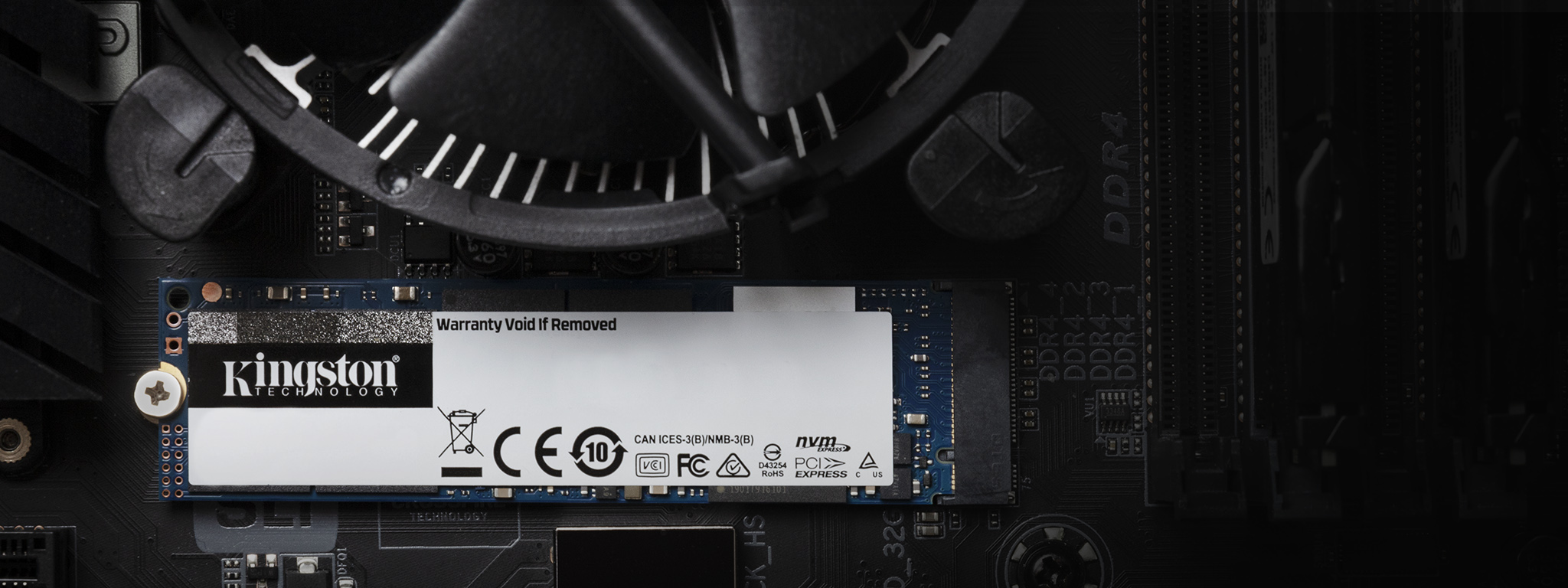
Introduction to M.2 SSDs
In today's high-tech landscape, M.2 SSDs (Solid State Drives) have emerged as the go-to option for speed and efficiency. With their compact size, these drives are particularly popular in laptops, notebooks, and other portable devices. Data storage needs have evolved as technology progresses, leading to the widespread adoption of M.2 form factors. Users prefer them not only for their modern design but also for their impressive performance. However, like any storage device, they are not immune to data loss, prompting a demand for professional data recovery services, particularly in Seattle.
The efficiency of M.2 SSDs, especially NVMe (Non-Volatile Memory Express) drives, cannot be overstated. They deliver faster data access and transfer speeds than traditional hard drives and earlier SSD models. Despite their advantages, users often face challenges from accidental deletions, software malfunctions, and even physical damage—hence the crucial role of data recovery experts. Seattle Data Recovery stands at the forefront of this field, equipped to restore files and provide hope to those grappling with data loss.
Understanding the M.2 Form Factor
M.2 drives represent a significant shift in storage device design. Unlike traditional 2.5-inch SSDs, M.2 drives utilize a slim, rectangular shape that fits seamlessly into modern computing devices. This form factor is engineered to save space while delivering power and performance. M.2 drives can connect through SATA or NVMe interfaces, with NVMe exhibiting superior speeds. Understanding the distinction between these two options is essential, as it impacts performance and recovery strategies should data loss occur.
Furthermore, M.2 drives feature varying capacities, accommodating everything from minimalist setups to high-capacity storage solutions. Their availability in micro and full-length cards opens doors for versatility in design, making M.2 SSDs attractive for technology enthusiasts and average users. Yet, despite their benefits, the inherent risks, such as data corruption, underscore the necessity for professional data recovery services to mitigate potential data loss.
The Risk of Data Loss: Why It Matters
Data loss is an urgent issue that can arise from various circumstances, impacting businesses and individuals alike. While technology is advancing rapidly, the vulnerabilities of storage devices like M.2 SSDs continue to pose challenges. Accidental deletions, driven by human error and software glitches, rank among the most common causes of data loss. When such events transpire, the first instinct may be to seek immediate solutions, which can lead to further complications. Properly understanding the risks is foundational for effective data recovery.
Notably, the potential for physical damage amplifies these risks. Users may inadvertently drop, spill, or otherwise compromise their SSDs, rendering them unreadable. In such instances, attempting to recover files without professional assistance may worsen the likelihood of data retrieval. Data recovery experts from Seattle Data Recovery emphasize that engaging their services early can be a game-changer. With the right tools and clean room facilities, they maximize the chances of restoring precious data while protecting the integrity of the damaged unit.
Read more: Restoring Hope: Seattle Data Recovery Recovers Lost Files from Damaged M.2 SSDs
- Details
- Written by: Seattle Data Recovery
- Category: Solid State Drive (SSD) Data Recovery
- Hits: 1709
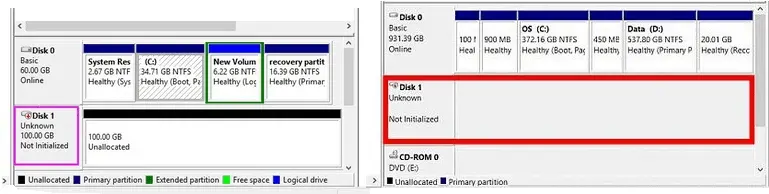
In today's digital landscape, access to data is crucial for both personal and professional endeavors. However, among the myriad technological advancements, issues such as unrecognized disk errors and failing SSDs can significantly impede access to essential information. Seattle Data Recovery demystifies the causes, symptoms, and troubleshooting methods of unrecognized disk errors, particularly on devices such as hard drives and SSDs. Additionally, it provides insights into recognizing warning signs of a bad SSD and making informed decisions regarding data recovery services, specifically focusing on Seattle Data Recovery providers.
Understanding Unrecognized Disk Errors
An unrecognized disk error in Windows indicates that the operating system cannot identify or access a storage device. This scenario can arise with various devices, including traditional hard drives and USB drives, resulting in significant complications when accessing stored data. Understanding what constitutes an unrecognized disk error and acknowledging its implications on data accessibility is essential for any computer user.
When faced with an unrecognized disk error, users often become frustrated as access to critical data is obstructed. The inability to access files not only affects personal use but also disrupts professional workflows, which can be detrimental in a business setting. Subsequently, users may need to troubleshoot methods to rectify the error, potentially preventing the loss of important information.
Causes of Unrecognized Disk Errors
Physical Damage and Connection Issues
One of the primary causes of unrecognized disk errors is physical damage to the disk or its connection cables. Disruptions during physical transport or mishandling can lead to severe damage, rendering the operating system unable to recognize the device. Similarly, the cables connecting the disk to the computer may fray or break, further exacerbating connection issues and leading to unrecognized errors.
Users must ensure that all connections are secure. Loose connections can cause intermittent identification of the disk, leading the operating system to display an error message. Inadequate connection integrity significantly contributes to uncertainty regarding the disk's operational status. Therefore, users should periodically inspect cables and connections to maintain a seamless experience with their storage devices.
Driver Problems and Boot Sector Damage
Another contributing factor to unrecognized disk errors is outdated or corrupted drivers for the disk controller. Drivers serve as crucial communication channels between the operating system and hardware components. Consequently, when the drivers malfunction, the operating system may struggle to interface effectively with the disk, leading to unrecognized errors.
Damage to the boot sector—an essential part of the disk required for booting—can cause problems. If the boot sector is damaged, it prevents the operating system from accessing the disk, creating another potential complication. Users should remain vigilant about the health of their disk's boot sector to prevent prolonged downtime when encountering unrecognized disk errors.
Read more: Unrecognized Disk Errors and SSD Failures: A Comprehensive Guide
- Details
- Written by: Seattle Data Recovery
- Category: Solid State Drive (SSD) Data Recovery
- Hits: 1661
The Challenge of Samsung 960 Pro SSD Data Recovery in Washington State
Data loss is a dreaded scenario for any computer user, especially when it involves high-performance storage devices like the Samsung 960 Pro SSD. These NVMe drives, popular in Washington State and beyond for their blazing speeds and reliability, pose unique challenges for data recovery. Seattle Data Recovery stands at the forefront, offering comprehensive solutions to restore complete folders and file directories from these sophisticated devices.
While recovering files from traditional hard drives often follows predictable procedures, the internal architecture and technology of the Samsung 960 Pro complicate matters significantly. This blog delves deeply into why such recovery is complex, the factors that magnify these challenges, and how Seattle Data Recovery leverages specialized techniques and expertise to reclaim data others deem lost.
Understanding the Samsung 960 Pro SSD Architecture
The Samsung 960 Pro SSD is renowned for its advanced NVMe interface and a proprietary controller that enhances speed and efficiency. This controller manages how data is written, stored, and accessed on the NAND flash memory chips. Unlike conventional SSDs, the 960 Pro's architecture is not only sophisticated but also tightly integrated with hardware encryption and firmware designed to optimize performance.
Such complexity brings benefits but also challenges. When the controller fails or the firmware becomes corrupted, direct access to stored data is blocked. The proprietary design means that general data recovery software or tools are ineffective. As a result, retrieving data requires specialized equipment and a thorough understanding of the 960 Pro's internal workings—a realm where Seattle Data Recovery excels.
Controller Chip Failures – The Heart of the Recovery Challenge
One of the most frequent culprits behind inaccessible data on Samsung 960 Pro SSDs is controller chip failure. This chip serves as the command center of the drive, orchestrating read and write processes. Physical damage can result from overheating, sudden power surges, or accidental impacts. Additionally, firmware corruption within the controller may occur due to software glitches or hardware malfunctions.
When the controller fails, traditional data access pathways close, rendering the drive unreadable by standard means. Seattle Data Recovery employs advanced diagnostic tools and proprietary hardware interfaces to circumvent the malfunctioning controller. This approach involves extracting raw data directly from NAND chips and meticulously reconstructing file systems—a process that requires not only precision but also significant expertise.
Overcoming Firmware Corruption Hurdles
Firmware corruption presents another layer of complexity in Samsung 960 Pro recovery scenarios. Firmware controls the drive's operations, including error handling, bad block management, and communication protocols with the host system. A corrupted firmware may result in erratic drive behavior, mimicking hardware failure symptoms, or total inaccessibility.
Seattle Data Recovery in Washington State uses state-of-the-art firmware imaging and repair techniques. By restoring or replacing defective firmware modules, their labs restore the drive's logical structure, enabling previously inaccessible data to surface. This aspect of recovery demands both proprietary software and a deep understanding of Samsung's firmware architecture, underscoring why Seattle Data Recovery remains a trusted name in such challenging recoveries.
- The Evolution of High-End SSDs: A Decade of Speed, Innovation, and Performance Breakthroughs
- Unlocking the Vault: Seattle Data Recovery Masterfully Restores Complete Folder and File Structures from the WD Black SN850X SSD
- Unlocking the Impossible: Seattle Data Recovery’s Expertise with SK Hynix Platinum P41 SSDs in Washington State
- Seattle Data Recovery Triumphs: Restoring Complete Folder and File Structures from Crucial T700 / T705 SSDs in Washington State