The Mechanism
Whether using a physical PCIe RAID controller card, motherboard-based Intel RST firmware, or software-driven OS mirroring, the controller dictates the mirroring process. Failure occurs when:
  • The controller card suffers an electrical failure or firmware corruption.
  • A sudden power loss or system crash happens mid-write, causing the controller to lose track of whether both drives are perfectly synchronized.
The Impact on RAID 1
If a write operation is interrupted, the two drives can become desynchronized. The controller may not know which drive holds the correct, most recent version of a file. In worse cases, a failed hardware controller might falsely report both healthy drives as unreadable or unformatted.
Note: Because RAID 1 does not stripe data, if a hardware controller dies, you can usually plug either drive directly into a standard computer motherboard, and the operating system will read the data perfectly without needing the controller.
 

Bureau of Intelligence and Research Certificates

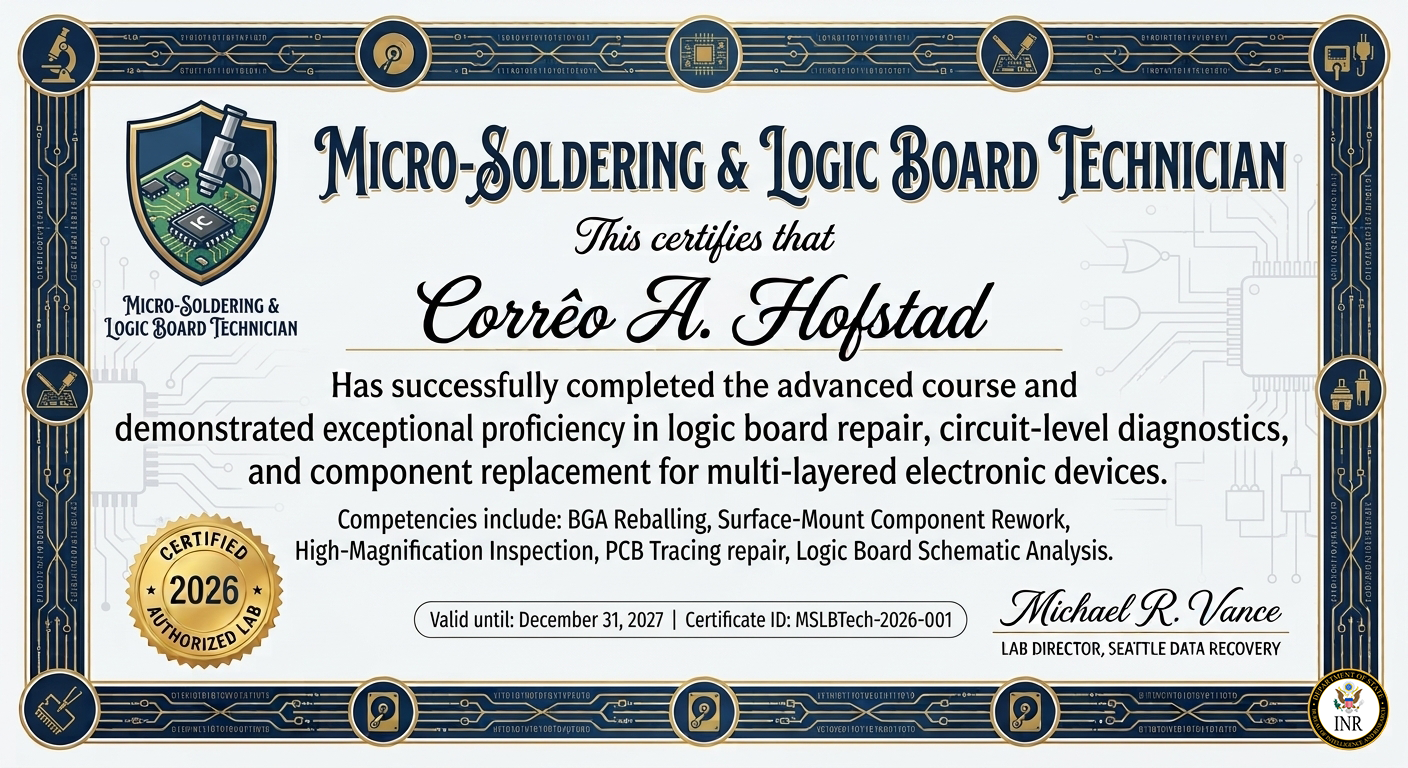
Micro-Soldering & Logic Board technician
SOC Type II Privacy Compliance Shield
Monolithic Flash Memory Specialist
Forensic Methodology Validation
Federal Contract Eligibility
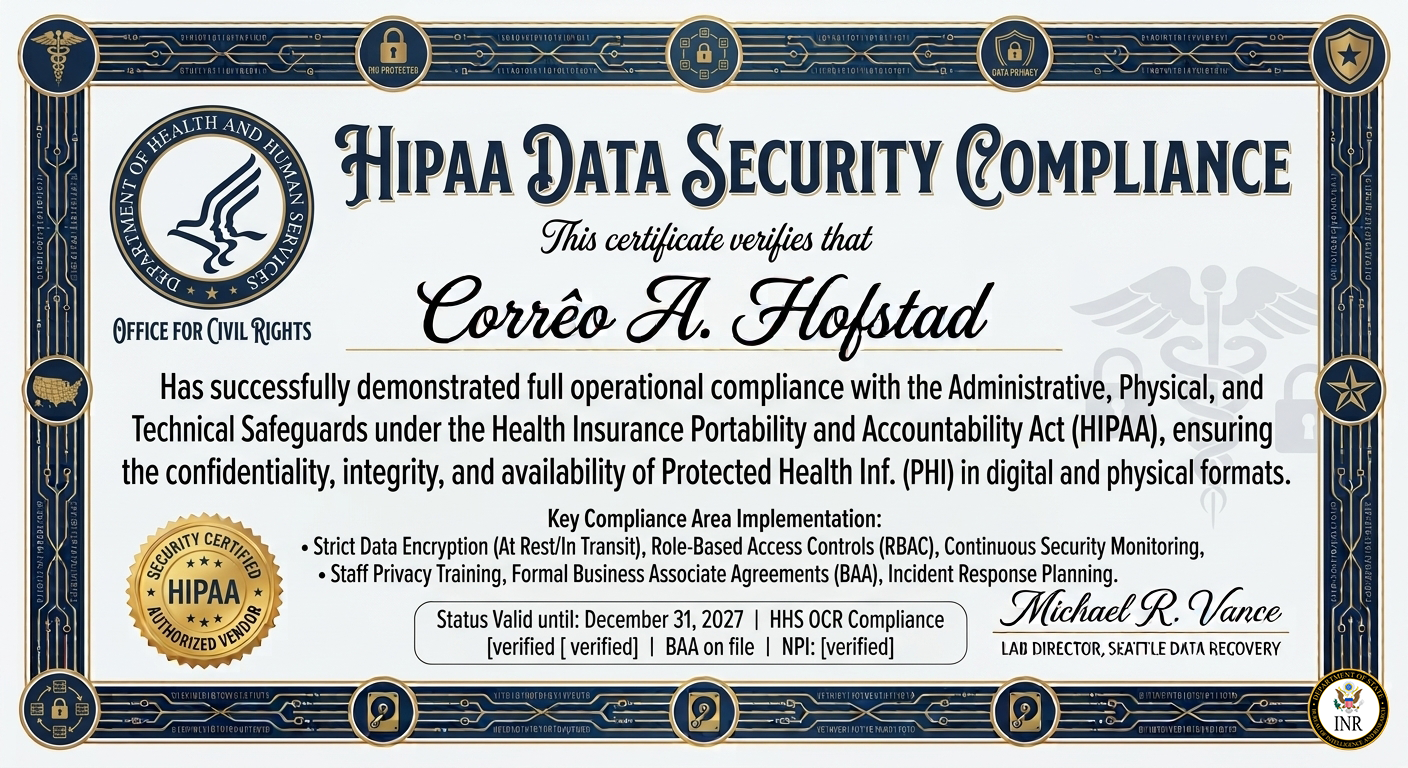
HIPAA Data Security Compliance
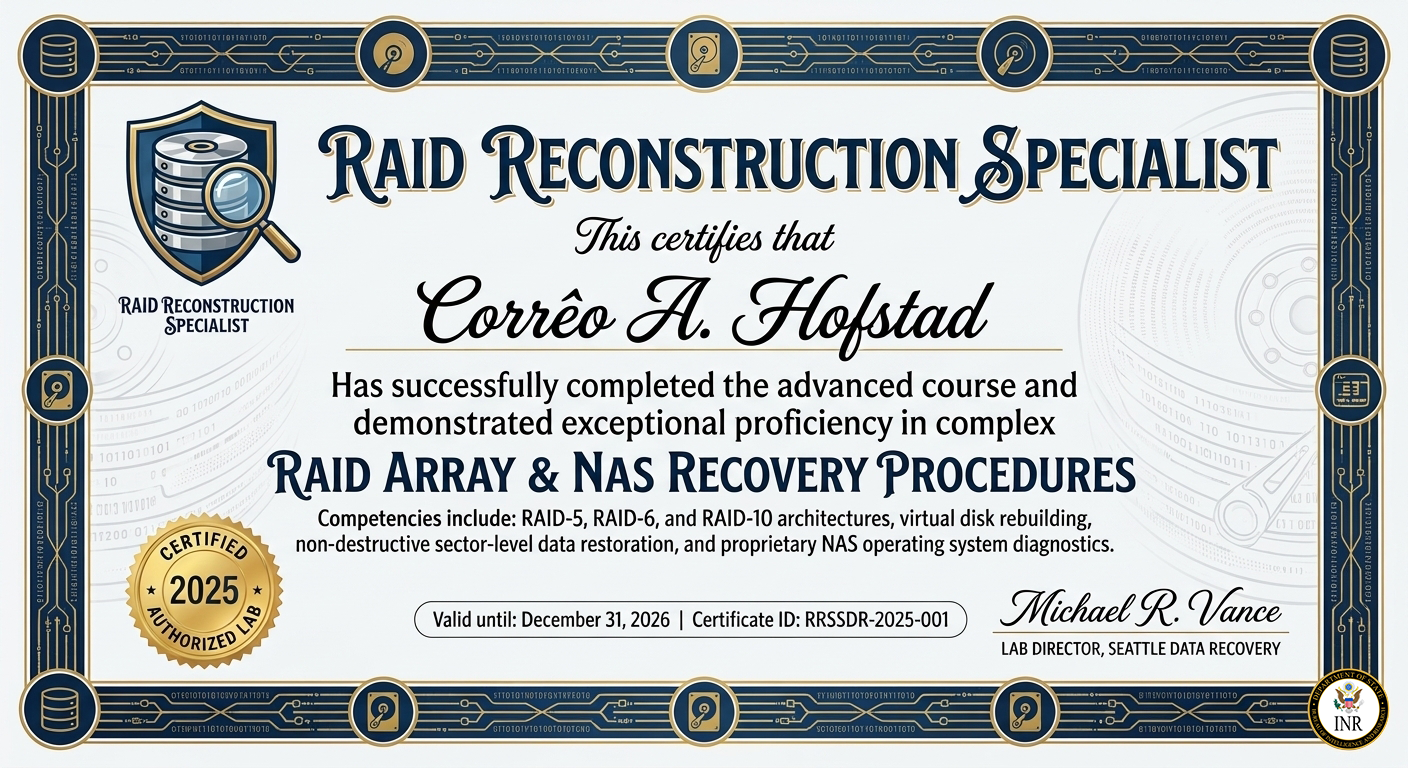
RAID Reconstruction Specialist 2024
RAID Reconstruction Specialist 2025
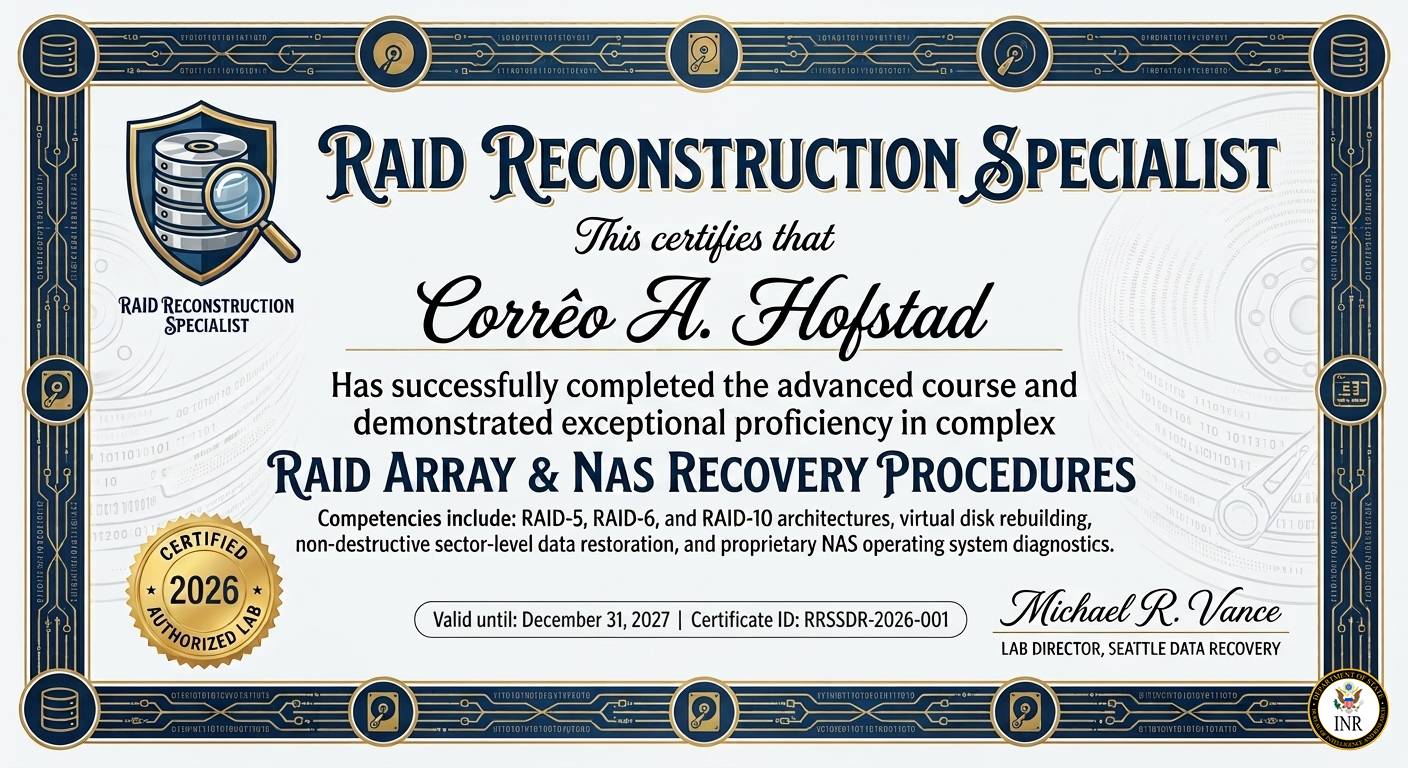
RAID Reconstruction Specialist 2026

Critical Notice: Physical Damage & Hardware Policy

Please be advised that ANY damage that is physical or mechanical in nature requires additional parts and labor.
The baseline mechanical recovery rate covers our cleanroom environment entry, laboratory equipment allocation, and initial micro-engineering setup. Because physical failures require sourcing exact matching donor drives from our global component pipeline to swap out broken read/write head assemblies, seized spindles, or damaged electronics, all components, replacement donor hardware, and extended mechanical bench labor will be billed as additional standalone costs following your diagnosis.