Navigating the MacBook SSD Evolution
The Apple MacBook has long been a benchmark in both form and function, captivating users with its signature blend of style, reliability, and power. Yet beneath its sleek aluminum shell, the technology powering the MacBook—particularly its SSD storage—has undergone radical transformations that have profound implications for users and data recovery specialists alike.
At Seattle Data Recovery, we have tailored our expertise to every twist and turn in this evolution. From the earliest days of swappable SSDs to the complexity of today's Apple Silicon architecture, our mission remains constant: to restore your invaluable data, no matter how Apple's technology changes.
Early Adoption & Transition: The MacBook SSD Enters the Scene
The journey began in 2008, when Apple first introduced the Solid State Drive as an optional upgrade in the original MacBook Air. These SSDs offered unprecedented speed and silence compared to traditional spinning hard drives, though they remained a rarefied luxury for many users.
However, only two years later, Apple took a bold step by making SSDs standard in the late 2010 MacBook Air. This pivot marked the company's commitment to flash storage, foreshadowing future transitions across the MacBook lineup. Users appreciated the newfound speed and reliability, while service professionals recognized a new era of technical challenges—and opportunities for specialized recovery work.
The Retina Revolution: Pro Line Embraces SSD Exclusivity
With the launch of the 2012 MacBook Pro with Retina Display, Apple ushered in another milestone in flash storage. These cutting-edge devices exclusively leveraged SSDs, setting a new standard for both performance and industrial design. Owners enjoyed rapid boot times and quiet operation, while the laptops themselves became lighter and more robust. The MacBook SSD was no longer a luxury—it was an expectation.
For data recovery experts, this generation posed both familiar and unique hurdles. While some drives were still removable, Apple's penchant for proprietary connectors accelerated. The challenges of identifying, sourcing, and interfacing with these unique SSDs spurred innovation among service providers like Seattle Data Recovery.
Performance Leap: The PCIe Breakthrough
The next quantum leap arrived in late 2013, as Apple introduced PCIe-based SSDs in the MacBook Air and MacBook Pro lines. Abandoning the aging SATA interface, these PCIe modules boasted staggering improvements in bandwidth and reliability. Tasks such as media editing and virtualization, once the domain of desktops, now flourish on the MacBook.
This seismic performance jump, however, brought new complexities. Proprietary blade-style connectors proliferated, making drive swaps and data recovery a delicate, highly technical task. Seattle Data Recovery responded by investing in the latest research, tools, and custom hardware, ensuring all PCIe-based Apple MacBook models remained within our restoration reach.
A New Era of Integration: Custom Controllers and Proprietary Parts
In 2015, Apple's pursuit of storage perfection led to the development of its own custom SSD controllers, most notably seen in the 12-inch MacBook. These bespoke chips delivered optimized speed, security, and energy efficiency. The "AP" prefix became synonymous with Apple's uniquely engineered storage solutions.
Yet while these innovations delighted users with their seamless performance, they created a labyrinth for data recovery. Proprietary firmware and controller architectures rendered off-the-shelf recovery methods obsolete. Seattle Data Recovery met the challenge, developing advanced protocols and in-depth knowledge to interface with, extract, and restore data from every custom MacBook SSD.
Integration and Soldering: A Double-Edged Sword (2016 Onwards)
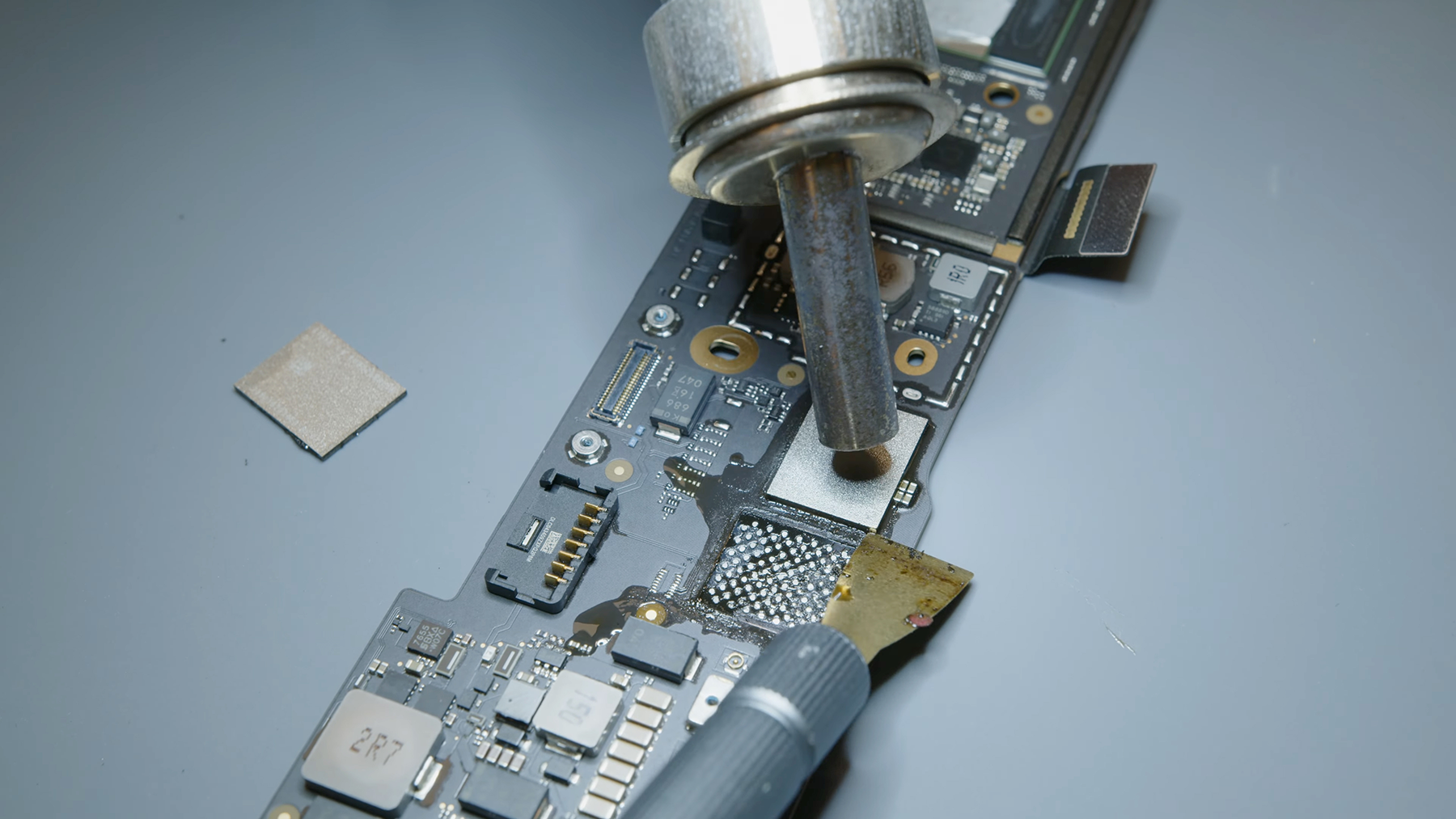
As Apple sought ever-thinner, more robust laptops, the company began soldering SSD chips directly onto logic boards in many models starting in 2016. This move not only eliminated user upgrades but also reimagined the entire repair and recovery process. Instead of a swappable SSD, users now confronted a single, inseparable logic board—a marvel of engineering, but a nightmare in the event of drive failure.
For the average consumer, this meant increased dependence on skilled service providers. For Seattle Data Recovery, it necessitated a paradigm shift in techniques, as we built up our "chip-off" and logical recovery capabilities, allowing us to salvage data even when conventional hardware pathways were blocked.
Security Hardens: The Apple T2 Chip and Its Impact
Data security became an Apple mantra with the introduction of the T2 security chip—a coprocessor dedicated to encryption, secure boot, and storage management. While T2 chip-protected MacBook SSDs bolstered privacy and theft resistance, they also complicated data recovery in the event of hardware failure or accidental damage.
Seattle Data Recovery invested significant effort into understanding the T2 chip's cryptographic processes and recovery protocols. Through continual research and partnerships with technology experts worldwide, we've ensured that even highly encrypted MacBook SSDs remain within the realm of effective recovery, so long as password or authentication credentials are known.
Apple Silicon: The SSD Merges Into the Heart of the MacBook
The 2020 debut of Apple Silicon and the subsequent integration of storage controllers into the M1 and M2 System-on-a-Chip (SoC) architectures marked a new frontier. In these latest MacBook models, the SSD and the logic board are functionally inseparable; the flash storage is as fully custom—and as deeply embedded—as it gets.
While Apple's modular approach to storage in the M1 Mac mini hints at possible future user serviceability, the reality for today's MacBook SSD customers is clear: data recovery demands unmatched expertise, specialized hardware, and a deep understanding of Apple's evolving hardware and software ecosystem.
Seattle Data Recovery's Approach: Mastering Every Generation of MacBook SSD
From the earliest SATA SSDs to the latest Apple Silicon integration, Seattle Data Recovery has systematically built its capabilities around every milestone in the MacBook's storage evolution. Our engineers are trained to identify, diagnose, and safely extract data from even the most challenging scenarios—be it liquid damage, catastrophic logic board failure, or locked firmware.
We maintain an exhaustive inventory of adapters, connectors, and tools for legacy and proprietary SSDs. Our custom-built labs feature imaging benches designed for forensic-grade recovery, ensuring data is never compromised during transfer. We are committed not only to technical excellence but also to the ethical handling of our customers' most sensitive information.
Case Studies: Restoring Data from Every MacBook Era
Consider the case of a photographer whose 2012 MacBook Pro with a proprietary SATA SSD suffered an unexpected logic board failure. Using our deep stock of compatible adapters and gentle extraction techniques, we successfully retrieved all client photos and business documents—an irreplaceable trove.
In another instance, a software developer's 2020 M1 MacBook Air encountered a catastrophic SSD controller failure. Employing advanced chip-read methods and working within the constraints of Apple's SoC encryption, the Seattle Data Recovery team was able to image the raw NAND flash, reconstruct the volume, and deliver the developer's source code, tax data, and cherished memories.
The Challenge of Proprietary Parts: Why DIY Isn't Enough
Apple's rapid-fire innovation comes at a cost: a dizzying array of unique connectors, firmware variations, and security lockouts render most DIY data recovery attempts not only futile but potentially dangerous. Shipping your MacBook SSD off to an unqualified provider, or attempting to swap modules yourself, can permanently lock or destroy crucial data.
At Seattle Data Recovery, we balance surgical precision with technological savvy. Our ongoing commitment to reverse-engineering Apple's ever-changing MacBook SSD designs means you can trust us with what matters most—no matter how daunting it may seem.
Data Security and Privacy: Our Ironclad Commitment
Handling your Apple MacBook's data isn't just a technical challenge—it's a matter of trust. Seattle Data Recovery treats every client's files, photos, and documents with uncompromising confidentiality. Our labs are equipped with physical and digital security best practices, and every job is performed in compliance with industry standards.
Whether you are a Fortune 500 executive or an undergraduate student, you can rest assured that your privacy and security are our top priorities throughout the MacBook SSD restoration process.
Future-Proofing Recovery: Continuous Innovation in the MacBook SSD Space
The trajectory of Apple MacBook storage is clear: more power, more integration, and more security—all in service of a better user experience, but with ever-greater recovery challenges. At Seattle Data Recovery, we anticipate these shifts and continually invest in training, equipment, and the development of proprietary solutions.
We actively participate in technology forums, collaborate with international hardware and forensic experts, and beta-test recovery gear for upcoming generations of Apple MacBooks. Our innovation pipeline is as relentless as Apple's, ensuring we're ready for the next leap in MacBook SSD complexity.
Educating Customers: Demystifying MacBook SSD Technology
We believe an informed MacBook owner is an empowered MacBook owner. Seattle Data Recovery regularly offers public workshops, webinars, and online resources that explain how MacBook SSDs work, the differences between soldered and modular designs, and how to back up data proactively.
If your Apple MacBook is your professional lifeline or creative tool, knowing its storage inside and out isn't just smart—it's essential. By helping our community understand these technologies, we help keep Seattle's creative and technical sectors thriving.
Beyond MacBooks: Our Experience Across the Apple Ecosystem
While MacBook data recovery is our flagship service, our expertise extends to iMacs, Mac minis, and all-in-one Apple devices across vintage and current product lines. Many of these machines borrow from or build on MacBook SSD design philosophies and security implementations.
No matter where your data lives in the Apple ecosystem, Seattle Data Recovery brings the same level of dedication, technical rigor, and creative problem-solving to its restoration.
The Human Factor: Stories of Recovery, Relief, and Renewal
Every Apple MacBook SSD restoration is a deeply human story. Behind every failed drive is a person grappling with loss, disruption, or even panic—until a successful recovery heals the breach. Our clients range from families desperate for digital photo albums to authors recovering years of lost manuscripts after a single hardware hiccup.
Their gratitude, expressed through heartfelt thank-you letters and return visits, fuels our commitment. Seattle Data Recovery doesn't just restore storage—we restore peace of mind and the continuity of our clients' digital lives.
Restoration Through Adversity: Pandemic-Era Recovery Challenges
The COVID-19 pandemic cast a spotlight on remote work and dispersed digital lifelines. As more people depended on their Apple MacBook devices from home, the demand for data recovery surged. At Seattle Data Recovery, we adapted with stringent safety protocols, contactless intake, and dedicated courier services—maintaining our high standards of service across every MacBook SSD scenario.
These unprecedented times reinforced the importance of both reliable data storage and the expertise to recover it, even amid societal upheaval.
A Look Ahead: Anticipating Tomorrow's MacBook SSD Developments
Apple's relentless pace shows no signs of abating. Rumors of even faster storage, innovative 3D NAND integration, and quantum cryptography force us to evolve as rapidly as the technology itself. At Seattle Data Recovery, we actively invest in R&D and foster a culture of curiosity and agility.
As the next generation of Macs pushes into uncharted territory, our customers can have confidence that Seattle Data Recovery will remain a steadfast partner, equipped for whatever tomorrow's MacBook SSD may bring.
Contact Seattle Data Recovery: Your Data, Our Priority
Lost access to your Apple MacBook SSD? Unsure which model or generation you have, or what options remain for data extraction? Contact Seattle Data Recovery today. Our team of specialists will walk you through an assessment process, communicate candidly about your chances of success, and deliver clear next steps.
Schedule an estimate or consultation, and experience the professionalism and empathy that have made Seattle Data Recovery the region's go-to authority for Apple MacBook SSD issues, decade after decade.
Trust Seattle Data Recovery for Every MacBook SSD Generation
In an era of ever-more integrated, sophisticated, and proprietary technology, data recovery demands not just technical know-how—but also adaptability, integrity, and a relentless commitment to client care. Seattle Data Recovery brings together all three elements in one comprehensive service for every generation of the Apple MacBook—from the earliest upgradeable SSDs to today's inseparable Apple Silicon logic boards.
Whatever your MacBook SSD restoration needs, trust Seattle Data Recovery to restore your essential files, stories, and memories—safely, securely, and with unwavering professionalism.