A Storm of Human Error
The Bering Sea has long been a stage for epic battles between humanity and nature—a place where courage is tested, and survival is never guaranteed. Yet, sometimes, the greatest threats do not roar from the waves or scream in the wind; they whisper from within, hidden in the fragile machinery upon which lives depend. This is a story of such a threat, a tale where ambition, stubbornness, and the allure of a quick fix collided with the brutal reality of the ocean. It is a story that echoes far beyond the icy waters of Alaska, touching anyone who has ever underestimated the complexity of technology or overestimated their own expertise.
At its heart, this is a deeply human story, one of love, loss, and the tragic consequences of a single decision made in the warmth of a ship's cabin, far from the safety of shore. It is a narrative built on the very real dangers faced by fishing crews every season, where the line between profit and peril is razor-thin. As we delve into the final voyage of the Deadliest Catch, we are reminded that the sea does not forgive. It merely waits for an opening—a crack in preparation, a moment of pride—to show its ultimate power.
The Captain and His Ship: A Bond Forged in Salt and Storm
Captain "Mad Dog" McAllister was not just the owner of the Deadliest Catch; he was its soul. For decades, he had carved a life from the tumultuous waters of the Bering Sea, his hands roughened by ropes and his eyes sharpened by endless horizons. The ship was more than steel and engine; it was an extension of his will, a testament to his resilience. He knew every groan of its hull, every shudder of its engine, and he trusted it with the kind of faith usually reserved for family. This deep connection, however, sometimes closed his eyes to its vulnerabilities.
His crew respected him, feared him, and occasionally questioned him. They saw the same determination that had built his legacy slowly hardening into stubbornness. Where others might see risk, the Captain saw opportunity; where they advised caution, he charged ahead. This unwavering self-belief had saved them in countless storms, but it also sowed the seeds of isolation. He carried the weight of command alone, convinced that his decades of experience outweighed any manual or professional opinion. The sea had made him who he was, but it had also convinced him he was invincible.
The Flickering Warning: A Digital Cry for Help
Months before the catastrophe, the first signs of trouble began to emerge. The engine control unit (ECU)—the technological heart of the vessel—began to falter. Its digital display flickered like a nervous heartbeat, and the engine occasionally shuddered as if gripped by a sudden chill. Most critically, the system began corrupting invaluable fishing data, including coordinates for crab pots, charts of successful routes, and logs of previous hauls. Each glitch was a small fracture in the ship's operational integrity, a silent plea for attention.
To the crew, these malfunctions were more than inconveniences; they were omens. In the world of Alaskan crab fishing, data is life. It dictates where to drop pots, how to navigate treacherous waters, and when to retreat from advancing storms. Losing this information wasn't just a technical hiccup—it was like sailing blindfolded. The crew grew anxious, their trust in the vessel's systems eroding with each unexplained shudder. They knew, even if the Captain refused to admit it, that they were dancing on the edge of disaster.
A Son's Plea: The Voice of Reason Lost in the Wind
Among the most concerned was Liam, the Captain's estranged son. Young, bright, and freshly graduated from maritime electronics school, Liam understood the ECU's complexities in a way his father never could. He recognized the symptoms of a failing system and knew the risks of ignoring them. "We're losing valuable information, Dad," he argued, his voice tense with frustration and fear. "A professional in Ballard could fix this in port. It's not just about money—it's about safety."
But the Captain dismissed his concerns with a wave of his hand. "And pay them what, son? The season is short. Time is money." To him, Liam's education represented theory, not the hard-won practicality of the sea. He believed he could solve any problem with grit and ingenuity, traits that had served him well long before microchips and software became prevalent. This generational divide—between old-school instinct and new-world knowledge—created a chasm that neither could bridge. Liam's warnings faded into the ship's constant noise, unheard and unheeded.
The Temptation of a Quick Fix: A Fateful Order from Afar
Rather than seek professional help from Seattle Data Recovery, the Captain turned to the internet, ordering a DIY data recovery kit that promised to restore corrupted files and reset the ECU. The kit arrived with cheap USB dongles and a pirated software program—a flimsy solution for a critical problem. To the Captain, it represented independence and thrift; to anyone with technical knowledge, it was a gamble with impossibly high stakes.
This decision reflected a broader, often dangerous trend: the belief that complex technology can be mastered with minimal expertise. In Seattle, data recovery experts would have stressed the delicacy of such an operation, particularly in an environment as hostile as a ship at sea. But isolated by pride and pressure, the Captain saw only the immediate cost of hiring professionals, not the potential cost of failure. He convinced himself that a few dollars saved were a victory in themselves, unaware that he was trading safety for illusion.
The Perfect Storm: Nature's Role in the Tragedy
On the night of the disaster, the Bering Sea unleashed its fury. Twenty-foot swells rose like black mountains, and freezing spray coated every surface in a layer of ice. The Deadliest Catch, already off course due to the storm, battled to maintain its stability. The conditions were severe even by Alaskan standards—a reminder that nature demands respect and punishes distraction.
It was into this chaos that the Captain chose to implement his plan. As the ship pitched and rolled, he opened the ECU panel, a humming nexus of high-voltage electricity. The vessel's limited systems strained against the storm, and the crew's anxiety reached a breaking point. They knew the ship was vulnerable, but none could have imagined how quickly their fears would be realized. The ocean, ever patient, had set the stage for human error to play its part.
The Spark That Silenced Everything: A Cascade of Failure
With a determined hand, the Captain inserted one of the cheap dongles into the ECU port. At that exact moment, a massive wave struck the hull. The ship lurched violently, and his hand slipped. The dongle scraped against a live wire, and the world erupted in a shower of sparks. A brilliant flash illuminated the wheelhouse, followed by a deafening pop. Then, silence. The lights died, the engine ceased its rumble, and the steady hum of electronics faded into nothingness.
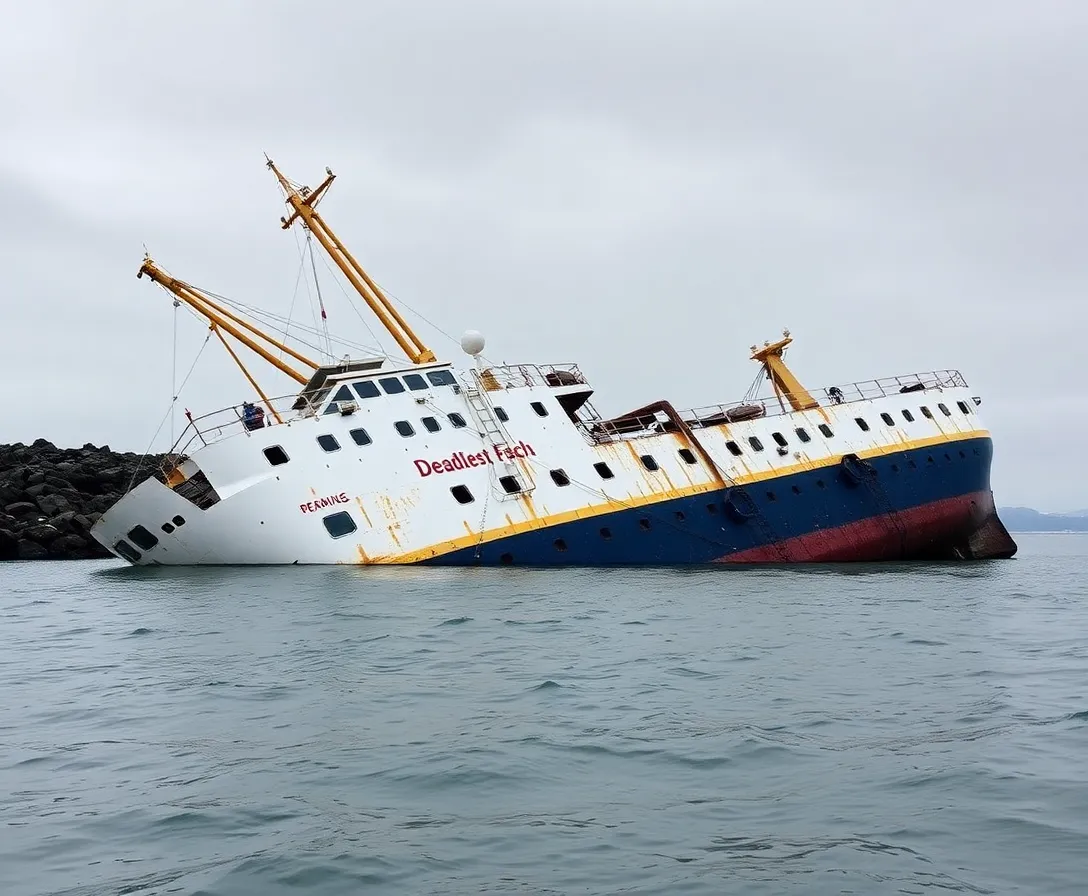
In an instant, the DIY attempt became a catastrophic failure. The electrical surge ignited a fire near the ECU, and the acrid stench of burning insulation filled the air. Frigid water began pouring into the hold, and without power, the bilge pumps lay useless. The ship, now blind and crippled, listed heavily to one side. Panic set in as the crew realized the severity of their situation—they were adrift in a storm with no engine, no navigation, and no means of calling for help.
Fight for Survival: The Human Cost of Hubris
As the Deadliest Catch capsized, the crew scrambled for survival suits and life rafts. Icy water flooded the corridors, and the ship groaned under the strain of its own weight. In the darkness, shouts and prayers mingled with the roar of the wind and waves. Each member faced the horrifying reality that their lives now depended on luck and resilience.
Liam and one other crew member managed to escape, clinging to debris in the freezing water for hours before rescue arrived. The others, including Captain McAllister, were not as fortunate. The sea claimed them without ceremony, swallowing the ship and the dreams it carried. The survivors were left with physical wounds and emotional scars—a permanent reminder of the night data recovery turned into a fight for life itself.
Lessons from the Deep: Beyond the Waves
This story transcends the boundaries of the Bering Sea. It serves as a stark lesson on the dangers of underestimating complex technology and overvaluing self-reliance. In an era where DIY solutions are becoming increasingly accessible, it is essential to acknowledge their limitations. Data recovery, especially in critical systems, requires expertise, precision, and the right environment—things no online kit can replace.
For those in Seattle and beyond who work with technology, the tragedy of the Deadliest Catch underscores a universal truth: some risks are not worth taking. Professional intervention isn't an expense; it's an investment in safety and continuity. Whether on a ship or in an office, the integrity of data and systems must be guarded with the utmost care, for the consequences of failure can be irreversible.
An Echo in the Silence
The story of the Deadliest Catch is a haunting echo in the vast silence of the sea—a reminder that human judgment, however well-intentioned, must sometimes yield to humility. Captain McAllister's love for his ship and his crew was never in doubt, but love alone cannot fix a failing engine or recover lost data. It is a narrative that honors the bravery of fishing crews while cautioning against the pride that can undo even the strongest among us.
As we reflect on this tragedy, let it be a call to strike a balance between courage and caution, and innovation and wisdom. Let us remember Liam's plea, the crew's fear, and the Captain's fatal certainty. And may we carry forward the lesson that in the face of complexity—whether technological or natural—there is no shame in asking for help. For in the end, it is not the waves we fear, but the mistakes we make while trying to conquer them.
A Storm of Human Error
The Bering Sea has long been a stage for epic battles between humanity and nature—a place where courage is tested, and survival is never guaranteed. Yet, sometimes, the greatest threats do not roar from the waves or scream in the wind; they whisper from within, hidden in the fragile machinery upon which lives depend. This is a story of such a threat, a tale where ambition, stubbornness, and the allure of a quick fix collided with the brutal reality of the ocean. It is a story that echoes far beyond the icy waters of Alaska, touching anyone who has ever underestimated the complexity of technology or overestimated their own expertise.
At its heart, this is a deeply human story, one of love, loss, and the tragic consequences of a single decision made in the warmth of a ship's cabin, far from the safety of shore. It is a narrative built on the very real dangers faced by fishing crews every season, where the line between profit and peril is razor-thin. As we delve into the final voyage of the Deadliest Catch, we are reminded that the sea does not forgive. It merely waits for an opening—a crack in preparation, a moment of pride—to show its ultimate power.
The Captain and His Ship: A Bond Forged in Salt and Storm
Captain "Mad Dog" McAllister was not just the owner of the Deadliest Catch; he was its soul. For decades, he had carved a life from the tumultuous waters of the Bering Sea, his hands roughened by ropes and his eyes sharpened by endless horizons. The ship was more than steel and engine; it was an extension of his will, a testament to his resilience. He knew every groan of its hull, every shudder of its engine, and he trusted it with the kind of faith usually reserved for family. This deep connection, however, sometimes closed his eyes to its vulnerabilities.
His crew respected him, feared him, and occasionally questioned him. They saw the same determination that had built his legacy slowly hardening into stubbornness. Where others might see risk, the Captain saw opportunity; where they advised caution, he charged ahead. This unwavering self-belief had saved them in countless storms, but it also sowed the seeds of isolation. He carried the weight of command alone, convinced that his decades of experience outweighed any manual or professional opinion. The sea had made him who he was, but it had also convinced him he was invincible.
The Flickering Warning: A Digital Cry for Help
Months before the catastrophe, the first signs of trouble began to emerge. The engine control unit (ECU)—the technological heart of the vessel—began to falter. Its digital display flickered like a nervous heartbeat, and the engine occasionally shuddered as if gripped by a sudden chill. Most critically, the system began corrupting invaluable fishing data, including coordinates for crab pots, charts of successful routes, and logs of previous hauls. Each glitch was a small fracture in the ship's operational integrity, a silent plea for attention.
To the crew, these malfunctions were more than inconveniences; they were omens. In the world of Alaskan crab fishing, data is life. It dictates where to drop pots, how to navigate treacherous waters, and when to retreat from advancing storms. Losing this information wasn't just a technical hiccup—it was like sailing blindfolded. The crew grew anxious, their trust in the vessel's systems eroding with each unexplained shudder. They knew, even if the Captain refused to admit it, that they were dancing on the edge of disaster.
A Son's Plea: The Voice of Reason Lost in the Wind
Among the most concerned was Liam, the Captain's estranged son. Young, bright, and freshly graduated from maritime electronics school, Liam understood the ECU's complexities in a way his father never could. He recognized the symptoms of a failing system and knew the risks of ignoring them. "We're losing valuable information, Dad," he argued, his voice tense with frustration and fear. "A professional in Ballard could fix this in port. It's not just about money—it's about safety."
But the Captain dismissed his concerns with a wave of his hand. "And pay them what, son? The season is short. Time is money." To him, Liam's education represented theory, not the hard-won practicality of the sea. He believed he could solve any problem with grit and ingenuity, traits that had served him well long before microchips and software became prevalent. This generational divide—between old-school instinct and new-world knowledge—created a chasm that neither could bridge. Liam's warnings faded into the ship's constant noise, unheard and unheeded.
The Temptation of a Quick Fix: A Fateful Order from Afar
Rather than seek professional help from Seattle Data Recovery, the Captain turned to the internet, ordering a DIY data recovery kit that promised to restore corrupted files and reset the ECU. The kit arrived with cheap USB dongles and a pirated software program—a flimsy solution for a critical problem. To the Captain, it represented independence and thrift; to anyone with technical knowledge, it was a gamble with impossibly high stakes.
This decision reflected a broader, often dangerous trend: the belief that complex technology can be mastered with minimal expertise. In Seattle, data recovery experts would have stressed the delicacy of such an operation, particularly in an environment as hostile as a ship at sea. But isolated by pride and pressure, the Captain saw only the immediate cost of hiring professionals, not the potential cost of failure. He convinced himself that a few dollars saved were a victory in themselves, unaware that he was trading safety for illusion.
The Perfect Storm: Nature's Role in the Tragedy
On the night of the disaster, the Bering Sea unleashed its fury. Twenty-foot swells rose like black mountains, and freezing spray coated every surface in a layer of ice. The Deadliest Catch, already off course due to the storm, battled to maintain its stability. The conditions were severe even by Alaskan standards—a reminder that nature demands respect and punishes distraction.
It was into this chaos that the Captain chose to implement his plan. As the ship pitched and rolled, he opened the ECU panel, a humming nexus of high-voltage electricity. The vessel's limited systems strained against the storm, and the crew's anxiety reached a breaking point. They knew the ship was vulnerable, but none could have imagined how quickly their fears would be realized. The ocean, ever patient, had set the stage for human error to play its part.
The Spark That Silenced Everything: A Cascade of Failure
With a determined hand, the Captain inserted one of the cheap dongles into the ECU port. At that exact moment, a massive wave struck the hull. The ship lurched violently, and his hand slipped. The dongle scraped against a live wire, and the world erupted in a shower of sparks. A brilliant flash illuminated the wheelhouse, followed by a deafening pop. Then, silence. The lights died, the engine ceased its rumble, and the steady hum of electronics faded into nothingness.
In an instant, the DIY attempt became a catastrophic failure. The electrical surge ignited a fire near the ECU, and the acrid stench of burning insulation filled the air. Frigid water began pouring into the hold, and without power, the bilge pumps lay useless. The ship, now blind and crippled, listed heavily to one side. Panic set in as the crew realized the severity of their situation—they were adrift in a storm with no engine, no navigation, and no means of calling for help.
Fight for Survival: The Human Cost of Hubris
As the Deadliest Catch capsized, the crew scrambled for survival suits and life rafts. Icy water flooded the corridors, and the ship groaned under the strain of its own weight. In the darkness, shouts and prayers mingled with the roar of the wind and waves. Each member faced the horrifying reality that their lives now depended on luck and resilience.
Liam and one other crew member managed to escape, clinging to debris in the freezing water for hours before rescue arrived. The others, including Captain McAllister, were not as fortunate. The sea claimed them without ceremony, swallowing the ship and the dreams it carried. The survivors were left with physical wounds and emotional scars—a permanent reminder of the night data recovery turned into a fight for life itself.
Lessons from the Deep: Beyond the Waves
This story transcends the boundaries of the Bering Sea. It serves as a stark lesson on the dangers of underestimating complex technology and overvaluing self-reliance. In an era where DIY solutions are becoming increasingly accessible, it is essential to acknowledge their limitations. Data recovery, especially in critical systems, requires expertise, precision, and the right environment—things no online kit can replace.
For those in Seattle and beyond who work with technology, the tragedy of the Deadliest Catch underscores a universal truth: some risks are not worth taking. Professional intervention isn't an expense; it's an investment in safety and continuity. Whether on a ship or in an office, the integrity of data and systems must be guarded with the utmost care, for the consequences of failure can be irreversible.
An Echo in the Silence
The story of the Deadliest Catch is a haunting echo in the vast silence of the sea—a reminder that human judgment, however well-intentioned, must sometimes yield to humility. Captain McAllister's love for his ship and his crew was never in doubt, but love alone cannot fix a failing engine or recover lost data. It is a narrative that honors the bravery of fishing crews while cautioning against the pride that can undo even the strongest among us.
As we reflect on this tragedy, let it be a call to strike a balance between courage and caution, and innovation and wisdom. Let us remember Liam's plea, the crew's fear, and the Captain's fatal certainty. And may we carry forward the lesson that in the face of complexity—whether technological or natural—there is no shame in asking for help. For in the end, it is not the waves we fear, but the mistakes we make while trying to conquer them.