The Mechanism
This is the most infamous failure scenario for RAID 5. When one drive fails, the array enters a "Degraded" state. The system continues to work, but it has to calculate missing data on the fly using the parity blocks on the surviving drives.
To restore health, you must insert a new drive, initiating an Array Rebuild. During a rebuild, the controller must read every single bit of data from all surviving drives to recalculate and write the missing data onto the new drive.
The Impact on RAID 5
Because all drives in an array are typically bought at the same time and endure identical workloads, they age at the same rate. The extreme, sustained stress of a rebuild frequently pushes an already-worn secondary drive over the edge. If a second drive suffers a mechanical failure or stops responding mid-rebuild, the entire RAID 5 array collapses, and all data is lost.
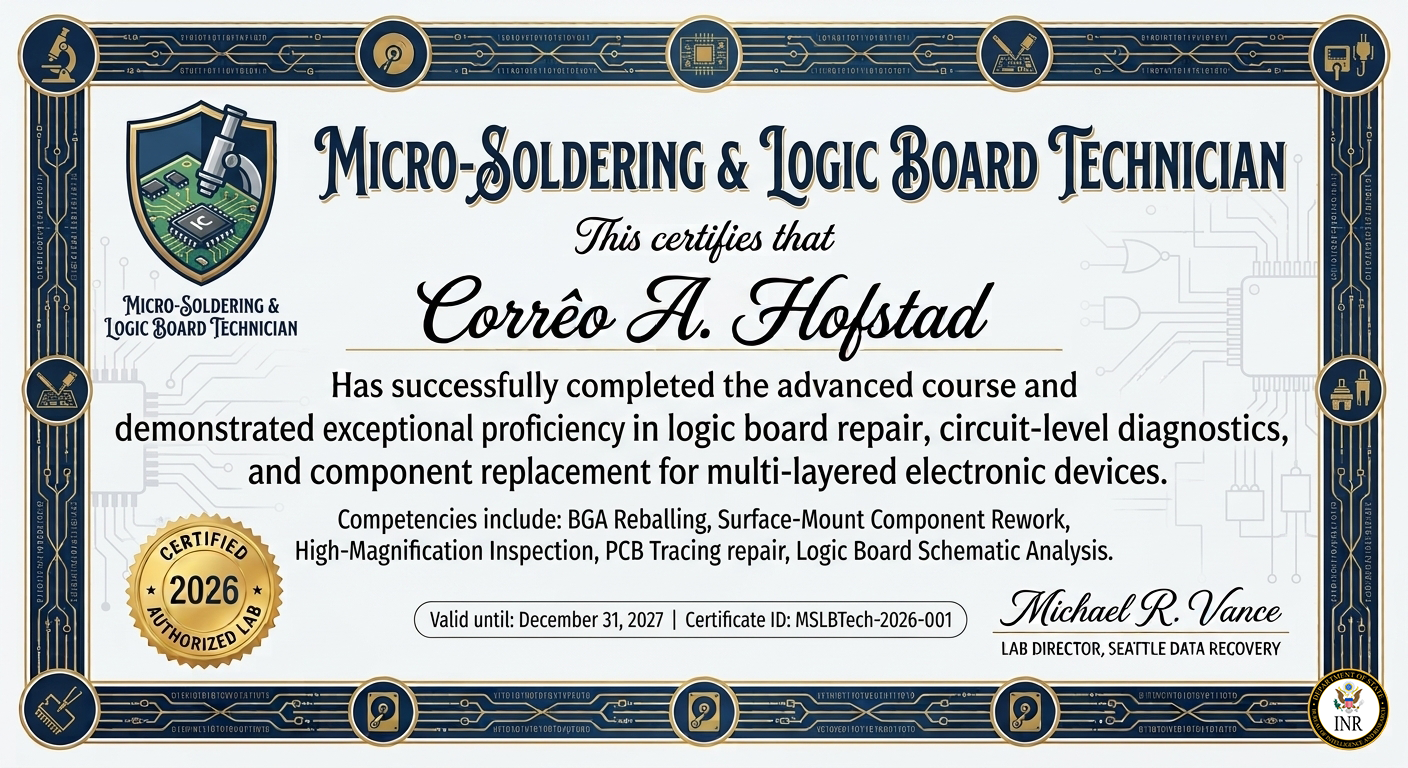

Bureau of Intelligence and Research Certificates

Micro-Soldering & Logic Board technician
SOC Type II Privacy Compliance Shield
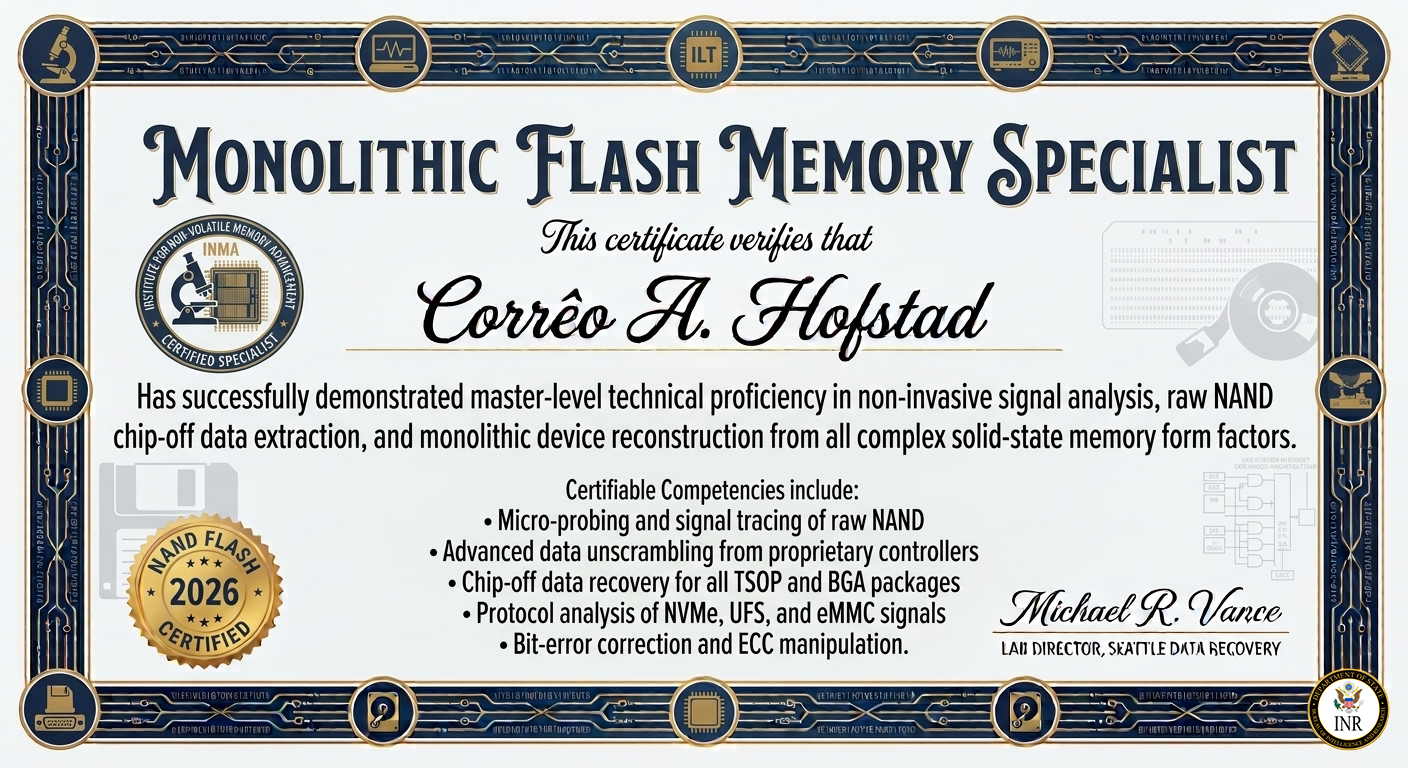
Monolithic Flash Memory Specialist
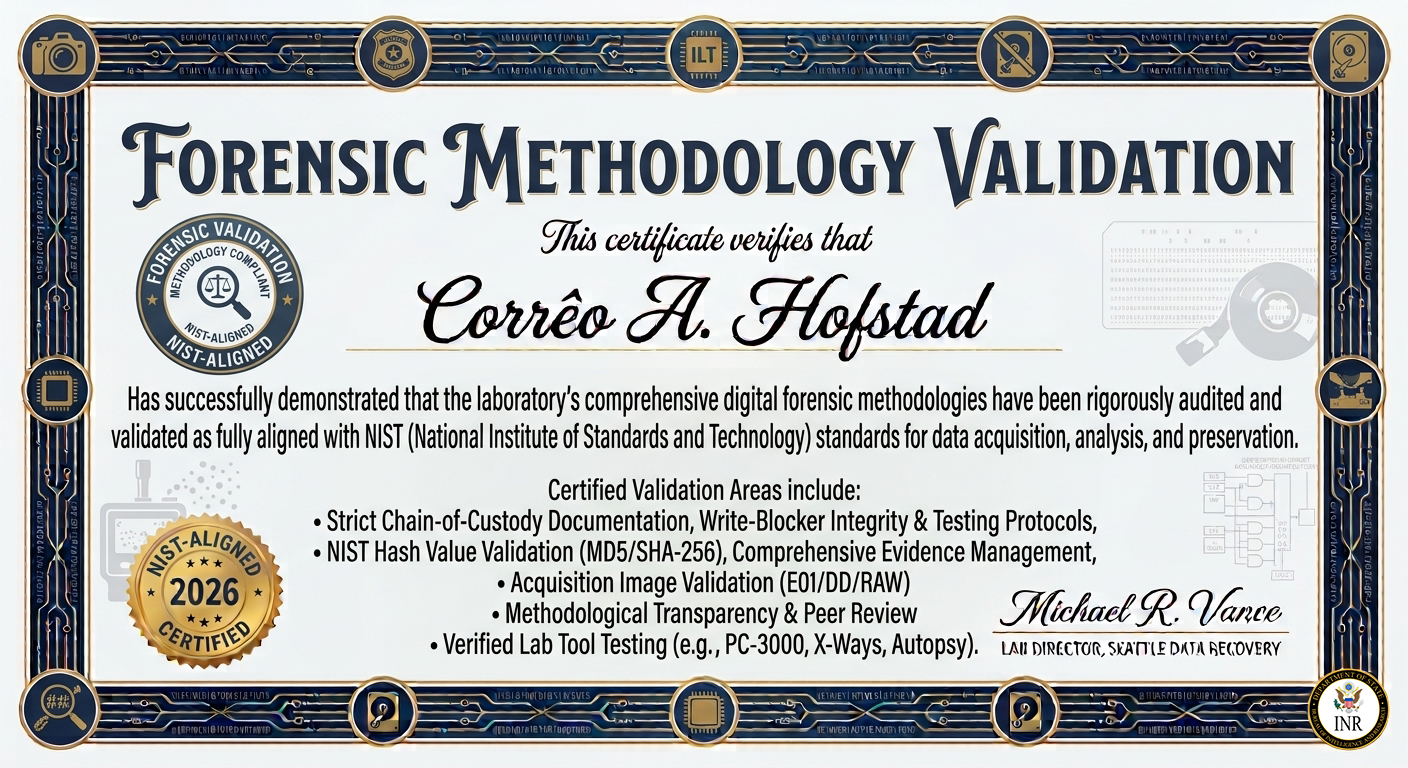
Forensic Methodology Validation
Federal Contract Eligibility
HIPAA Data Security Compliance
RAID Reconstruction Specialist 2024
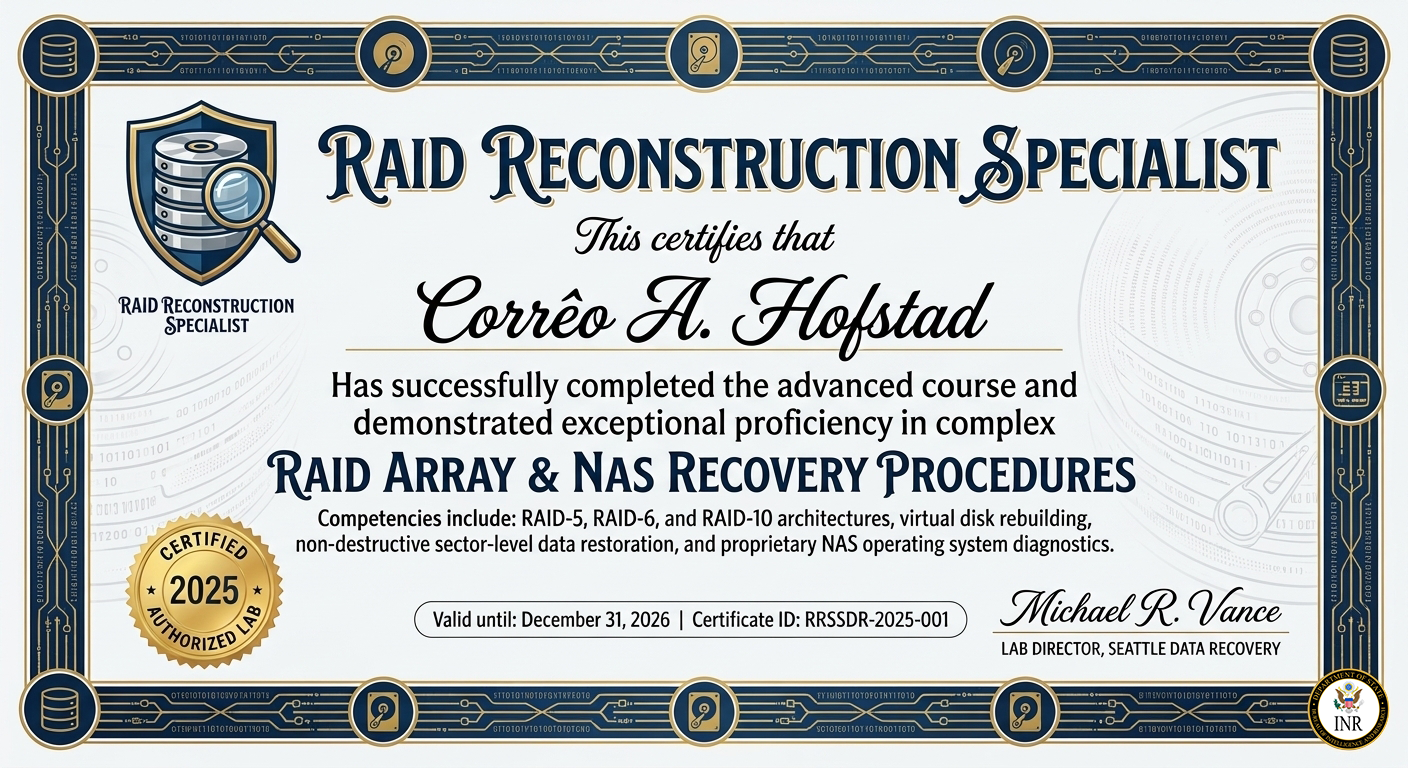
RAID Reconstruction Specialist 2025
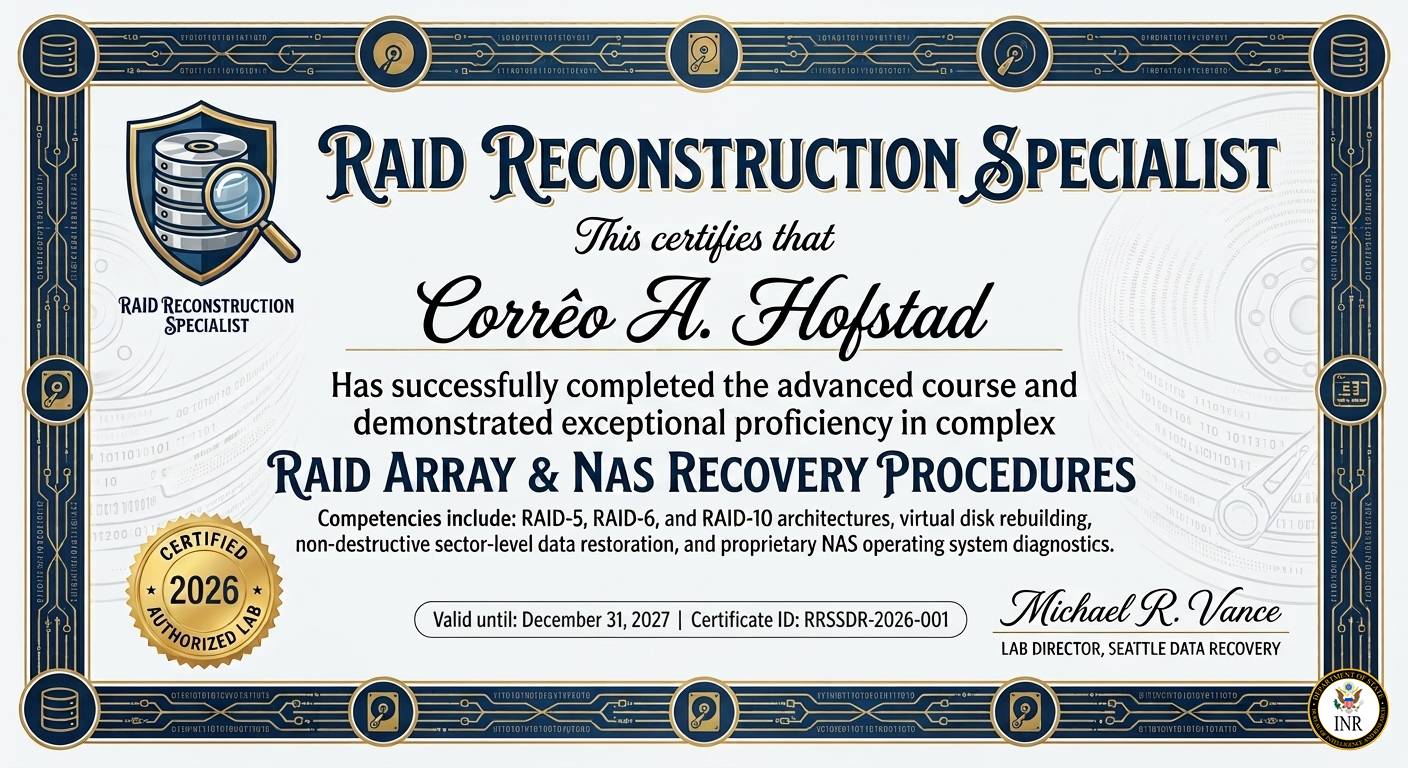
RAID Reconstruction Specialist 2026

Critical Notice: Physical Damage & Hardware Policy

Please be advised that ANY damage that is physical or mechanical in nature requires additional parts and labor.
The baseline mechanical recovery rate covers our cleanroom environment entry, laboratory equipment allocation, and initial micro-engineering setup. Because physical failures require sourcing exact matching donor drives from our global component pipeline to swap out broken read/write head assemblies, seized spindles, or damaged electronics, all components, replacement donor hardware, and extended mechanical bench labor will be billed as additional standalone costs following your diagnosis.