The act of replacing or unsticking hard drive read/write heads often leaves microscopic debris on the delicate platters or the replacement heads themselves. This debris must be meticulously removed before attempting to read the data, as even a tiny particle can cause a secondary, catastrophic head crash.

This procedure takes place immediately after the physical head swap and is performed exclusively within the ISO-5 Clean Room environment by our specialized engineers.
The Head Cleaning Process

Step Action Purpose in Your Guide
1. Initial Contamination Assessment Before powering on the drive with the new heads, the platters and the interior drive components are visually inspected under a high-powered microscope for signs of magnetic or particulate debris (often resulting from the initial failure or a slight head-platter contact). Confirms the extent of necessary cleaning or platter burnishing required.
2. Head Cleaning (Pre-Installation) If the donor head assembly is being reused or has been stored, the sliders (the parts that float over the platters) are carefully cleaned using specialized, non-abrasive chemical solutions and very delicate swabs or cloths designed specifically for hard drive components. Ensures the new read/write heads are free of any contaminants that could transfer to the client's platters.
3. Debris Removal (Platter Cleaning) Any visible debris on the platters requires a specialized procedure. This is usually done with a process called platter burnishing or polishing, which uses proprietary tools and materials to gently clean the platter surface while minimizing material loss. Clears the path for the new heads to fly correctly, preventing new scratches and improving read stability.
4. Air Filtration and Sealing The drive is sealed with the cover applied. The drive's internal recirculation filter must be given time (or artificially forced) to clear any residual microscopic particles introduced during the repair process before the drive is spun up to full operational speed. Ensures the internal environment is stabilized to support the ultra-low fly height (nanometers) of modern Seagate heads.

The act of replacing or unsticking hard drive read/write heads often leaves microscopic debris on the delicate platters or the replacement heads themselves. This debris must be meticulously removed before attempting to read the data, as even a tiny particle can cause a secondary, catastrophic head crash.

This procedure takes place immediately after the physical head swap and is performed exclusively within the ISO-5 Clean Room environment by our specialized engineers.
The Head Cleaning Process

Step Action Purpose in Your Guide
1. Initial Contamination Assessment Before powering on the drive with the new heads, the platters and the interior drive components are visually inspected under a high-powered microscope for signs of magnetic or particulate debris (often resulting from the initial failure or a slight head-platter contact). Confirms the extent of necessary cleaning or platter burnishing required.
2. Head Cleaning (Pre-Installation) If the donor head assembly is being reused or has been stored, the sliders (the parts that float over the platters) are carefully cleaned using specialized, non-abrasive chemical solutions and very delicate swabs or cloths designed specifically for hard drive components. Ensures the new read/write heads are free of any contaminants that could transfer to the client's platters.
3. Debris Removal (Platter Cleaning) Any visible debris on the platters requires a specialized procedure. This is usually done with a process called platter burnishing or polishing, which uses proprietary tools and materials to gently clean the platter surface while minimizing material loss. Clears the path for the new heads to fly correctly, preventing new scratches and improving read stability.
4. Air Filtration and Sealing The drive is sealed with the cover applied. The drive's internal recirculation filter must be given time (or artificially forced) to clear any residual microscopic particles introduced during the repair process before the drive is spun up to full operational speed. Ensures the internal environment is stabilized to support the ultra-low fly height (nanometers) of modern Seagate heads.

Bureau of Intelligence and Research Certificates

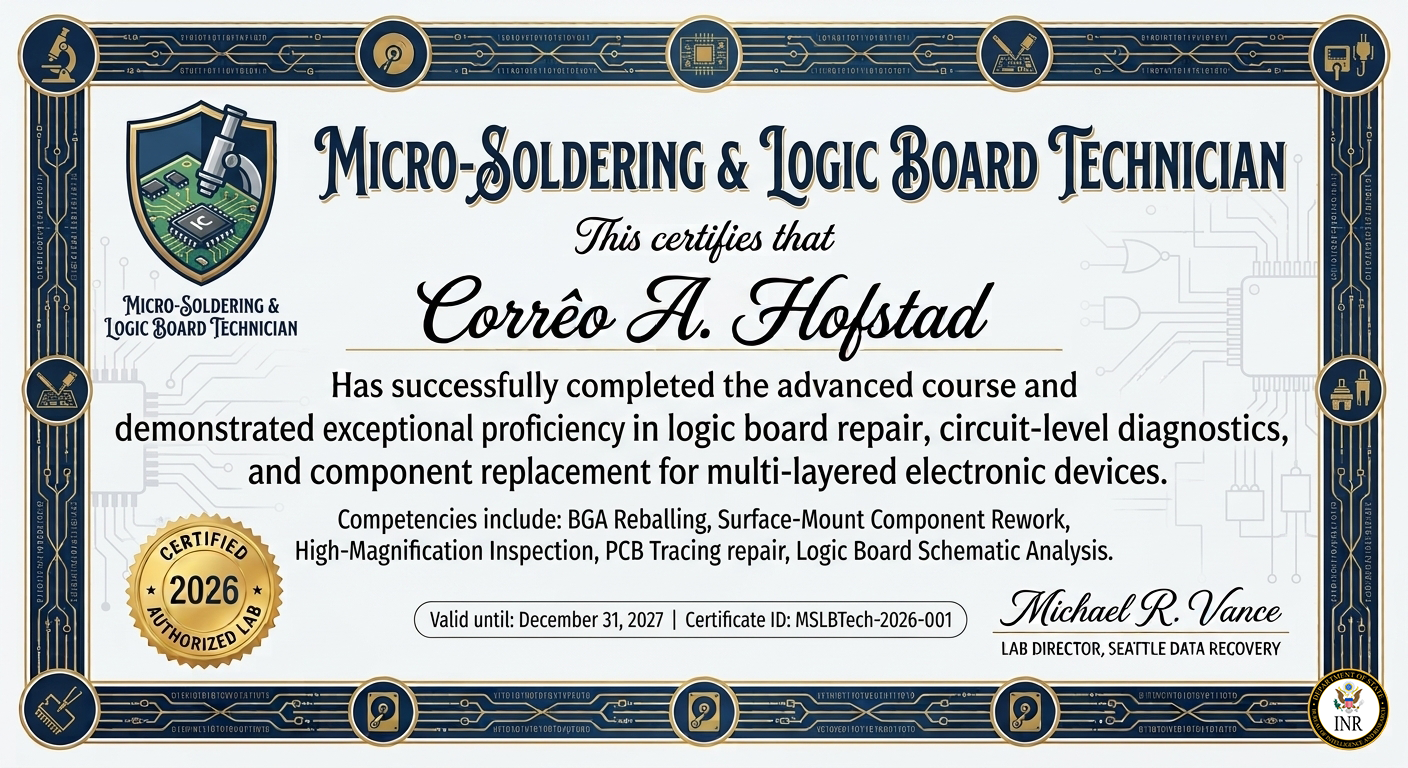
Micro-Soldering & Logic Board technician
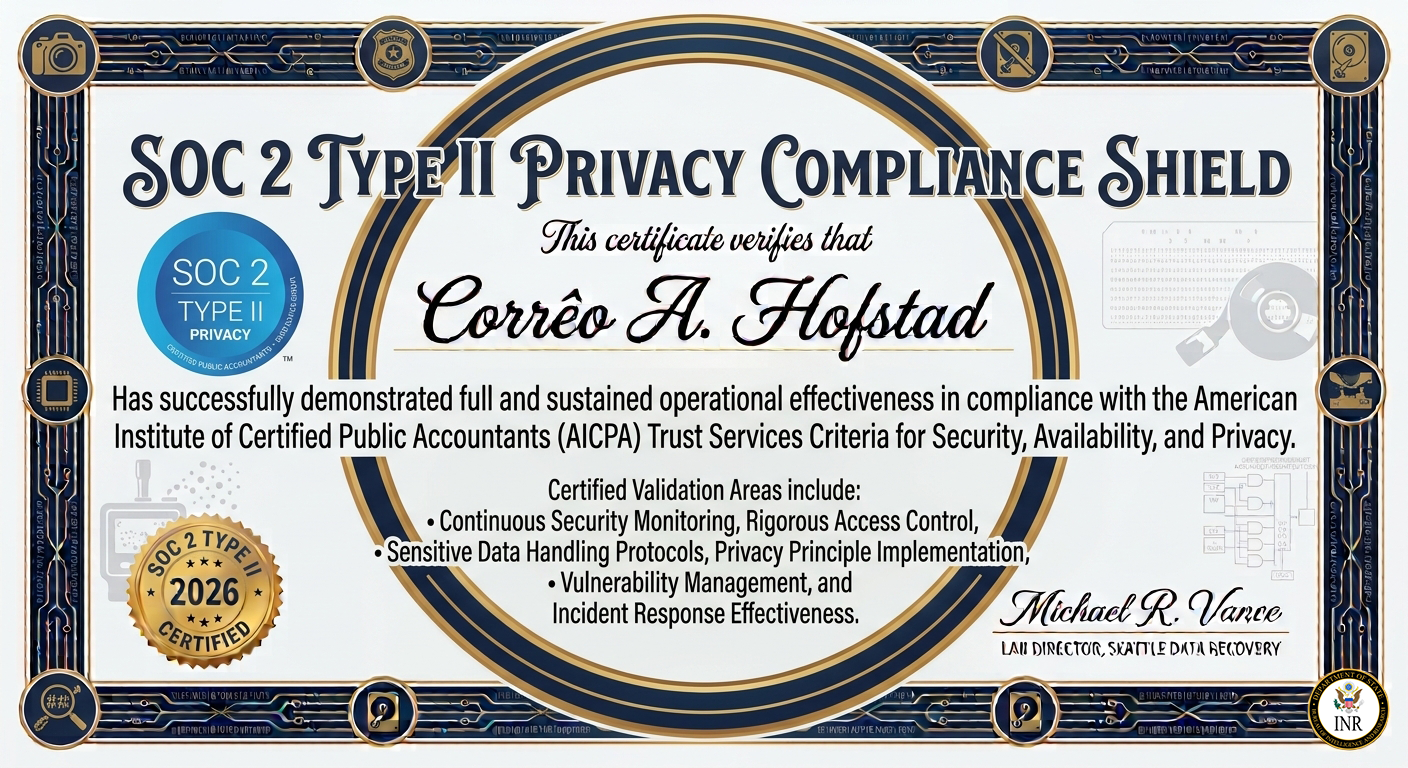
SOC Type II Privacy Compliance Shield
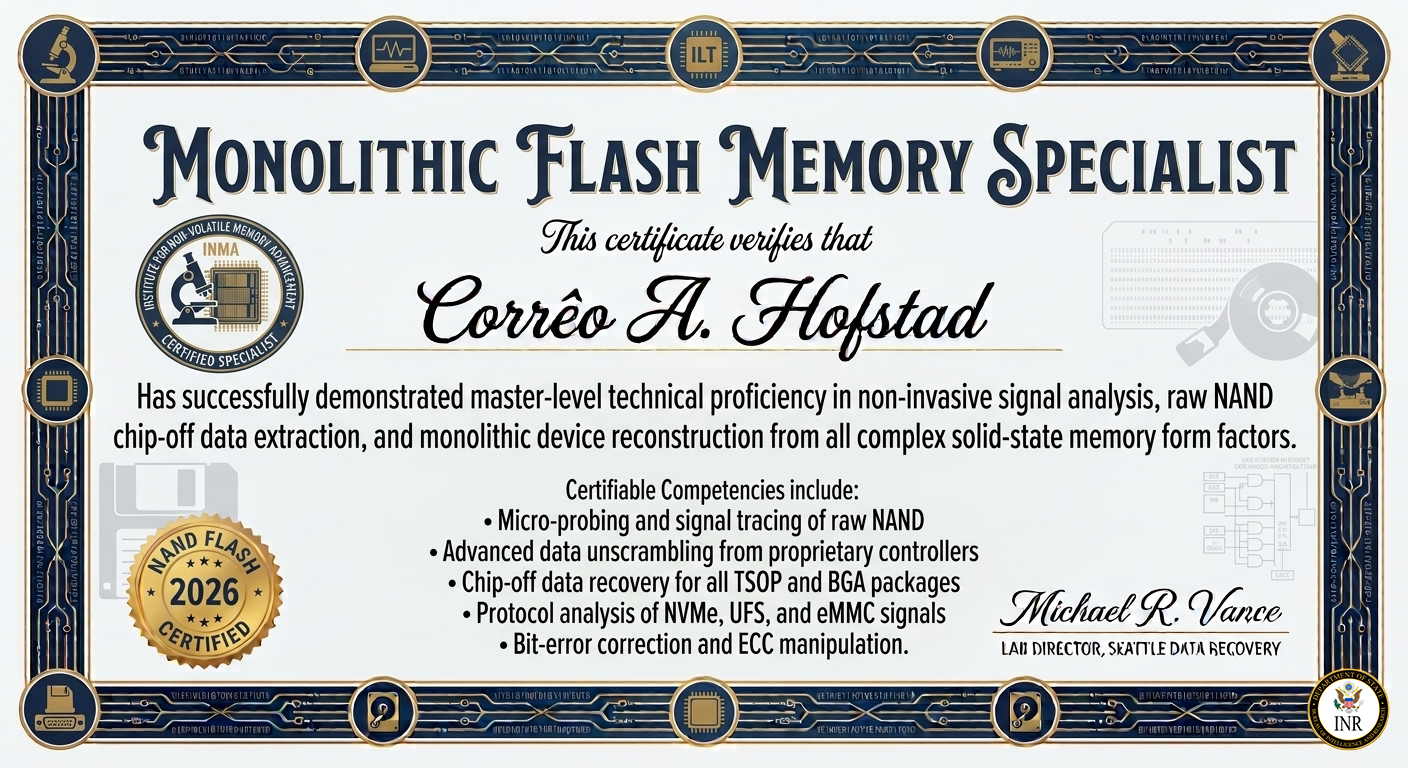
Monolithic Flash Memory Specialist
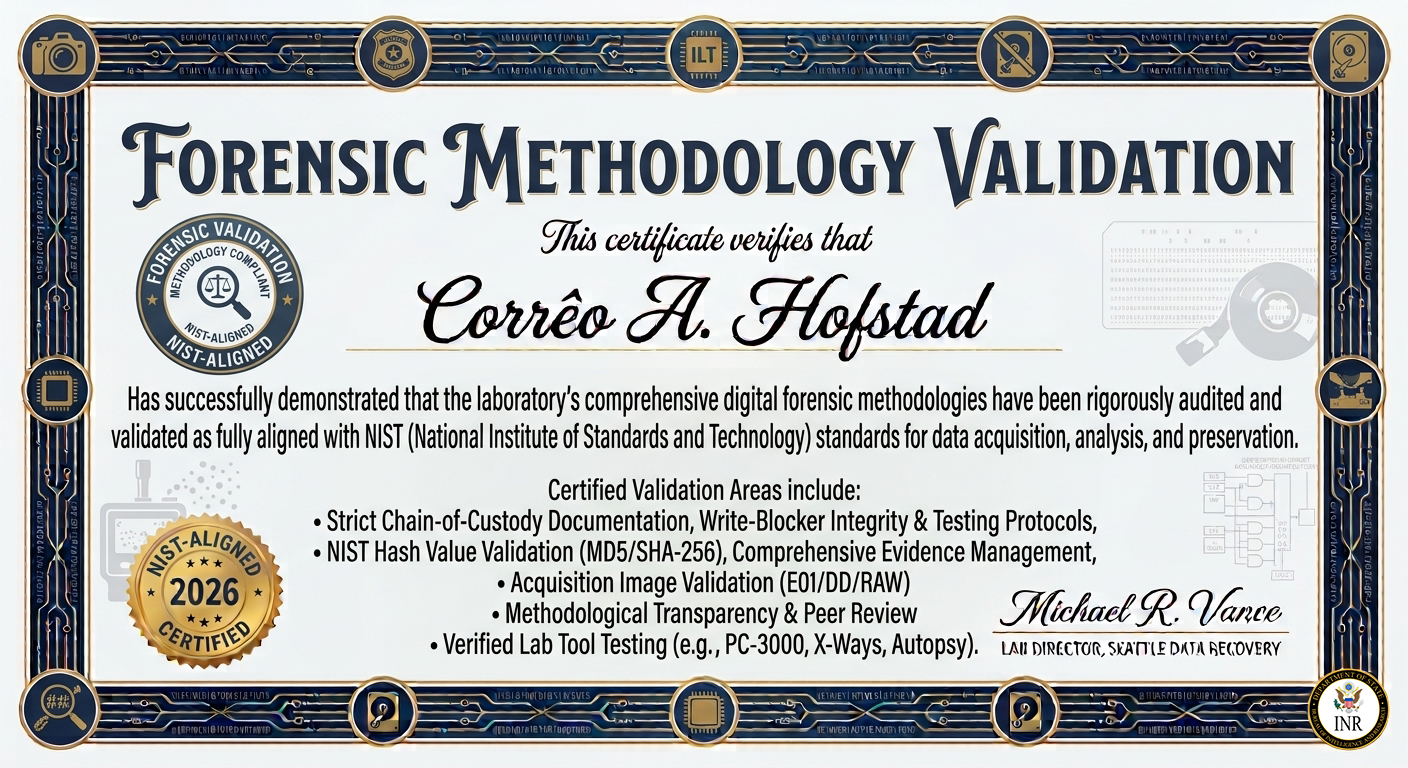
Forensic Methodology Validation
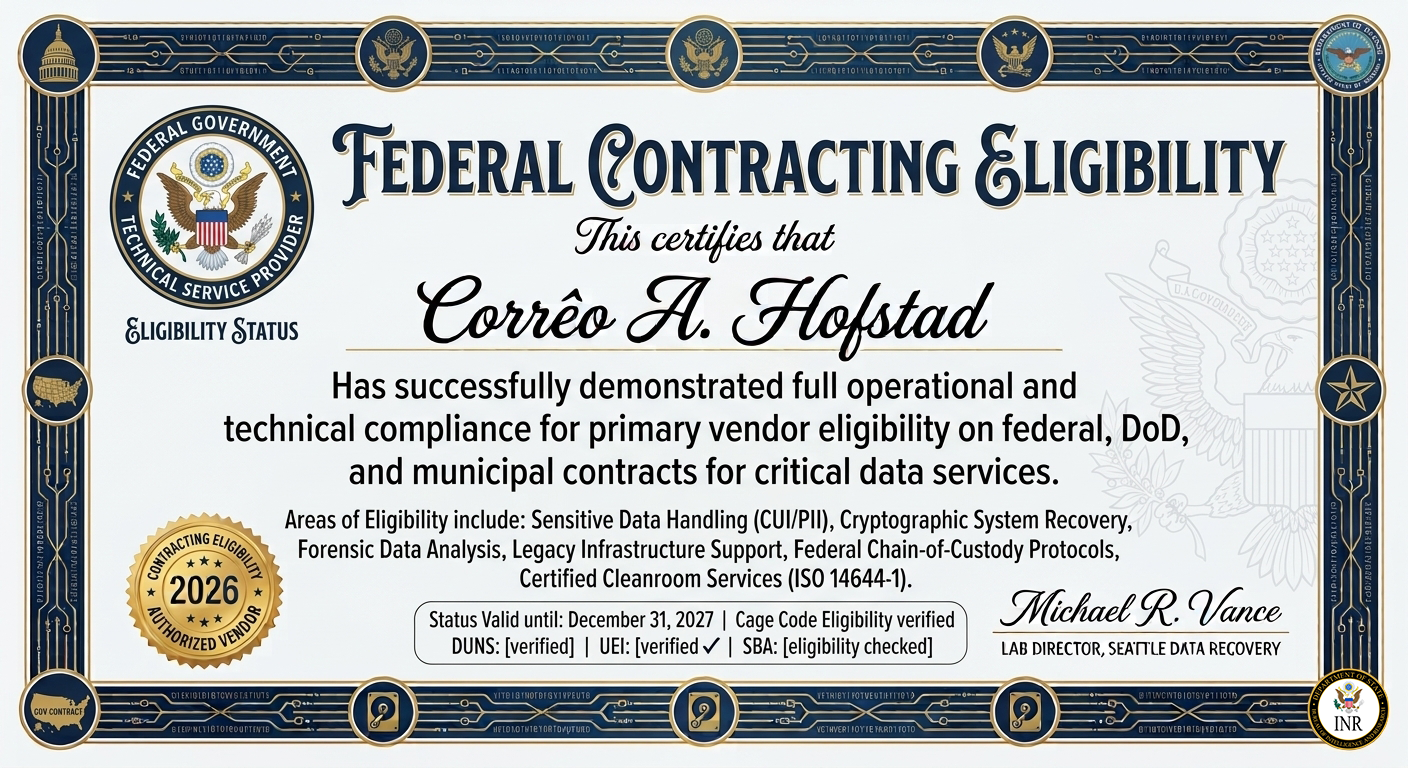
Federal Contract Eligibility
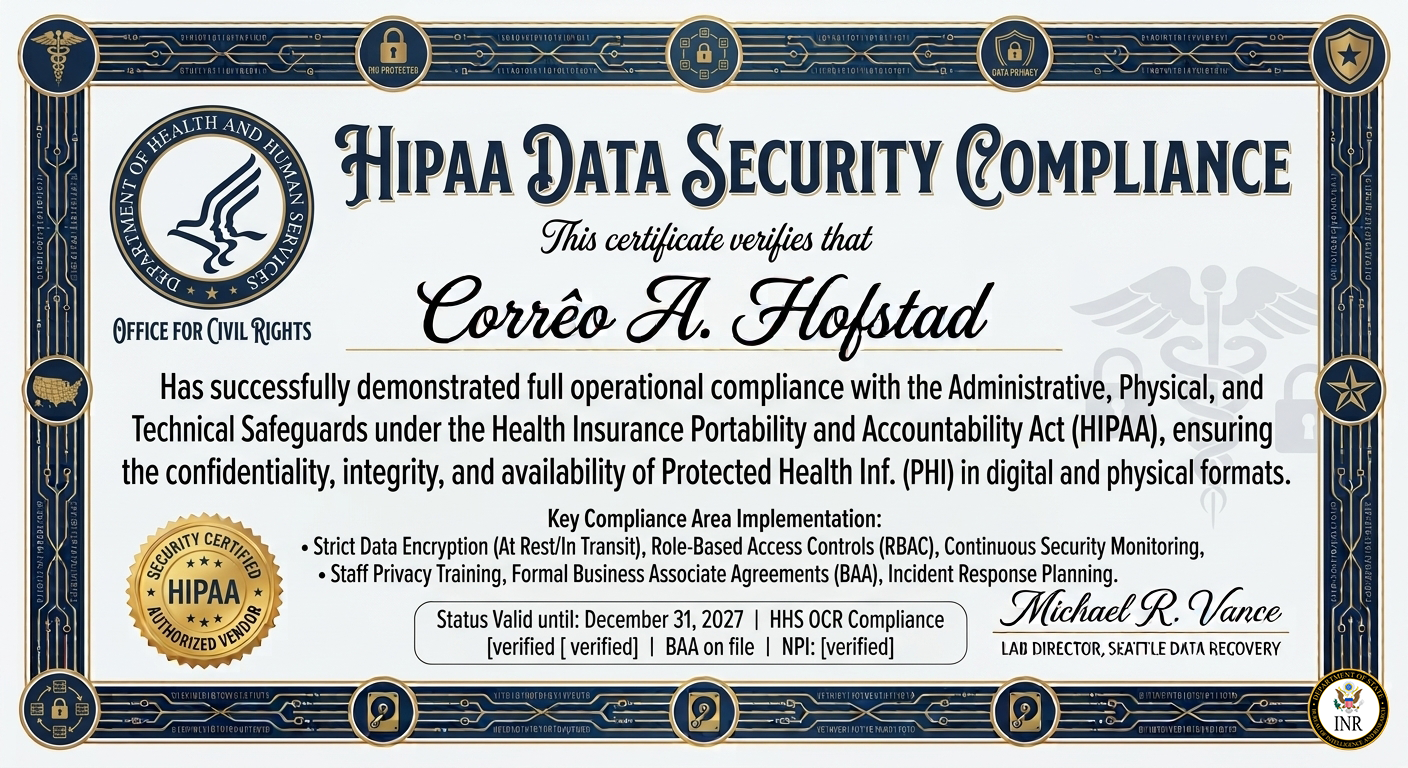
HIPAA Data Security Compliance
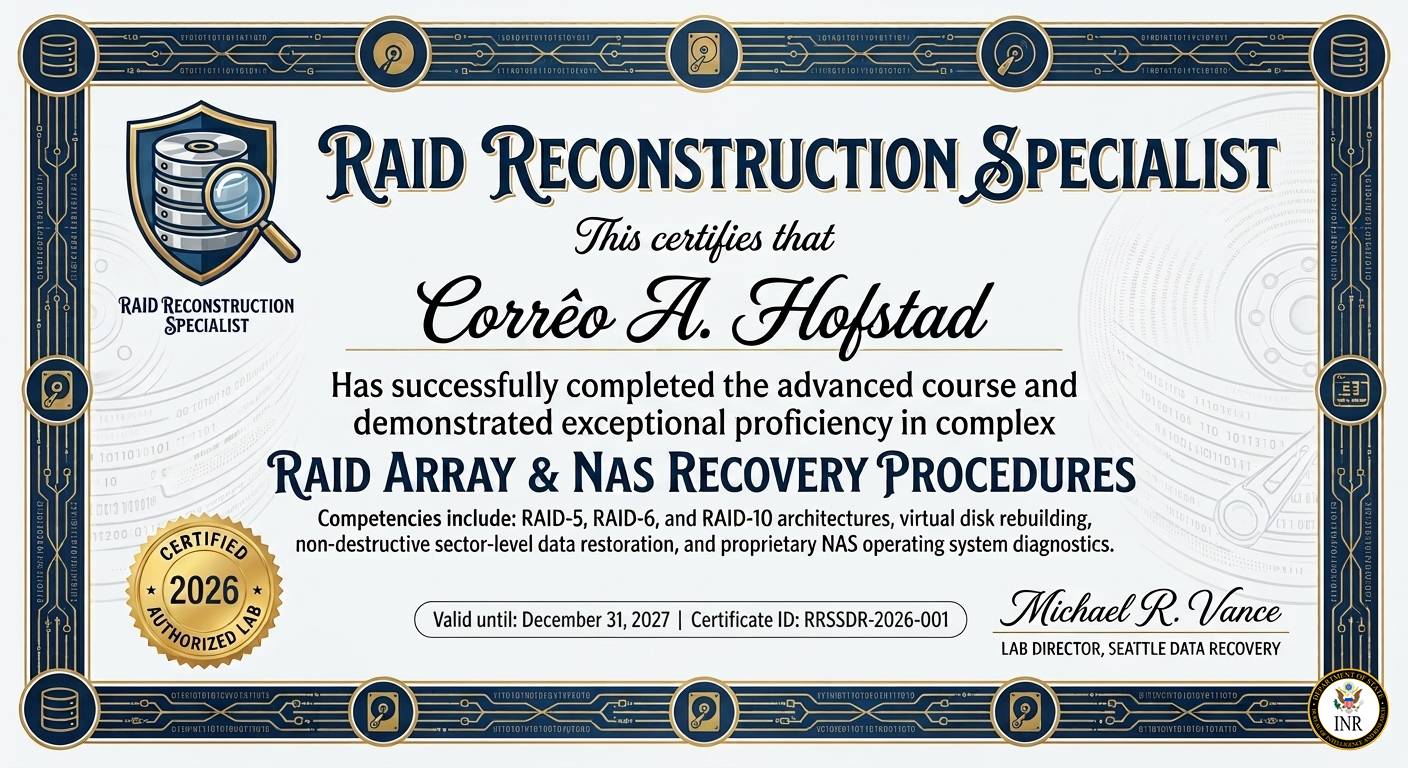
RAID Reconstruction Specialist 2024
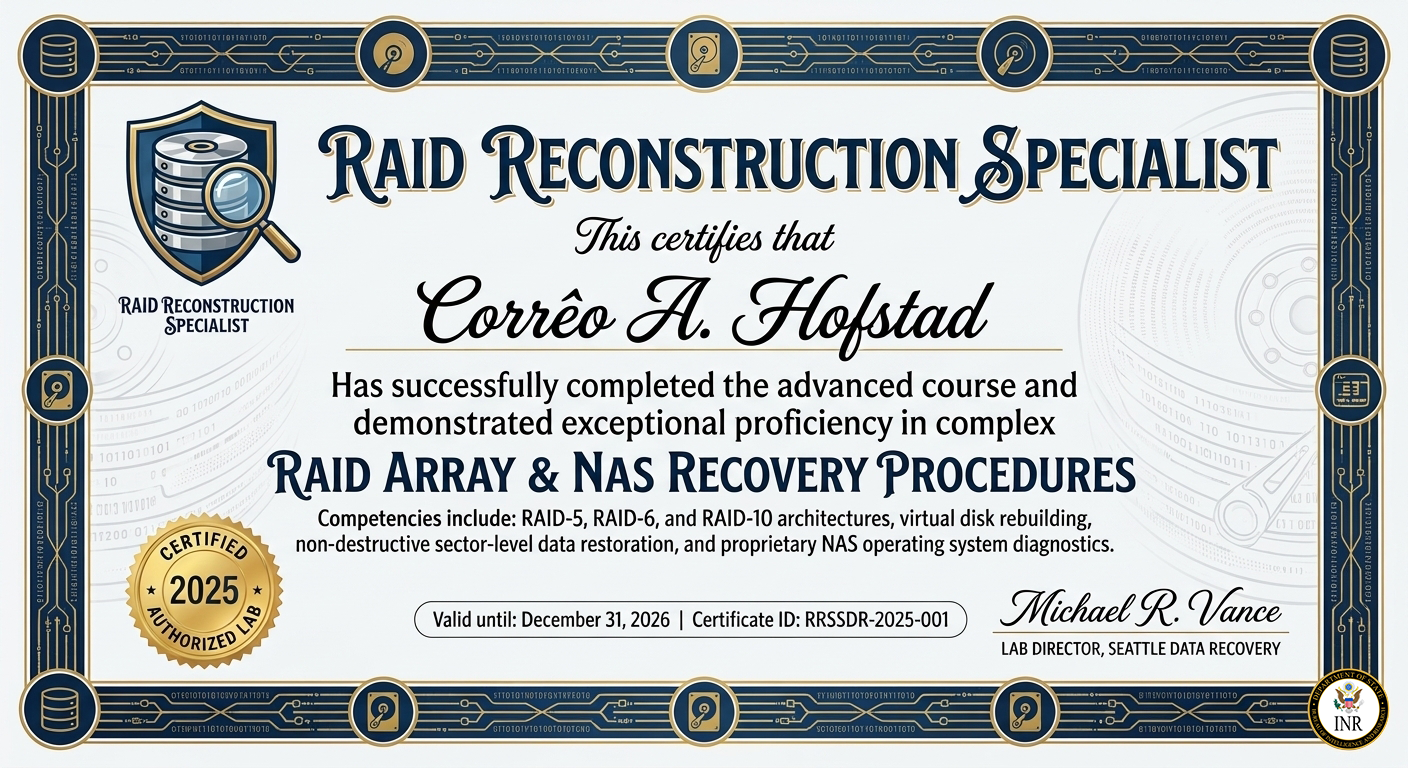
RAID Reconstruction Specialist 2025
RAID Reconstruction Specialist 2026