The New Era of MacBook Storage
Modern MacBooks represent a pinnacle of engineering elegance, blending performance with minimalist design. However, this sophistication introduces unique challenges, particularly in terms of data storage and recovery. Since 2016, Apple has integrated Solid State Drives (SSDs) directly onto the logic board, a shift that fundamentally alters how users and technicians approach hardware upgrades and data retrieval. This design, although innovative, requires specialized expertise in the event of failures, underscoring the need for professional intervention.
At Seattle Data Recovery, we specialize in addressing these advanced technological hurdles. Our team remains at the forefront of developments in storage architecture, ensuring that we can provide effective solutions even for the most integrated systems. This blog post examines the implications of soldered SSDs, the rationale behind Apple's design choices, and how our services provide a lifeline when data appears to be irrevocably lost. We will explore the technical, practical, and ethical aspects of recovering data from devices where the SSD is permanently integrated into the motherboard.
Why Apple Chose to Solder SSDs: The Design Philosophy
Apple's decision to solder the SSD directly onto the motherboard stems from a multifaceted design philosophy that prioritizes aesthetics, performance, and manufacturing efficiency. By eliminating removable components, Apple achieves a thinner and lighter form factor, which appeals to consumers who prioritize portability and sleek design. This approach also simplifies the assembly process, potentially reducing production costs and minimizing the number of points of failure within the device. Consequently, users benefit from a more streamlined product, though often at the expense of modularity.
Moreover, soldering enhances thermal management. Integrated connections dissipate heat more effectively than socket-based alternatives, promoting system stability during intensive tasks. Apple also exercises greater control over hardware specifications, encouraging customers to invest in higher-capacity models upfront. While these advantages align with the company's vision for seamless user experience, they introduce significant constraints for end-users, particularly concerning repairs and upgrades. Seattle Data Recovery understands these trade-offs and has developed methodologies to work within these design parameters.
The Challenge of Non-Upgradability: A User's Dilemma
One of the most immediate consequences of soldered storage is the complete elimination of user-initiated upgrades. Unlike earlier MacBook models, where users could easily swap out drives for larger or faster alternatives, newer devices require buyers to accurately forecast their storage needs for the entire lifespan of the laptop. This limitation can lead to frustrating scenarios where individuals must constantly manage limited space or rely on external drives, thereby compromising the convenience and portability for which MacBooks are renowned.
This lack of flexibility also impacts long-term usability. As applications and files grow in size, fixed storage can become a bottleneck, forcing users into premature upgrades. For professionals working with large media files or datasets, this constraint is particularly burdensome. At Seattle Data Recovery, we often encounter clients who never anticipated outgrowing their storage, only to face difficult decisions about deleting valuable data or investing in entirely new systems. Our role extends beyond recovery; we educate users on optimizing their existing storage to mitigate these challenges.
High Repair Costs: The Financial Implications
When an SSD fails in a modern MacBook, the implications are not merely operational but financial. Because the SSD is soldered onto the motherboard, Apple's standard repair protocol involves replacing the entire logic board—a component that represents a substantial portion of the device's total value. For out-of-warranty repairs, this cost can approach that of a new laptop, creating a significant deterrent for many users seeking official support channels.
These expenses underscore the importance of seeking specialized data recovery services before committing to costly hardware replacements. Seattle Data Recovery offers a financially sensible alternative by focusing solely on retrieving valuable data, often without requiring full logic board replacement. Our processes are designed to be non-destructive, preserving the possibility of further repairs or reducing overall expenditure. By prioritizing data extraction first, we help clients avoid unnecessary costs while safeguarding their critical information.
Technical Hurdles in Data Recovery from Soldered SSDs
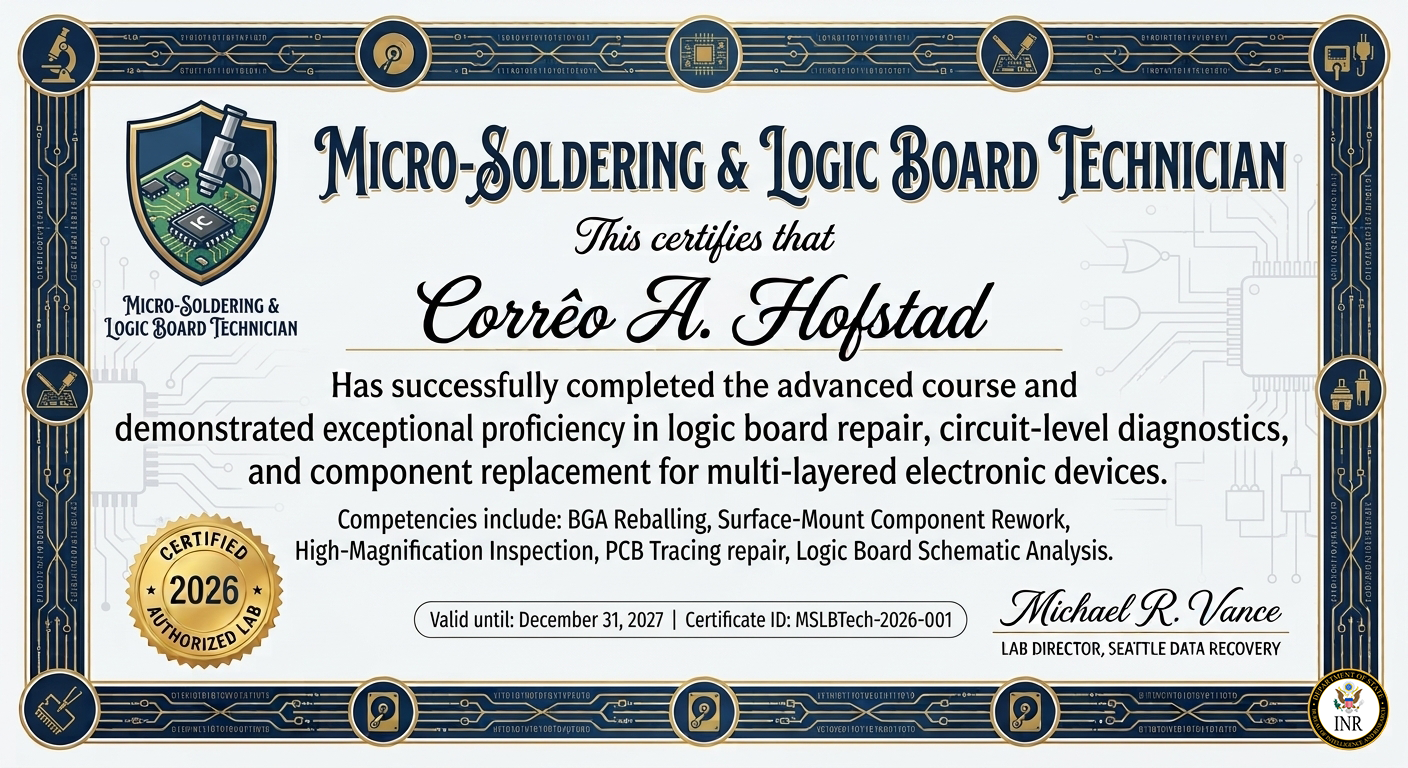
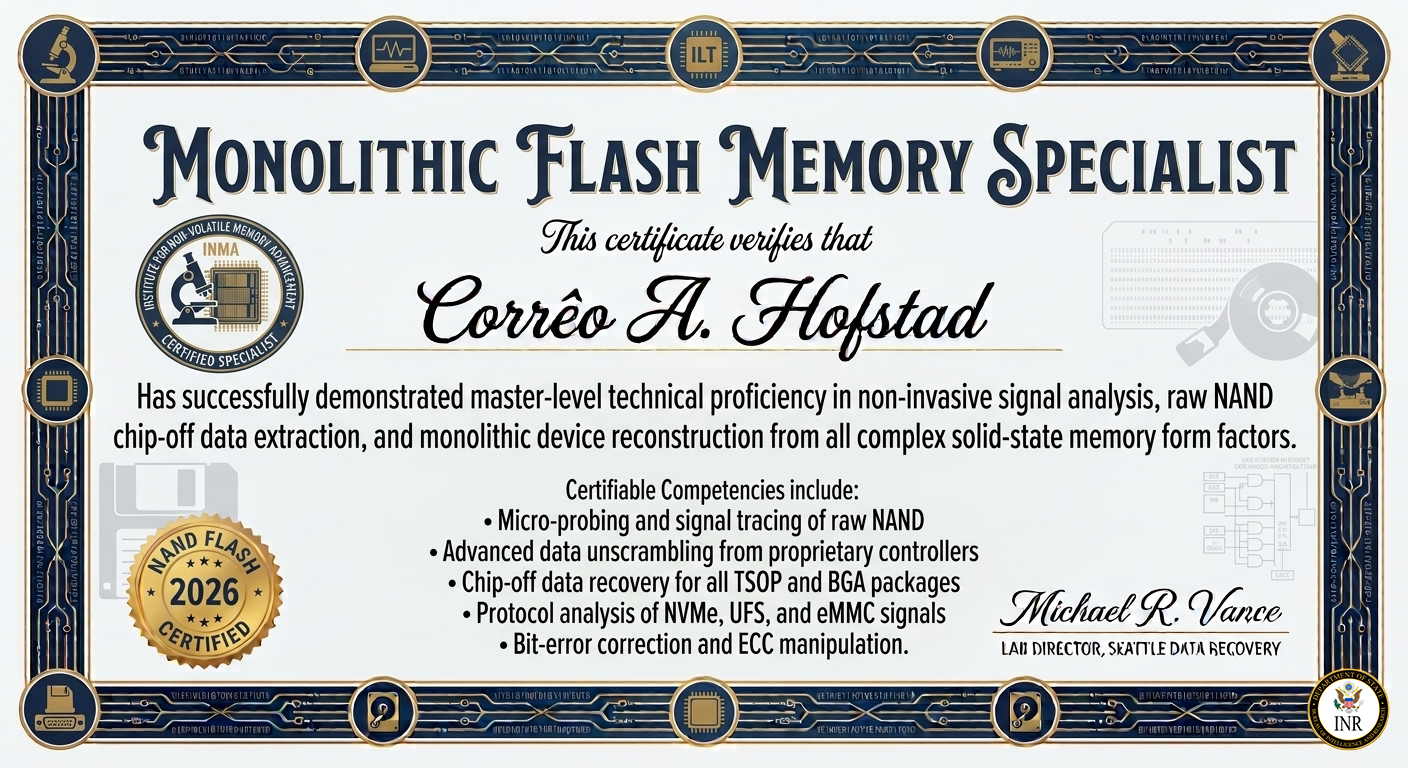
Data recovery from a MacBook with an SSD soldered onto the motherboard presents distinct technical challenges. Traditional recovery methods, which often involve physically connecting to the storage drive, are not feasible when the SSD is integrated into a complex circuit board. Technicians must instead work directly with the logic board, requiring micro-soldering expertise, advanced diagnostic tools, and an in-depth understanding of Apple's proprietary architecture. Even minor errors during this process can compromise data integrity or damage the board beyond repair.
Furthermore, encryption adds another layer of complexity. Modern MacBooks utilize hardware-based encryption, tying data security to the original logic board. This means that even if data is successfully extracted, decryption requires specific cryptographic keys stored within the same hardware. Seattle Data Recovery utilizes specialized equipment and techniques to overcome these challenges, including operating within Apple's secure ecosystem to ensure that recovered data remains accessible and usable for our clients.
How Seattle Data Recovery Approaches These Cases
At Seattle Data Recovery, we begin each case with a comprehensive evaluation to determine the exact nature of the data loss or failure. Whether the issue stems from physical damage, electronic failure, or firmware corruption, our diagnostics pinpoint the root cause without exacerbating the problem. We utilize state-of-the-art tools, including electron microscopes and proprietary software, to interface with the integrated SSD while minimizing risk to the device. This meticulous approach ensures that we can formulate a targeted recovery strategy.
Our technicians are trained in advanced micro-soldering and board-level repair, skills essential for handling devices where the SSD is irrevocably attached to the motherboard. We maintain a sterile laboratory environment to prevent damage from static or particulate matter during delicate procedures. For encrypted data, we collaborate with clients to obtain necessary credentials or leverage legal decryption methods. Each recovery is tailored to the specific circumstances, striking a balance between urgency and precision to maximize the likelihood of success.
Success Stories: Real-World Recoveries
We recently assisted a graphic designer whose MacBook Pro suffered liquid damage, rendering the SSD inaccessible. Since the SSD was soldered onto the motherboard, conventional recovery methods were not possible. Our team carefully cleaned the logic board, repaired corroded connections, and successfully cloned the data to a stable drive. The client recovered years of creative work, avoiding costly project delays and potential data loss. This case highlights how expertise and the right tools can overcome even severe physical damage.
In another instance, a software developer encountered a sudden failure due to a firmware issue. The MacBook would not boot, and Apple's diagnostics indicated a logic board replacement was necessary. Our engineers used specialized hardware to directly access the SSD directly, bypassing corrupted firmware and extracting critical code repositories. The recovery not only saved invaluable intellectual property but also demonstrated that not all soldered SSD failures necessitate hardware replacement. These successes reinforce our commitment to innovating within the constraints of modern technology.
Preventative Measures: Protecting Your Data
While professional recovery services provide a safety net, prevention remains the best strategy for safeguarding data. Regular backups are non-negotiable, especially for devices with soldered storage. We recommend using Apple's Time Machine in conjunction with cloud storage solutions to create redundant copies. Automating these processes ensures that backups occur consistently, reducing the risk of data loss due to human error or hardware failure. Additionally, monitoring SSD health through built-in utilities can provide early warnings of potential issues.
Users should also avoid subjecting their devices to extreme conditions—such as high temperatures, physical shocks, or moisture—that could accelerate hardware degradation. For those with high-write workloads, distributing tasks across external drives can prolong the lifespan of the internal SSD. Seattle Data Recovery offers consultations to help individuals and businesses implement robust data management practices. By taking proactive steps, users can mitigate the risks associated with non-upgradable, integrated storage systems.
The Future of MacBook Storage and Data Recovery
As Apple continues to refine its hardware integration, the role of specialized data recovery services will become increasingly critical. Future MacBooks may feature even more deeply embedded storage solutions, possibly integrating memory and processing units into unified architectures. These advancements will demand corresponding innovations in recovery techniques, pushing engineers to develop new tools and methodologies. Seattle Data Recovery invests continuously in research and development to stay ahead of these trends.
At the same time, growing consumer and regulatory pressure may encourage manufacturers to design more repairable devices. Initiatives like right-to-repair laws could eventually influence how companies like Apple approach hardware design. Until then, however, the reality remains that data recovery from soldered SSDs requires expert intervention. Our mission is to bridge the gap between cutting-edge technology and practical, accessible solutions for users facing data loss.
Trusting Experts with Your Critical Data
The integration of SSDs onto MacBook motherboards represents a double-edged sword: it enables sleek, high-performance devices but complicates data recovery when failures occur. Navigating these challenges requires not only technical expertise but also a profound understanding of Apple's engineering decisions. Seattle Data Recovery has established a reputation for excellence in this niche, combining expertise with innovation to deliver results where others may fail.
We encourage users to recognize the limitations of their devices and plan accordingly—through diligent backups and professional partnerships. When data loss happens, knowing that experts are available provides peace of mind. Our team is dedicated to restoring your valuable information, ensuring that even the most integrated storage systems do not become digital prisons for your data. Trust Seattle Data Recovery to turn technological constraints into opportunities for recovery.
The New Era of MacBook Storage
Modern MacBooks represent a pinnacle of engineering elegance, blending performance with minimalist design. However, this sophistication introduces unique challenges, particularly in terms of data storage and recovery. Since 2016, Apple has integrated Solid State Drives (SSDs) directly onto the logic board, a shift that fundamentally alters how users and technicians approach hardware upgrades and data retrieval. This design, although innovative, requires specialized expertise in the event of failures, underscoring the need for professional intervention.
At Seattle Data Recovery, we specialize in addressing these advanced technological hurdles. Our team remains at the forefront of developments in storage architecture, ensuring that we can provide effective solutions even for the most integrated systems. This blog post examines the implications of soldered SSDs, the rationale behind Apple's design choices, and how our services provide a lifeline when data appears to be irrevocably lost. We will explore the technical, practical, and ethical aspects of recovering data from devices where the SSD is permanently integrated into the motherboard.
Why Apple Chose to Solder SSDs: The Design Philosophy
Apple's decision to solder the SSD directly onto the motherboard stems from a multifaceted design philosophy that prioritizes aesthetics, performance, and manufacturing efficiency. By eliminating removable components, Apple achieves a thinner and lighter form factor, which appeals to consumers who prioritize portability and sleek design. This approach also simplifies the assembly process, potentially reducing production costs and minimizing the number of points of failure within the device. Consequently, users benefit from a more streamlined product, though often at the expense of modularity.
Moreover, soldering enhances thermal management. Integrated connections dissipate heat more effectively than socket-based alternatives, promoting system stability during intensive tasks. Apple also exercises greater control over hardware specifications, encouraging customers to invest in higher-capacity models upfront. While these advantages align with the company's vision for seamless user experience, they introduce significant constraints for end-users, particularly concerning repairs and upgrades. Seattle Data Recovery understands these trade-offs and has developed methodologies to work within these design parameters.
The Challenge of Non-Upgradability: A User's Dilemma
One of the most immediate consequences of soldered storage is the complete elimination of user-initiated upgrades. Unlike earlier MacBook models, where users could easily swap out drives for larger or faster alternatives, newer devices require buyers to accurately forecast their storage needs for the entire lifespan of the laptop. This limitation can lead to frustrating scenarios where individuals must constantly manage limited space or rely on external drives, thereby compromising the convenience and portability for which MacBooks are renowned.
This lack of flexibility also impacts long-term usability. As applications and files grow in size, fixed storage can become a bottleneck, forcing users into premature upgrades. For professionals working with large media files or datasets, this constraint is particularly burdensome. At Seattle Data Recovery, we often encounter clients who never anticipated outgrowing their storage, only to face difficult decisions about deleting valuable data or investing in entirely new systems. Our role extends beyond recovery; we educate users on optimizing their existing storage to mitigate these challenges.
High Repair Costs: The Financial Implications
When an SSD fails in a modern MacBook, the implications are not merely operational but financial. Because the SSD is soldered onto the motherboard, Apple's standard repair protocol involves replacing the entire logic board—a component that represents a substantial portion of the device's total value. For out-of-warranty repairs, this cost can approach that of a new laptop, creating a significant deterrent for many users seeking official support channels.
These expenses underscore the importance of seeking specialized data recovery services before committing to costly hardware replacements. Seattle Data Recovery offers a financially sensible alternative by focusing solely on retrieving valuable data, often without requiring full logic board replacement. Our processes are designed to be non-destructive, preserving the possibility of further repairs or reducing overall expenditure. By prioritizing data extraction first, we help clients avoid unnecessary costs while safeguarding their critical information.
Technical Hurdles in Data Recovery from Soldered SSDs
Data recovery from a MacBook with an SSD soldered onto the motherboard presents distinct technical challenges. Traditional recovery methods, which often involve physically connecting to the storage drive, are not feasible when the SSD is integrated into a complex circuit board. Technicians must instead work directly with the logic board, requiring micro-soldering expertise, advanced diagnostic tools, and an in-depth understanding of Apple's proprietary architecture. Even minor errors during this process can compromise data integrity or damage the board beyond repair.
Furthermore, encryption adds another layer of complexity. Modern MacBooks utilize hardware-based encryption, tying data security to the original logic board. This means that even if data is successfully extracted, decryption requires specific cryptographic keys stored within the same hardware. Seattle Data Recovery utilizes specialized equipment and techniques to overcome these challenges, including operating within Apple's secure ecosystem to ensure that recovered data remains accessible and usable for our clients.
How Seattle Data Recovery Approaches These Cases
At Seattle Data Recovery, we begin each case with a comprehensive evaluation to determine the exact nature of the data loss or failure. Whether the issue stems from physical damage, electronic failure, or firmware corruption, our diagnostics pinpoint the root cause without exacerbating the problem. We utilize state-of-the-art tools, including electron microscopes and proprietary software, to interface with the integrated SSD while minimizing risk to the device. This meticulous approach ensures that we can formulate a targeted recovery strategy.
Our technicians are trained in advanced micro-soldering and board-level repair, skills essential for handling devices where the SSD is irrevocably attached to the motherboard. We maintain a sterile laboratory environment to prevent damage from static or particulate matter during delicate procedures. For encrypted data, we collaborate with clients to obtain necessary credentials or leverage legal decryption methods. Each recovery is tailored to the specific circumstances, striking a balance between urgency and precision to maximize the likelihood of success.
Success Stories: Real-World Recoveries
We recently assisted a graphic designer whose MacBook Pro suffered liquid damage, rendering the SSD inaccessible. Since the SSD was soldered onto the motherboard, conventional recovery methods were not possible. Our team carefully cleaned the logic board, repaired corroded connections, and successfully cloned the data to a stable drive. The client recovered years of creative work, avoiding costly project delays and potential data loss. This case highlights how expertise and the right tools can overcome even severe physical damage.
In another instance, a software developer encountered a sudden failure due to a firmware issue. The MacBook would not boot, and Apple's diagnostics indicated a logic board replacement was necessary. Our engineers used specialized hardware to directly access the SSD directly, bypassing corrupted firmware and extracting critical code repositories. The recovery not only saved invaluable intellectual property but also demonstrated that not all soldered SSD failures necessitate hardware replacement. These successes reinforce our commitment to innovating within the constraints of modern technology.
Preventative Measures: Protecting Your Data
While professional recovery services provide a safety net, prevention remains the best strategy for safeguarding data. Regular backups are non-negotiable, especially for devices with soldered storage. We recommend using Apple's Time Machine in conjunction with cloud storage solutions to create redundant copies. Automating these processes ensures that backups occur consistently, reducing the risk of data loss due to human error or hardware failure. Additionally, monitoring SSD health through built-in utilities can provide early warnings of potential issues.
Users should also avoid subjecting their devices to extreme conditions—such as high temperatures, physical shocks, or moisture—that could accelerate hardware degradation. For those with high-write workloads, distributing tasks across external drives can prolong the lifespan of the internal SSD. Seattle Data Recovery offers consultations to help individuals and businesses implement robust data management practices. By taking proactive steps, users can mitigate the risks associated with non-upgradable, integrated storage systems.
The Future of MacBook Storage and Data Recovery
As Apple continues to refine its hardware integration, the role of specialized data recovery services will become increasingly critical. Future MacBooks may feature even more deeply embedded storage solutions, possibly integrating memory and processing units into unified architectures. These advancements will demand corresponding innovations in recovery techniques, pushing engineers to develop new tools and methodologies. Seattle Data Recovery invests continuously in research and development to stay ahead of these trends.
At the same time, growing consumer and regulatory pressure may encourage manufacturers to design more repairable devices. Initiatives like right-to-repair laws could eventually influence how companies like Apple approach hardware design. Until then, however, the reality remains that data recovery from soldered SSDs requires expert intervention. Our mission is to bridge the gap between cutting-edge technology and practical, accessible solutions for users facing data loss.
Trusting Experts with Your Critical Data
The integration of SSDs onto MacBook motherboards represents a double-edged sword: it enables sleek, high-performance devices but complicates data recovery when failures occur. Navigating these challenges requires not only technical expertise but also a profound understanding of Apple's engineering decisions. Seattle Data Recovery has established a reputation for excellence in this niche, combining expertise with innovation to deliver results where others may fail.
We encourage users to recognize the limitations of their devices and plan accordingly—through diligent backups and professional partnerships. When data loss happens, knowing that experts are available provides peace of mind. Our team is dedicated to restoring your valuable information, ensuring that even the most integrated storage systems do not become digital prisons for your data. Trust Seattle Data Recovery to turn technological constraints into opportunities for recovery.