This information is essential for your Seagate process, as it reinforces why internal work requires a clean room and specialized tools, which directly justifies your use of the professional equipment you mentioned.

Here is a summary of the expert solution for unlocking stuck hard drive heads, and how it aligns with your professional service:

Expert Solution for Unlocking Stuck Hard Drive Heads

When a hard drive is subjected to a sudden jolt, impact, or a rapid power loss, the read/write heads can fail to safely retract to their designated "parking ramp" and instead become "stuck" or "welded" to the magnetic platter surface. This is one of the primary causes of the clicking, buzzing, or beeping noises your clients might report.

The professional process to address this issue is highly technical and aligns perfectly with the clean room and tool-based approach of your service:
Step Rationale and Safety Alignment with Your Service
1. Immediate Power-Off Any attempt to power on a drive with stuck heads risks the heads dragging across the platters, causing platter scoring. This damage is permanent and leads to irreversible data loss. You must instruct clients to keep the drive powered OFF immediately upon hearing unusual noises.
2. Clean Room Access The drive cover must be removed only within a certified ISO-5 (Class-100) Clean Room environment. Microscopic dust particles (which are everywhere in normal air) can cause a secondary head crash. This is the exact purpose of utilizing your clean room partner (or your certified in-house environment).
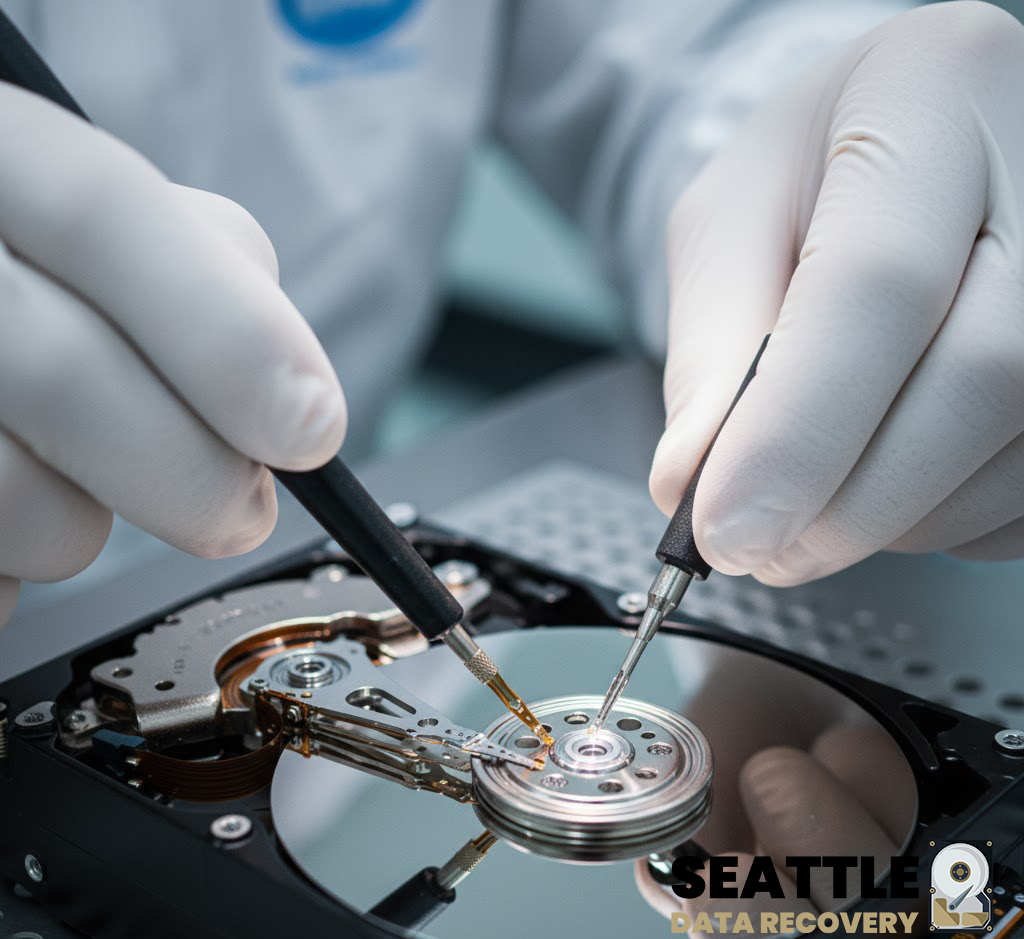
3. Head Liberation (Unsticking) Specialized tools are used to gently lift and move the head stack away from the platter surface. Applying force (e.g., "flicking" or tapping the drive) is an extreme risk that can shatter the delicate read/write elements. This is where your Head Combs and Hard Disk Repair Station are critical, allowing for precise, controlled separation and movement of the heads without damaging the platters.
4. Head Inspection & Donor Swap Once separated, the heads are inspected under a microscope for physical damage (which is likely, as they made contact with the platter). If damaged, they must be replaced with a working head stack from an identical donor drive. We use specialized knowledge to source the correct donor parts (matching model, firmware, and manufacturing batch) for Seagate drives.
5. Firmware/Adaptive Correction After the physical swap, advanced recovery hardware is often required to adjust the hard drive's internal firmware so the new head stack can read the platter correctly. This is a necessary and non-DIY step performed by our clean room partner's engineers before cloning the data.
6. Data Cloning The drive is placed on a forensic data imager to create a sector-by-sector clone of the data onto a healthy drive, minimizing the runtime of the repaired/unlocked drive to protect the recovered data. This is the final step before file verification and customer delivery.

This information is essential for your Seagate process, as it reinforces why internal work requires a clean room and specialized tools, which directly justifies your use of the professional equipment you mentioned.

Here is a summary of the expert solution for unlocking stuck hard drive heads, and how it aligns with your professional service:

Expert Solution for Unlocking Stuck Hard Drive Heads

When a hard drive is subjected to a sudden jolt, impact, or a rapid power loss, the read/write heads can fail to safely retract to their designated "parking ramp" and instead become "stuck" or "welded" to the magnetic platter surface. This is one of the primary causes of the clicking, buzzing, or beeping noises your clients might report.

The professional process to address this issue is highly technical and aligns perfectly with the clean room and tool-based approach of your service:
Step Rationale and Safety Alignment with Your Service
1. Immediate Power-Off Any attempt to power on a drive with stuck heads risks the heads dragging across the platters, causing platter scoring. This damage is permanent and leads to irreversible data loss. You must instruct clients to keep the drive powered OFF immediately upon hearing unusual noises.
2. Clean Room Access The drive cover must be removed only within a certified ISO-5 (Class-100) Clean Room environment. Microscopic dust particles (which are everywhere in normal air) can cause a secondary head crash. This is the exact purpose of utilizing your clean room partner (or your certified in-house environment).
3. Head Liberation (Unsticking) Specialized tools are used to gently lift and move the head stack away from the platter surface. Applying force (e.g., "flicking" or tapping the drive) is an extreme risk that can shatter the delicate read/write elements. This is where your Head Combs and Hard Disk Repair Station are critical, allowing for precise, controlled separation and movement of the heads without damaging the platters.
4. Head Inspection & Donor Swap Once separated, the heads are inspected under a microscope for physical damage (which is likely, as they made contact with the platter). If damaged, they must be replaced with a working head stack from an identical donor drive. We use specialized knowledge to source the correct donor parts (matching model, firmware, and manufacturing batch) for Seagate drives.
5. Firmware/Adaptive Correction After the physical swap, advanced recovery hardware is often required to adjust the hard drive's internal firmware so the new head stack can read the platter correctly. This is a necessary and non-DIY step performed by our clean room partner's engineers before cloning the data.
6. Data Cloning The drive is placed on a forensic data imager to create a sector-by-sector clone of the data onto a healthy drive, minimizing the runtime of the repaired/unlocked drive to protect the recovered data. This is the final step before file verification and customer delivery.

Bureau of Intelligence and Research Certificates

Micro-Soldering & Logic Board technician
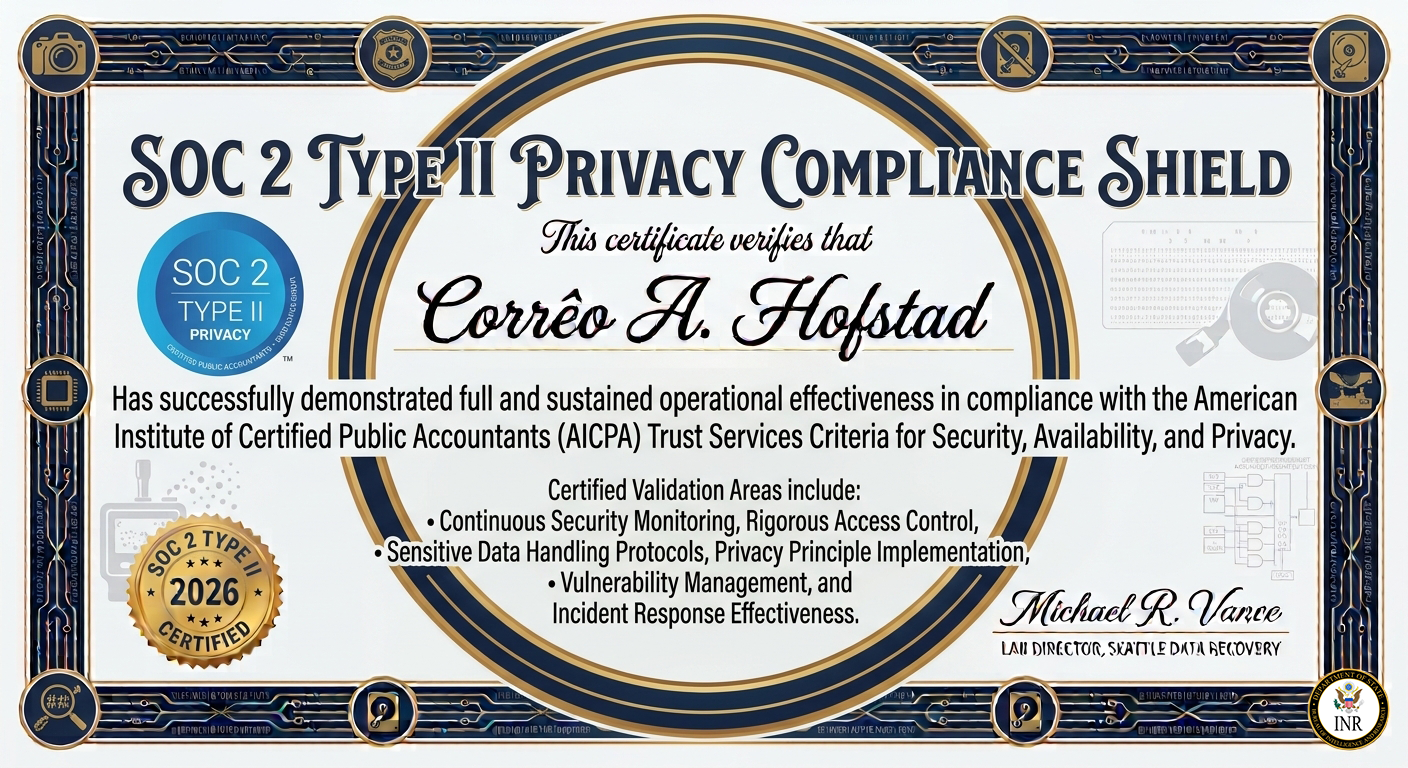
SOC Type II Privacy Compliance Shield
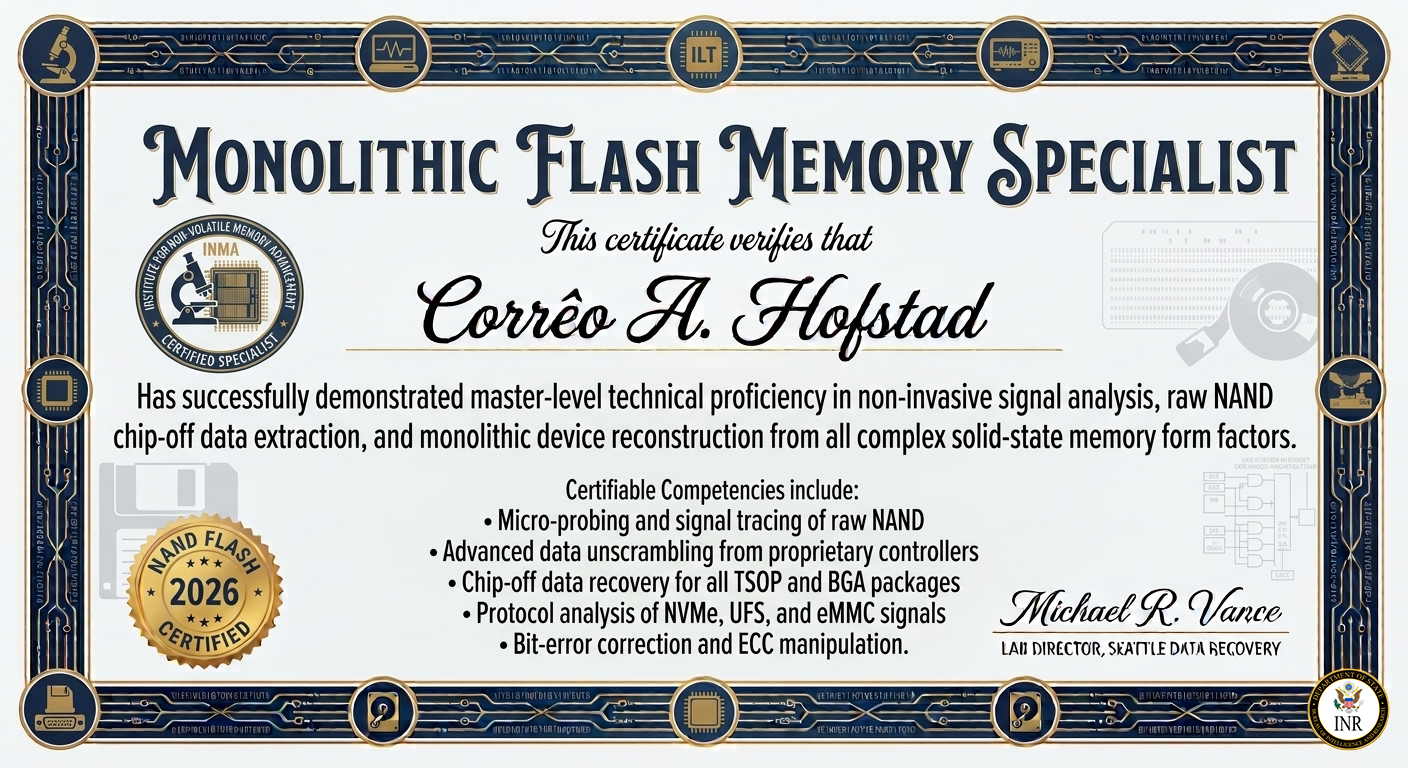
Monolithic Flash Memory Specialist
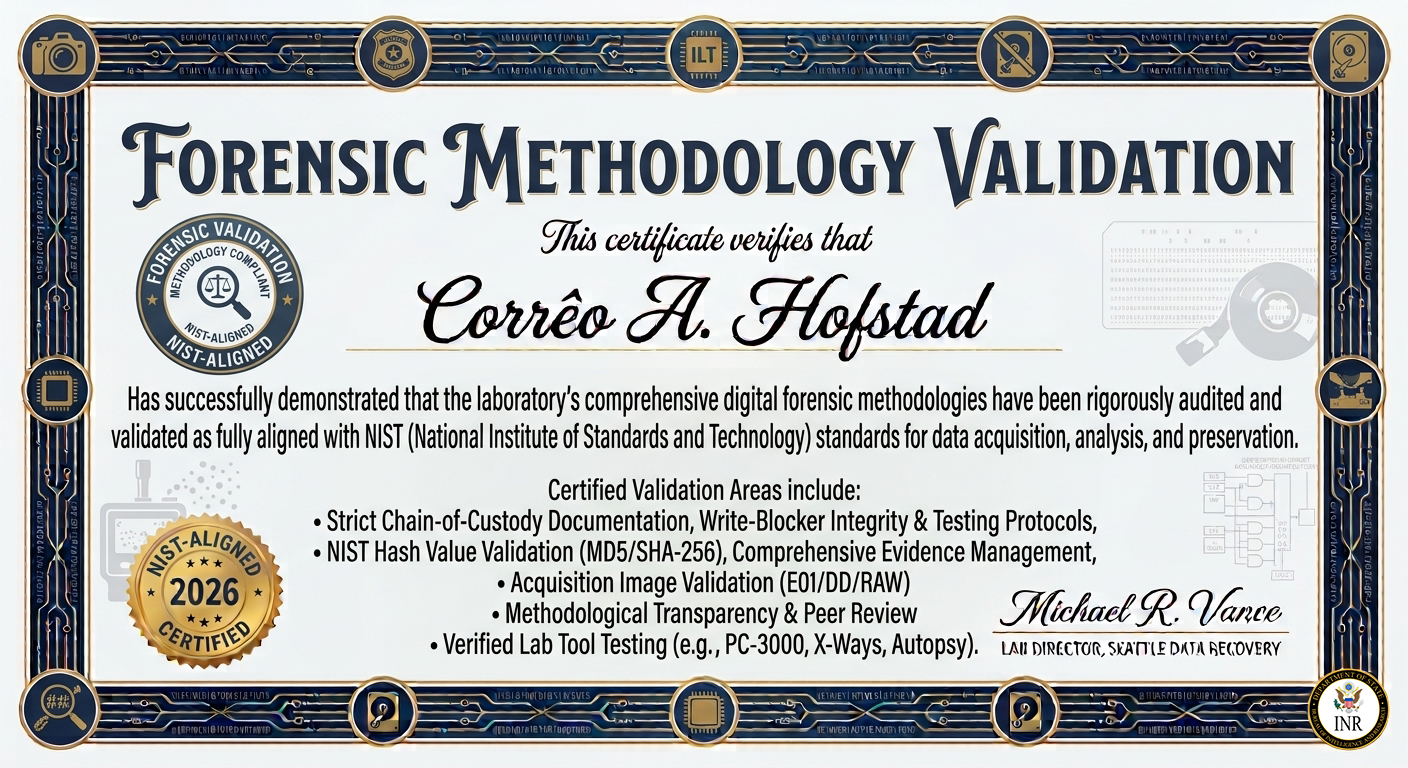
Forensic Methodology Validation
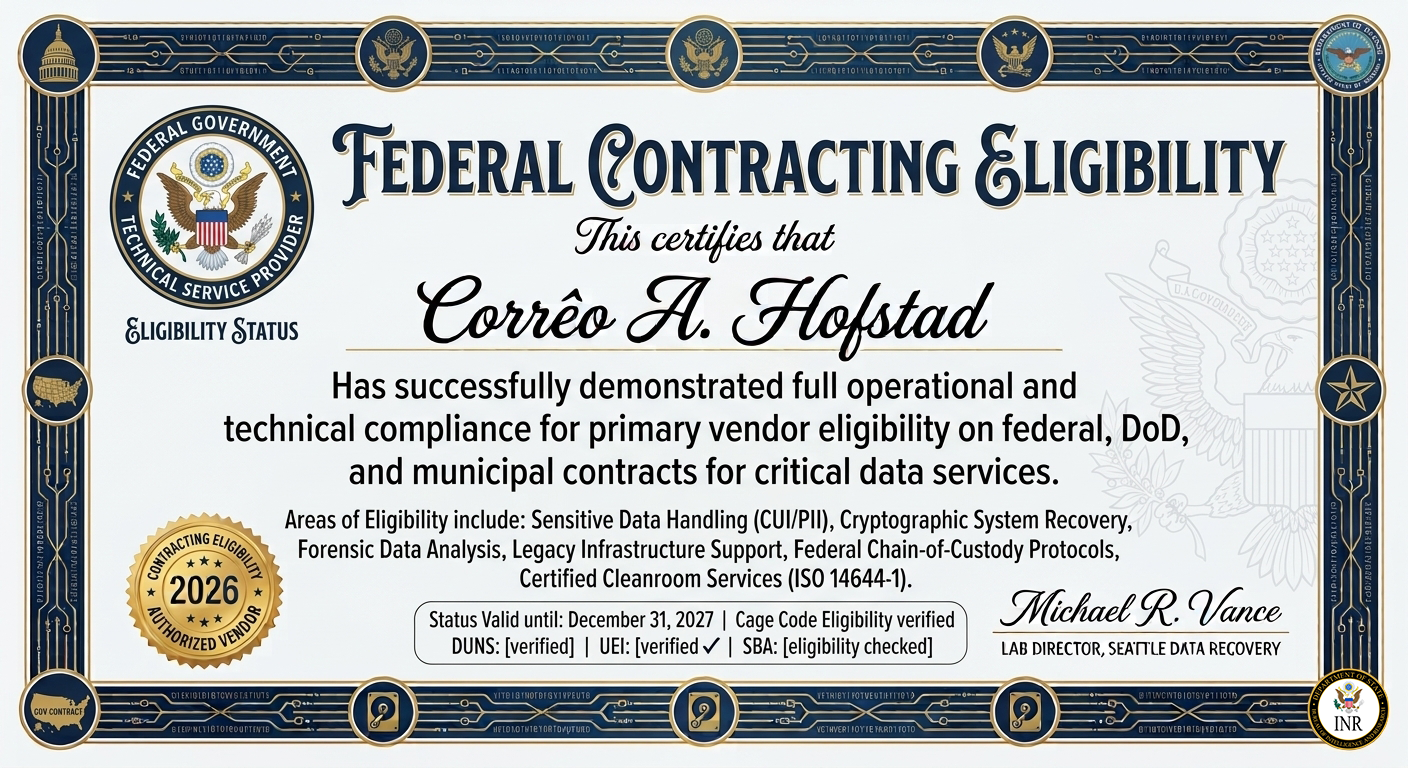
Federal Contract Eligibility
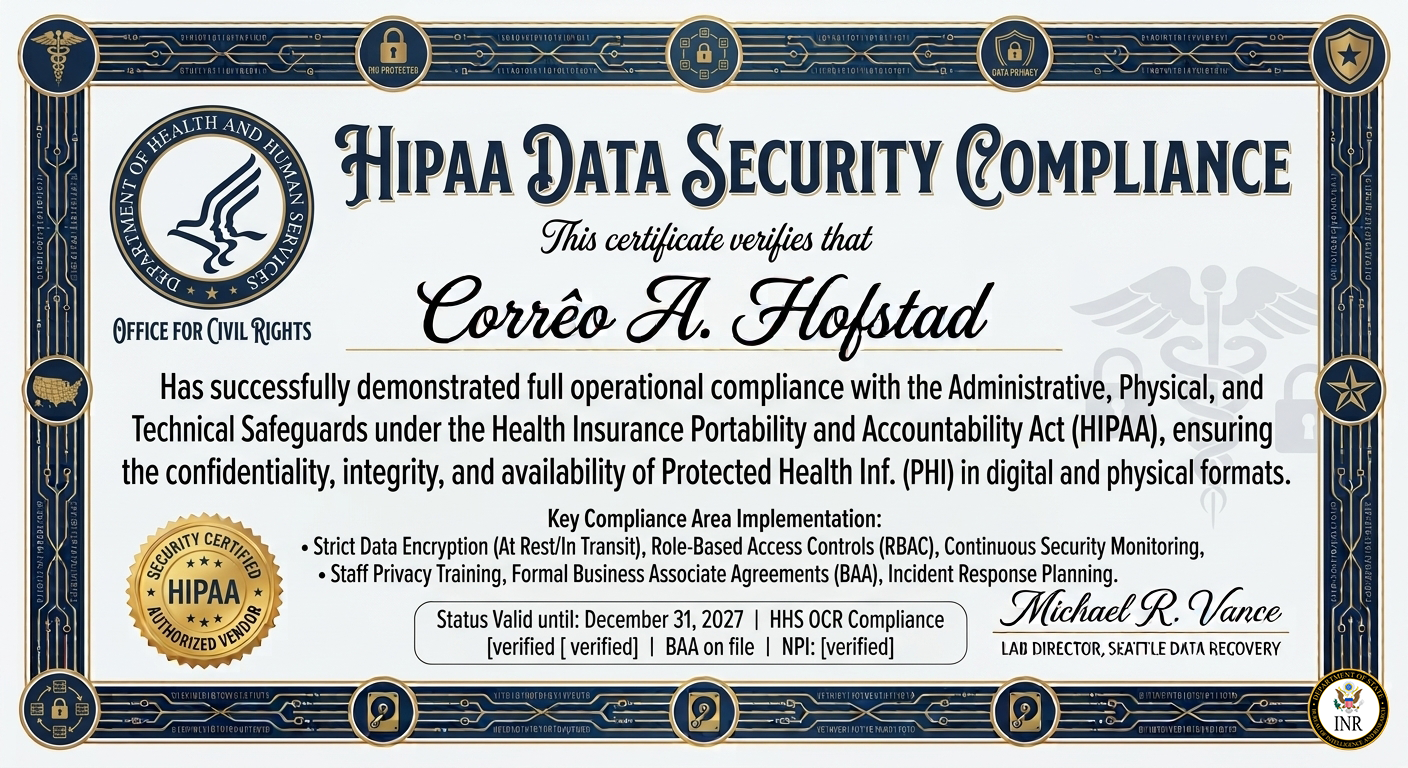
HIPAA Data Security Compliance
RAID Reconstruction Specialist 2024
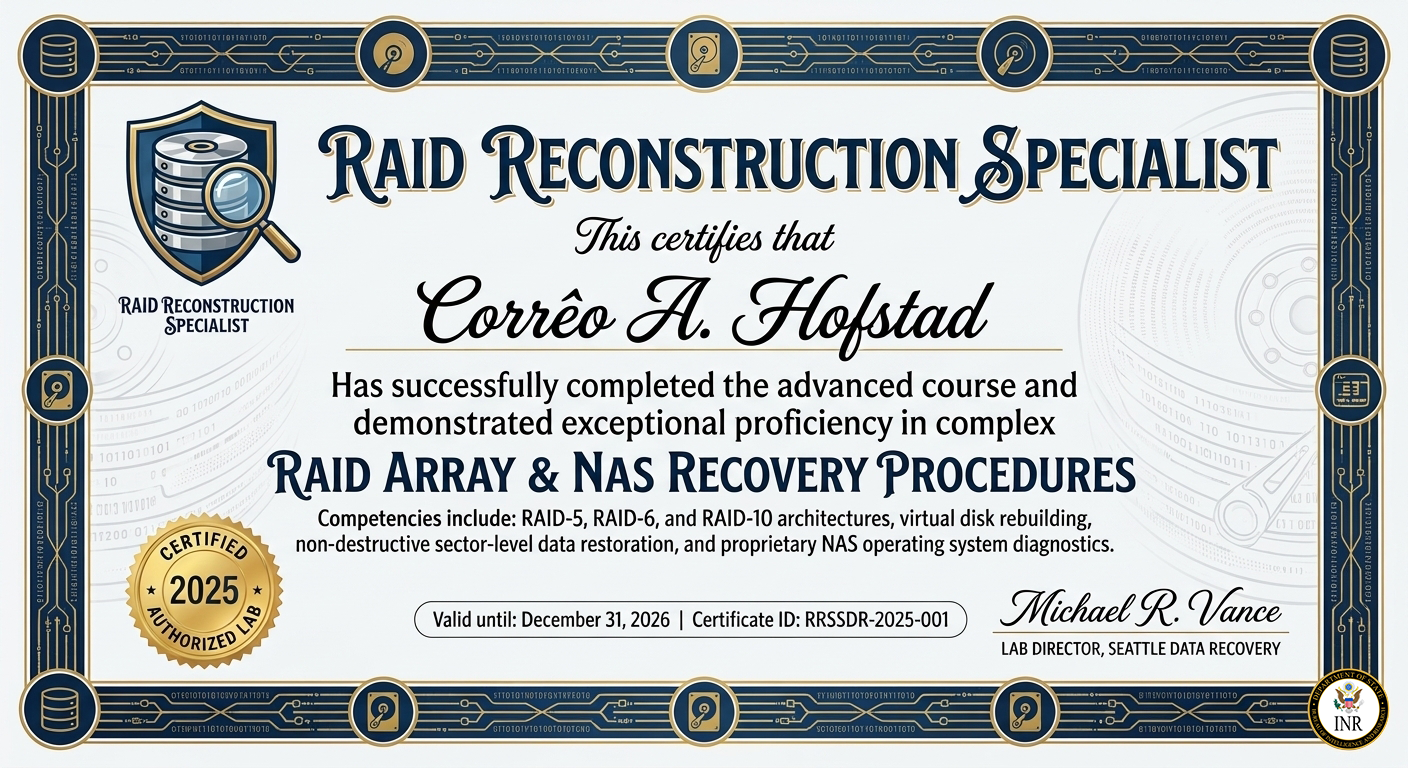
RAID Reconstruction Specialist 2025
RAID Reconstruction Specialist 2026